







Ibiza faces the challenge of balancing tourism growth with the conservation of its natural resources. In 2025, the island recorded its highest electricity demand since 2017, saw a 4.2% increase in waste generation, and experienced a rise in deep-sea temperatures. These are some of the conclusions of the Ibiza 2025 Sustainability Report, presented this Tuesday by Ibiza & Formentera Preservation through its Sustainability Observatory, with funding from the Consell Insular d’Eivissa. The document analyzes 66 socio-environmental indicators linked to the United Nations Sustainable Development Goals.
One of the major advances has been in wastewater treatment. Ibiza reduced the volume of water that did not undergo proper treatment from 3.93 million to 680,000 cubic meters, a decrease of approximately 83% compared to 2024. The opening of the new Sa Coma wastewater treatment plant has been one of the factors behind this improvement.
However, the reuse of treated water remains an unresolved issue. In 2025, the island reused only about 2.6% of its treated water, mainly for irrigation. In addition, 24.6% of the water supplied by municipal networks was not recorded as consumption, a figure that includes both water lost to leaks and unaccounted-for consumption. The problem becomes even more significant when one considers that 78.13% of the water distributed through these networks came from desalination plants.
More Energy and Waste on an Island Under Pressure
Nor has the rise in solar self-consumption managed to slow the growth in electricity demand. Ibiza reached 3,134 solar installations for self-consumption, a 15.8% increase from 2024. The installed capacity for this purpose has increased twentyfold in five years.
Despite this, electricity demand reached 1,022,543 MWh in 2025, up 6.7% from the previous year and the highest level in the data series analyzed since 2017. Meanwhile, electricity generation from grid-connected solar plants fell by 3.7%. Overall, renewable sources—including electricity imported from outside the island—accounted for 15.4% of electricity consumption, far short of the Balearic Islands’ goal of 35% by 2030.
Waste generation also increased. Ibiza produced 146,178 metric tons in 2025, 4.2% more than the previous year and 26.7% above 2010 levels. This trend contrasts with the goal established by Balearic regulations to reduce waste by 20% by 2030 compared to that baseline year.
The report also highlights the difficulties in properly sorting waste. Eighty-two percent of the waste examined in the “other” category at the Ca Na Putxa Environmental Area could have been sorted properly. Although selective collection improved slightly, it accounted for 33.9% of municipal waste, compared to the state target of 55% set for 2025.
39 days with sea temperatures above 28 degrees
Environmental trends are also reflected in emissions and sea temperature. Greenhouse gas emissions recorded in Ibiza increased by 61.3% in 2025 compared to 2024, mainly due to the higher volume of fuel used for aviation and, to a lesser extent, the increase in diesel A consumption.
In the marine environment, sensors installed by GEN-GOB in Talamanca Bay recorded 39 days with temperatures above 28 degrees at a depth of 11.5 meters. In 2024, this situation occurred on nine days.
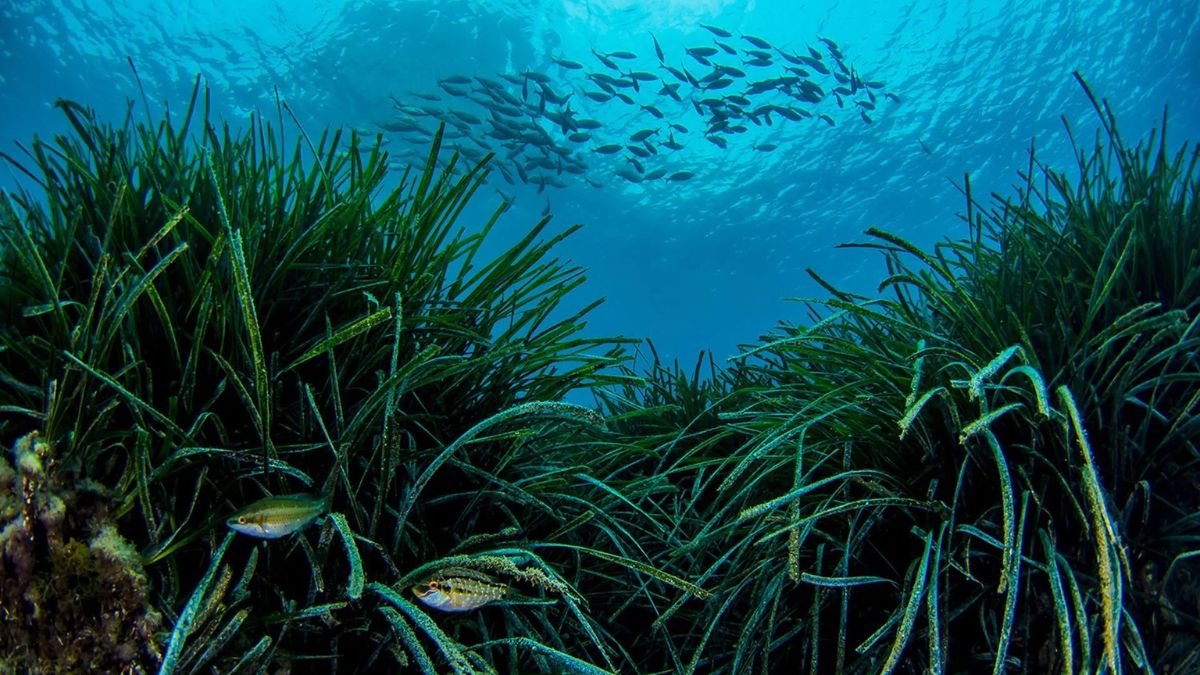
Prolonged warming can affect Posidonia seagrass beds, which are essential for marine biodiversity and the conservation of Ibiza’s coastline. Compounding this pressure is the limited management of marine protected areas: only 7.9% of the marine area included in the Natura 2000 Network has a plan that establishes measures to protect and conserve its habitats and species.
Population and tourism growth help put these indicators into context. The island welcomed 3,377,453 tourists in 2025, 3.33% more than the previous year, while the resident population reached 164,265, an increase of 1.7%.
Despite the challenges, the report also highlights progress in other areas, such as organic farming, which covered 1,590 hectares, equivalent to 20.4% of the usable agricultural area.
For Inma Saranova, executive director of Ibiza & Formentera Preservation, the results show that improvements in infrastructure are not enough to offset the increasing pressure on the island. The organization advocates for the need to reduce resource consumption, promote the reuse of treated water, and plan for growth based on the territory’s capacity.