






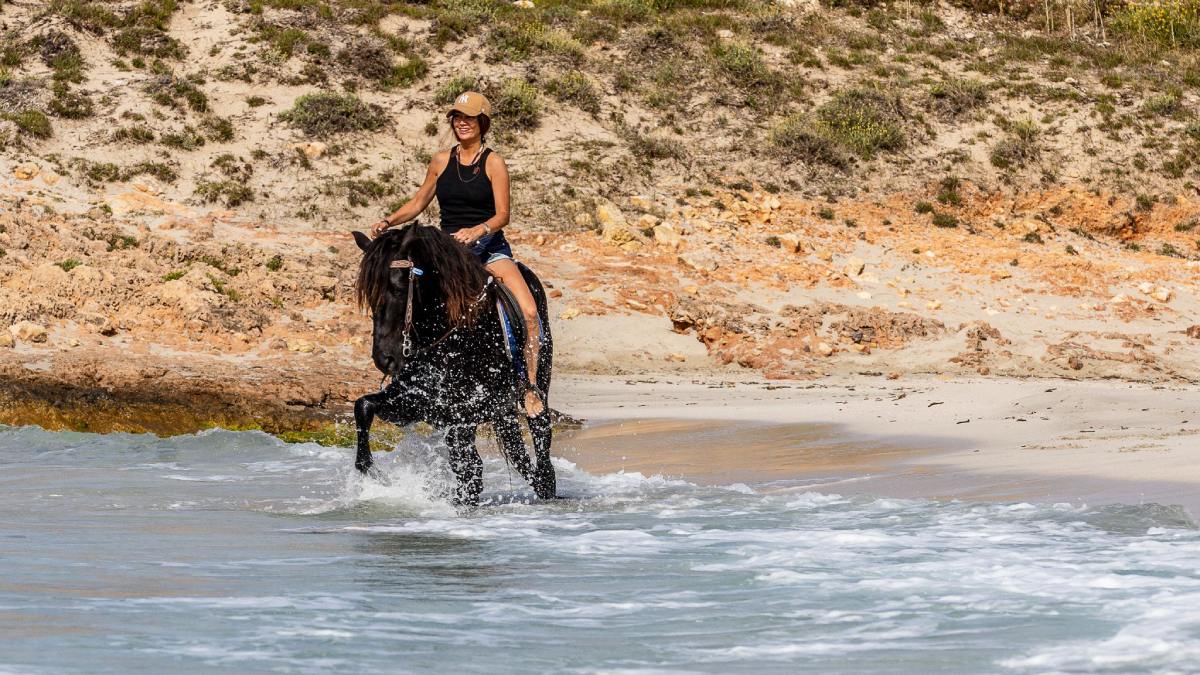
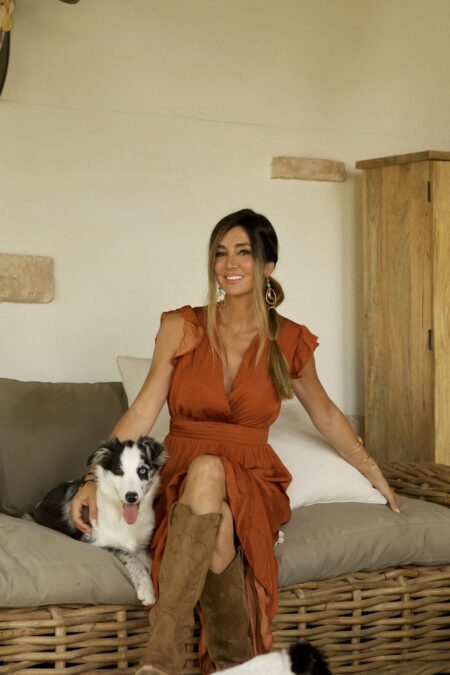
Some people find a career, while others find a way of life. For Marta González (Alicante, 1981), horses were always much more than a childhood hobby; they were her way of understanding the world. She grew up surrounded by animals and the countryside, with a connection to them so deep that for years she dreamed of becoming a veterinarian. She doesn’t even remember the first time she rode a horse, because her bond with them was always there, as something natural.
It was her father, Dámaso González—one of the great figures of bullfighting between the 1970s and 1990s—who taught her to ride when she was a little girl. He always had a deep connection to the countryside and animals, a passion he passed on to his daughter from childhood. During those years, the family estate in Albacete became a gathering place for various figures from the political, sports, and cultural spheres. Marta grew up seeing familiar faces come and go through her home, such as the Colombian painter Fernando Botero, politicians like Federico Trillo and José Bono, and the former presidents of Spain and Colombia, José María Aznar and Andrés Pastrana, respectively.
Despite this, she never liked the media attention, so she sought to build a simpler, quieter life connected to horses, animals, and the countryside, because that is where she finds balance, calm, and energy. She began working for the Hipódromo de la Zarzuela as a Project Manager in the VIP area. There she mingled with aristocrats such as Cayetano Martínez de Irujo and Infanta Elena, athletes like David Meca, and actresses such as Paz Vega, among other personalities.
But the moment that truly changed everything—and which she looks back on fondly—was when she was offered the chance to go on a horseback safari in Africa. She thus turned her passion into her profession, and today she is one of the most recognized voices in equestrian journalism. She currently serves as Director of Communications and Deputy Director at the World Equestrian Tourism Organization.
This week she will be in Menorca as an ambassador for the first edition of Menorca Horse Week, an event taking place from May 14 to 17 that aims to promote equestrian tourism on an island where horses are an integral part of its identity. Menorca boasts iconic trails such as the Camí de Cavalls, renowned throughout Europe, which makes the Menorcan landscape a unique destination for horseback riding.
Tell us what Menorca Horse Week is all about. How and why did this initiative come about?
Menorca Horse Week 2026 was created as an international platform to highlight the Menorcan horse and everything it represents: the history, culture, and traditions of Menorca.
This event combines competition, exhibition, and entertainment, featuring disciplines such as conformation, dressage—both classical and Menorcan—and free-work. It has emerged quite naturally, as it was conceived within the framework of the 35th edition of the Purebred Menorcan Conformation Show, making it a particularly significant occasion. This year, the competition takes it a step further, acquiring an international dimension that will bring great visibility to the Purebred Menorcan horse and the island’s equestrian heritage.
Menorca is known for its Camins de Cavalls. Which one do you like best? Tell us a story about it.
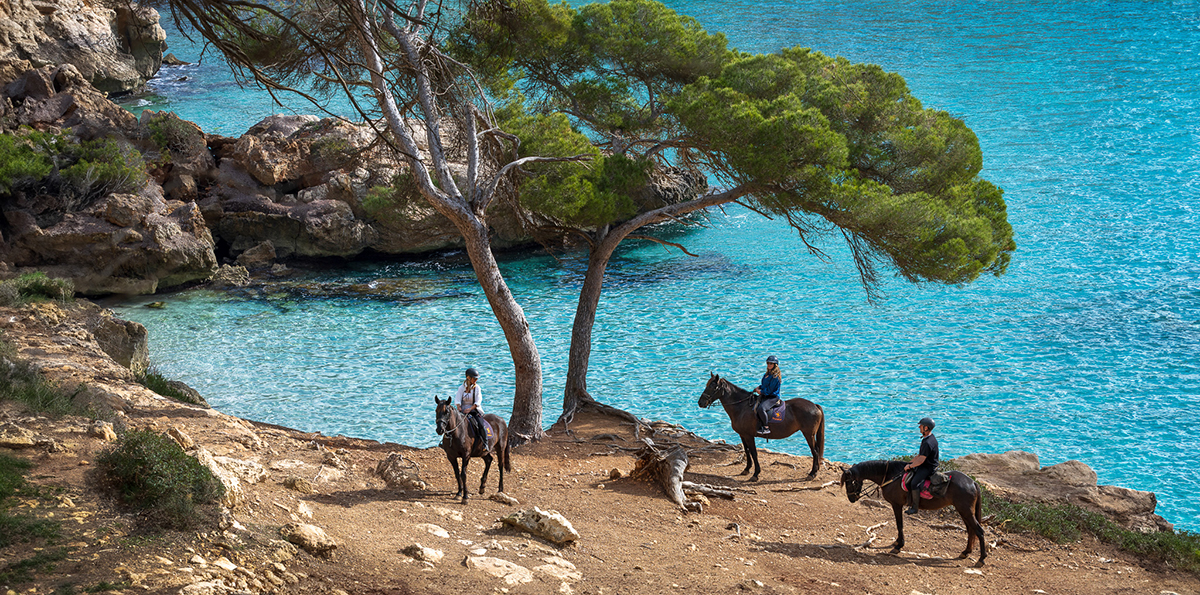
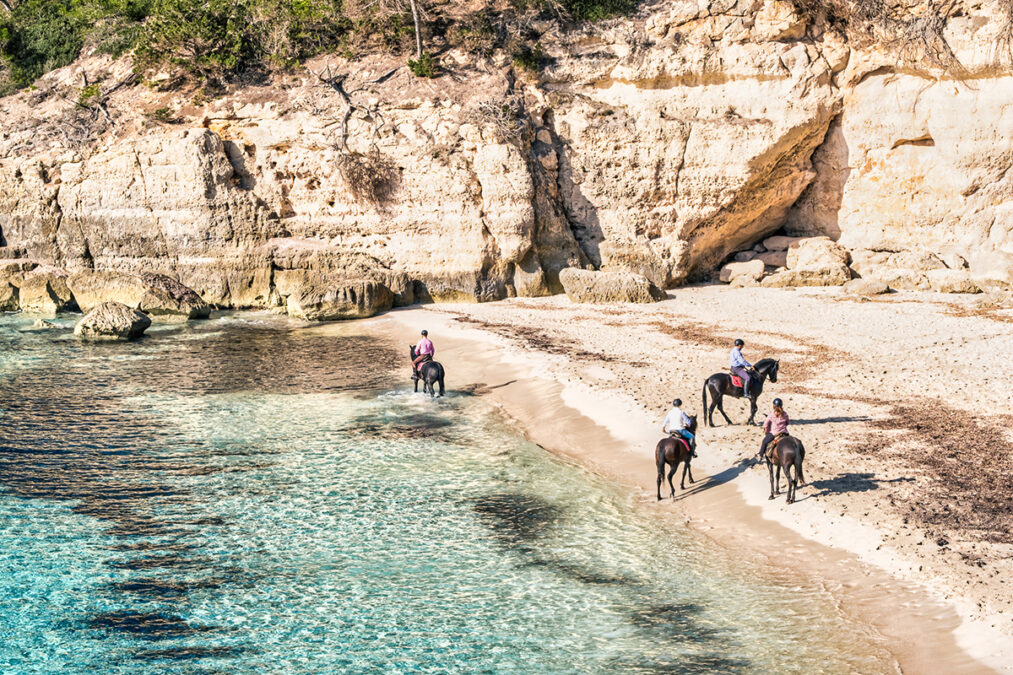
The Camí de Cavalls is a gem in its own right and one of the top attractions for equestrian tourism in Europe. Its origins date back to the 14th century, when it was created as a defense system that allowed the entire perimeter of the island to be traversed and monitored on horseback. And today, that same historic route has been transformed into a unique experience that allows visitors to discover Menorca on horseback from the inside, connecting landscape, history, and culture.
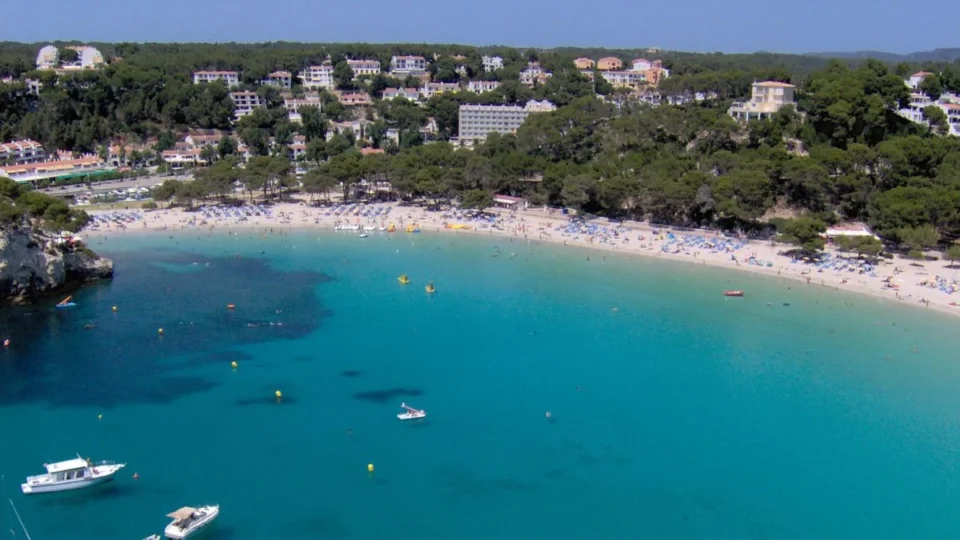
I was lucky enough to hike the section that leads to Son Bou Beach, one of the island’s most iconic beaches, which I highly recommend because it offers an incredible journey of contrasts between the lush green landscapes of the interior and the open sea.
Horses are the stars of all the local festivals in every town on Menorca: have you been to any?
I haven’t had the chance to experience them in person yet, but I’ve seen them in videos. The Sant Joan Festival is undoubtedly one of the island’s major international attractions, drawing visitors from all over the world.
What was it like when you decided to specialize in equestrian tourism, and what drew you to this specific sector?
I’ve always been involved in the equestrian world, but after completing my journalism training, I began working for various media outlets, writing about equestrian topics. I also worked at the Hipódromo de la Zarzuela and held other positions related to the equestrian world.
As for horseback travel, I was asked to promote a horseback safari in Africa, and that’s where I had my first real exposure to equestrian tourism. I discovered horseback safaris, an experience that left a deep impression on me and changed the way I understood this very special concept of exploring the world on horseback. From that moment on, I knew I wanted to pursue it professionally. I fell in love with equestrian tourism’s ability to offer authentic, sustainable experiences with a very special connection to the environment. Currently, in addition to being a journalist, I also hold a diploma as an international equestrian guide.
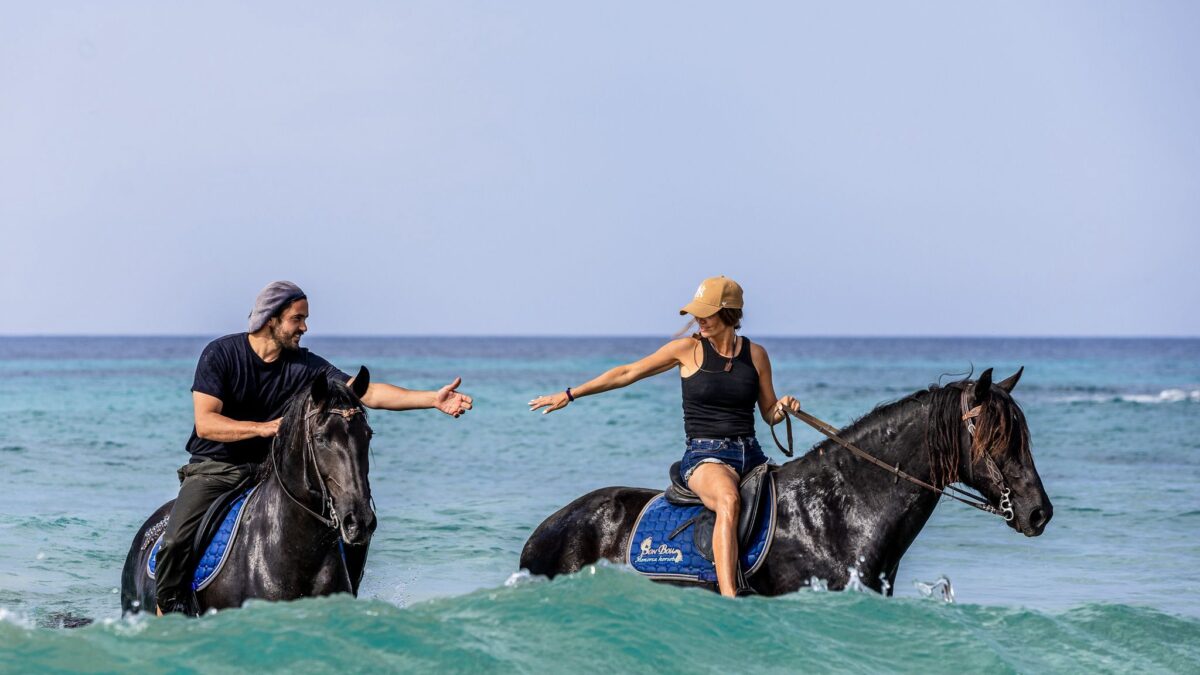
You are the Director of Communications and Deputy Director at the World Equestrian Tourism Organization. What has it been like to hold that position, and what has been the biggest communication challenge you’ve had to face?
Joining the World Equestrian Tourism Organization was, above all, a major challenge and a huge responsibility. It means actively contributing to the development of a sector that is experiencing rapid growth worldwide.
One of the biggest challenges has been explaining what quality equestrian tourism really is, because not everything goes. As an organization, we are working to convey very clear values: animal welfare as a foundation, sustainability, the professionalization of the sector, and, above all, building trust with travelers. The goal is to build a solid, responsible model that is aligned with the new demands of international tourism.
What changes have you noticed in the international perception of equestrian tourism since you started working in this field?
By establishing clear guidelines for animal welfare—because we cannot conceive of equestrian tourism without respect for horses—and by changing perceptions of this activity. For a long time, it was viewed as an elitist form of tourism, but today it has established itself as one of the major trends in experiential and sustainable tourism within the realm of active tourism.
Currently, equestrian tourism accounts for more than 26% of active tourism, and an increasing number of travelers are seeking authentic experiences. In this context, horses offer a unique way to explore destinations, fostering a deeper connection with the environment and raising awareness of animal welfare—a key factor for the sector’s future.
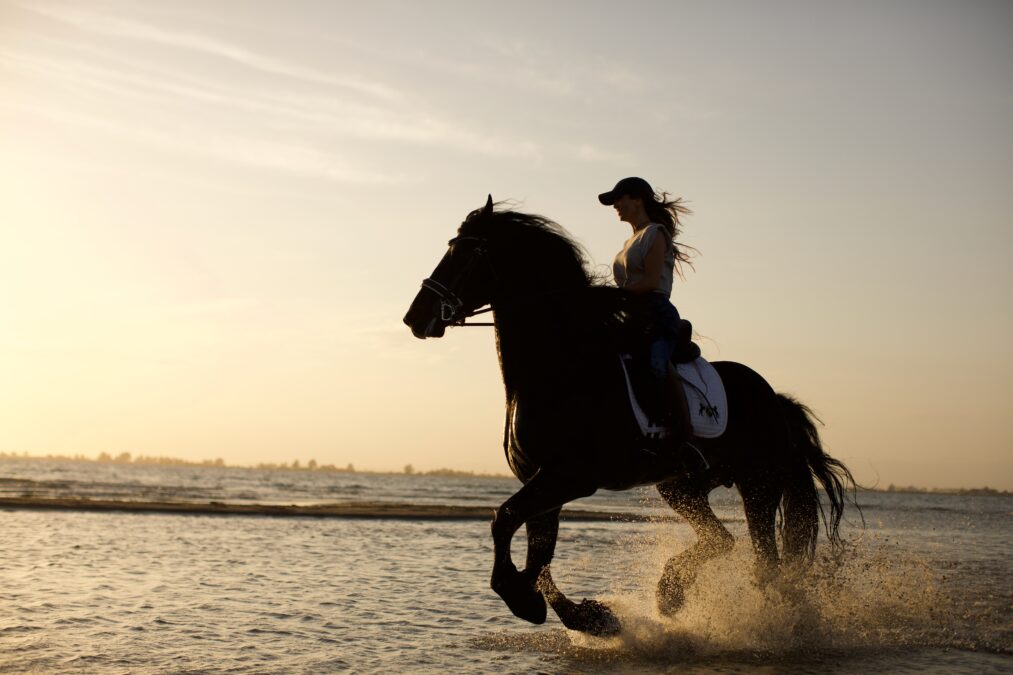
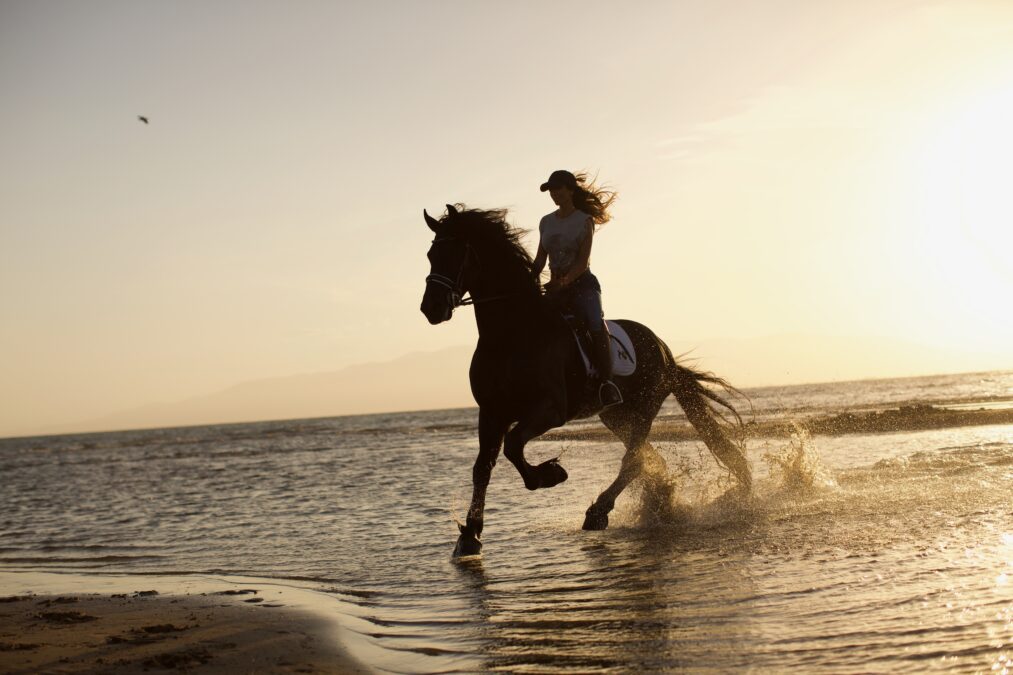
What’s the most incredible trip or experience you’ve ever had on horseback?
It’s hard to pick just one experience, but if I had to highlight one, I’d say that horseback safaris in Africa are truly life-changing. Riding through the savanna, in close contact with wildlife roaming freely, completely changes the way you think about travel.
I’ve also had some truly special experiences in places like Indonesia, in the Borobudur area, where some hotels incorporate horseback rides to visit temples into the experience itself, all within a spiritual setting. These are very different experiences—the adrenaline rush of Africa versus the serenity of Asia—but both reflect the richness of equestrian tourism worldwide.
On a personal note, when did you first ride a horse? When did you decide to pursue this professionally? Is there any experience involving horses that has had a particularly profound impact on you?
I rode a horse for the first time when I was very young, although I don’t remember exactly when. My father was the one who taught me, so from the very beginning it has been closely tied to my personal history.
The decision to pursue this career path came later, after I finished my degree in journalism. At the time, I was focused on teaching and working on my doctoral thesis in political science, but I decided to make a radical change. I started combining journalism with the world of horses, thinking it would be a temporary arrangement, but it ended up becoming my way of life.
What personal skills do you think have been key to your career in the equestrian world, leading you to hold management positions?
More than just skills, I’d say it’s been perseverance, hard work, and, above all, a passion for horses. The combination of discipline and dedication is, in my view, what really makes the difference in an industry like this.
How do you manage to balance your professional and personal life in such a demanding and global industry?
My work is part of my way of life, and horses are a natural part of my daily routine. Plus, it’s my passion, so I don’t see it as a chore, but rather as something that brings me balance. Even when I’m taking a break, I still feel connected to that environment that I love and that defines me.
It also helps that my partner works in the equestrian world, particularly in free-range training, which means we share not only a profession but also the same understanding of this lifestyle. That makes it much easier to balance both aspects.
If you hadn’t gone into equestrian tourism and communications, what else would you have liked to do?
As a child, I wanted to be a veterinarian; it was one of my top choices, and I’ve always been very interested in everything related to the countryside and animals. In the end, I chose the path of the humanities and studied journalism, although I also took Political Science with the idea of pursuing a career in university teaching. I’ll admit that I started in equestrian journalism thinking it would be a temporary gig, since I didn’t know of any job like the one I have today—which mainly involves promoting equestrian destinations.