








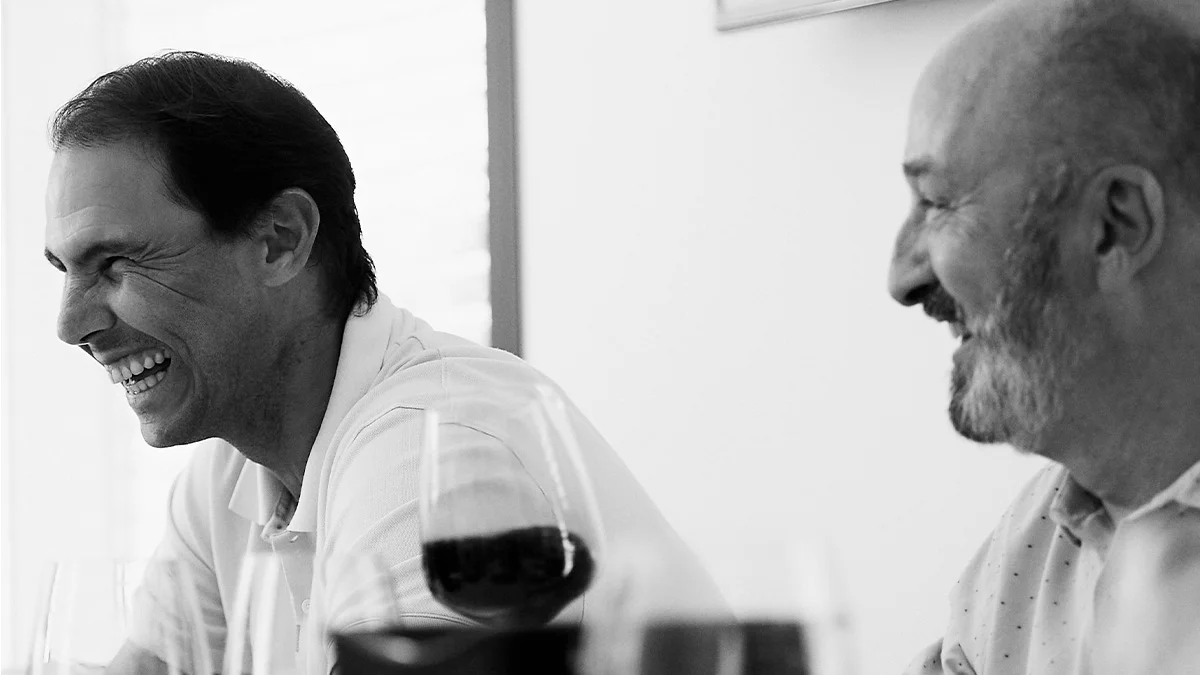
There is another way to measure time away from the tennis court. In Jumilla, time passes among vineyards more than half a century old, hand-harvested grapes, and barrels where the wine is left to mature for months. It is in this setting that El Tenista was born – Rafael Nadal’s first wine project, in collaboration with Familia Gil, a winery founded in 1916 in this town in Murcia.
The choice of Monastrell, a grape variety deeply rooted in the region’s identity, anchors the wine to its place of origin. From there, the winemaking process is based on the age of the vines, hand harvesting, and 18 months of aging in new French oak barrels. These three decisions reflect a winemaking process in which the raw materials and time play a central role.
Since retiring from professional tennis in 2024, Nadal has found another field to explore in gastronomy. But to truly appreciate ‘El Tenista,’ you have to look beyond the name on the label. The story begins before the bottle: in the ancient vineyards of Jumilla, with a grape variety native to that land, and in the patient work that transforms the grapes into wine.
Jumilla, the origin of the bottle
El Tenista is produced in Jumilla, one of the main wine regions of Murcia and an area closely associated with the Monastrell grape. This Mediterranean variety forms the basis of an organic red wine that seeks to express the character of its terroir. It’s not a trivial choice: to talk about Jumilla is to talk about a grape that is part of its wine identity and that finds the local conditions especially favorable.
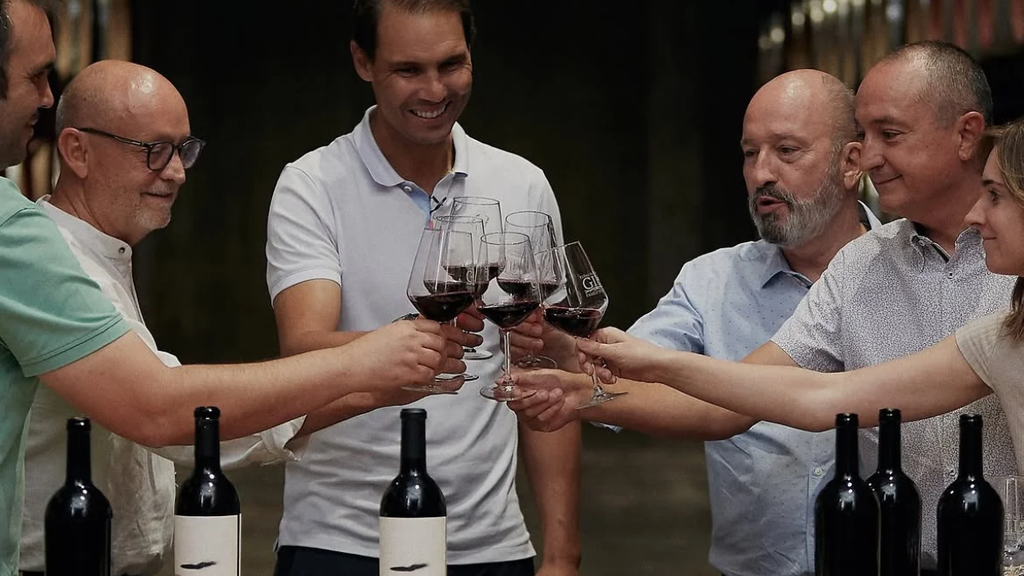
Behind the project is the Gil Family, whose history dates back to 1916, when Juan Gil Jiménez founded the winery in Jumilla. More than a century later, the family business maintains its ties to the region and has expanded its operations to other Spanish wine-growing areas. The collaboration with Nadal adds a new chapter to this journey and links the culture of wine with a figure whose career has been built on hard work and perseverance.
The former tennis player has shared photos on her social media of her visit to the vineyards and the wine-making family’s facilities. She has also described the project as a shared adventure, born of enthusiasm and a collaborative way of working.
Vines over 50 years old and limited production
One of the most surprising aspects of El Tenista lies in its vineyards. The wine comes from vines over 50 years old, situated at an altitude of about 750 meters. The grapes are hand-harvested and, according to information published about the project, each vine produces about 700 grams of grapes. This figure indicates a very limited yield per vine and highlights the importance placed on the selection of the raw material.
In viticulture, yield alone does not determine the final quality of a wine: the vintage, the condition of the grapes, the soil, the climate, and the decisions made during winemaking also play a role. However, these factors help define El Tenista’s approach, which begins with mature vines and manual harvesting before moving on to the next stage.
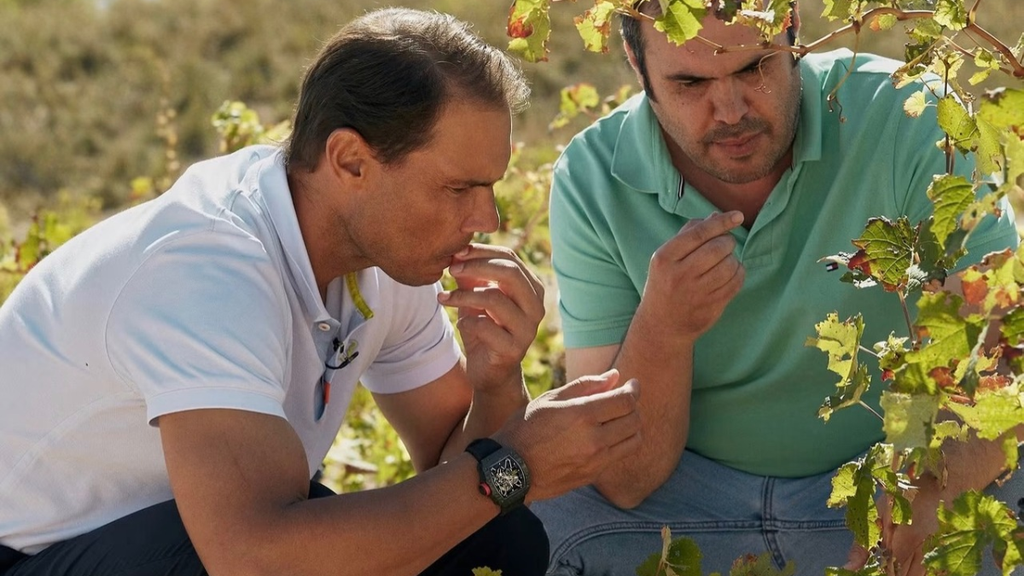
The Monastrell grape provides the common thread of this story. In Jumilla, this grape variety can produce red wines with intense color and ripe fruit, although its expression depends as much on the vine as on the work done in the cellar. In this case, the aging process takes on particular importance: the wine spends 18 months in new French oak barrels before completing its development in the bottle.
Time is not a secondary aspect of the process, but one of the key elements in its development. Oak influences the structure and aromatic profile, while aging allows the various components to develop. The final result will depend on how the fruit, the aging process, and the inherent character of Monastrell combine.
A label that’s quite a tennis
The link to Christmas is also evident in the design. The bottle features a discreet aesthetic, with a white label, the name ‘El Tenista,’ and a black line that evokes the movement of a ball on the clay court. There’s no need to use an image of the player to make the connection obvious: a simple graphic motif evoking tennis courts is enough for the sports reference to become part of the wine’s visual identity.
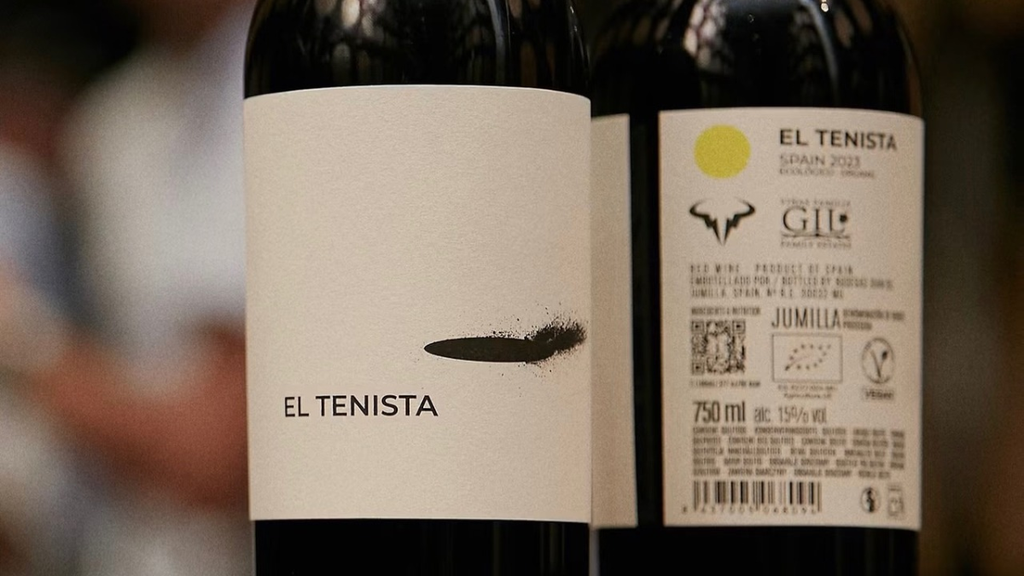
This restraint is consistent with the chosen name. The Tenista brings together two worlds without turning the label into a biographical showcase. There’s a nod to its origins, but the product itself takes center stage: a bottle of organic red wine from Jumilla, made with Monastrell grapes and aged for a year and a half in French oak.
In a market where collaborations between well-known figures and brands are often based primarily on name recognition, the details of the winemaking process offer another way to approach the project. Vines over five decades old, hand harvesting, and 18 months in oak barrels allow us to talk about the wine beyond the name behind it.
A premium red wine
The retail price of Rafa Nadal’s wine is about 60 euros per bottle, a figure that places it in the high-end price segment. In this segment, the name may spark curiosity, but sustained interest also depends on the wine’s origin, production methods, and the drinking experience. The combination of old vines, limited yield per vine, and aging in new French oak barrels forms the basis of this red wine.
El Tenista was born this way with a recognizable identity: Jumilla as its place of origin, Monastrell as the grape variety, the Gil family as its oenological partner, and Nadal as the driving force behind a new adventure outside the world of sports. A combination of elements that places it at the crossroads of wine, gastronomic culture, and personal branding, without any one necessarily eclipsing the others.


