








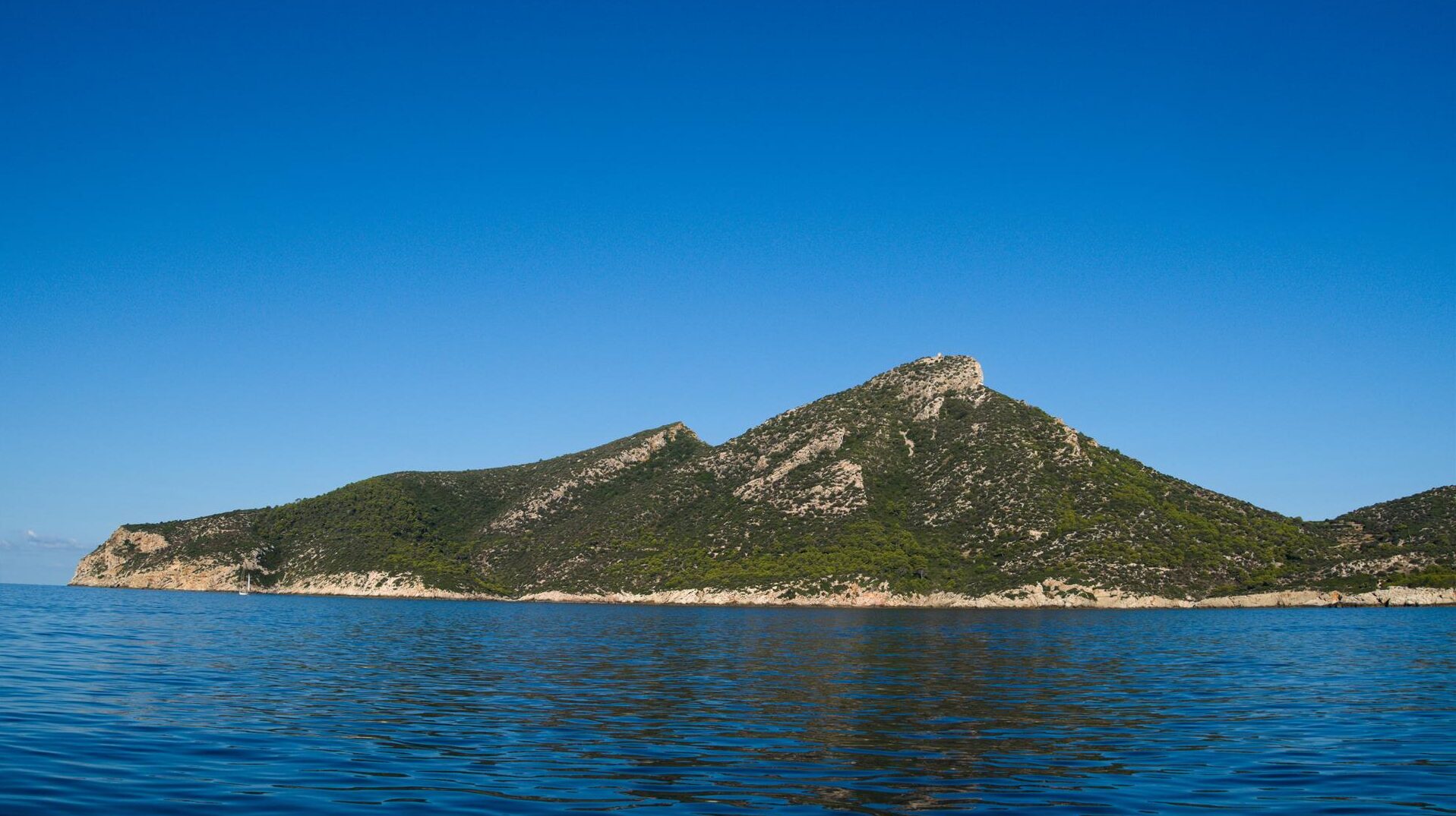
Some research requires time: not weeks or months, but years of observation before changes begin to reveal a pattern. At Sa Dragonera, monitoring some of the islands’ most characteristic species has become precisely one of these long-term projects. The Mediterranean Institute for Advanced Studies (Imedea CSIC-UIB) has now launched a fundraising campaign aimed at individuals, organizations, and institutions to ensure the continuity of this research and to bring the scientific work being carried out in the nature reserve closer to the public.
The initiative aims to allow everyone to contribute to the monitoring and conservation of the island’s species. Donations can be made through the website of the University-Business Foundation of the Balearic Islands. The campaign has also moved out of the lab—in this case, the research centers—to take root on Dragonera itself. Posters featuring some of the species included in the studies have been put up at the visitor center of the nature reserve. The wildlife images include a QR code that links directly to the page where funding is managed.
The idea is simple: let the animals themselves explain why they are worth studying. Sa Dragonera serves as an ideal observatory for monitoring the evolution of their populations. Among the species studied are the Balearic shearwater, the Mediterranean shearwater, the Mediterranean yellow-legged gull, the Corsican gull, the European storm petrel, the Eleonora’s falcon, and the Balearic island lizard.
Each one contributes a different piece to the puzzle. Some provide information about how terrestrial and marine ecosystems function, while others are also of particular interest from a conservation perspective. This is the case with the Balearic shearwater, endemic to the islands and considered one of Europe’s most threatened seabirds.
Scientific work is not limited to counting individuals. The Imedea team annually coordinates its research with the management of the nature reserve and conducts individual monitoring of lizards, storm-petrels, and gulls, as well as censuses of seabirds and raptors, seasonal studies on bird diversity, and surveillance for potential exotic predators.
The contribution of technology
Technology also allows researchers to track the lives of some of these species once they have moved out of their field of view. By using GPS devices placed on certain birds, the team can reconstruct their movements and identify the areas they use to feed, breed, or rest.
But perhaps the most important discovery of this study is not a specific figure, but time. Tracking the same populations over several years allows for the construction of time series that reveal changes that might go unnoticed in a single-point study: variations in a species’ abundance, changes in its distribution, alterations in its reproduction, or changes in its behavior.
This is where continuity becomes a scientific tool. The longer the observation period, the greater the chances of distinguishing a one-off fluctuation from a trend and of understanding how populations respond to an environment that is also changing.
In fact, Imedea warns that the interruption of this work could lead to gaps in the data and make it difficult to both identify trends and understand how species respond to environmental changes. At Sa Dragonera, therefore, the research isn’t just about knowing how many birds, gulls, or predators are there today. It involves returning, taking new measurements, and making comparisons. And doing so for long enough for the island to begin to tell its own story.


