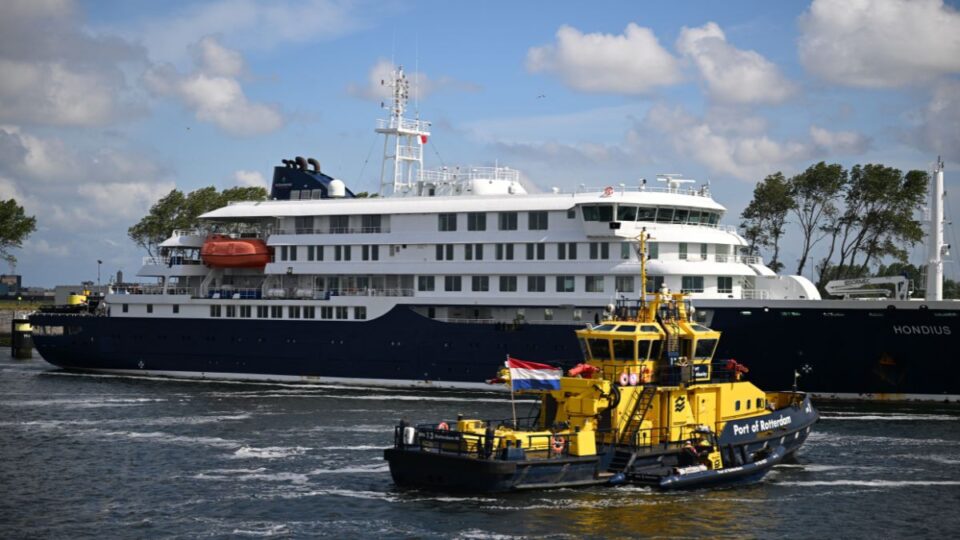








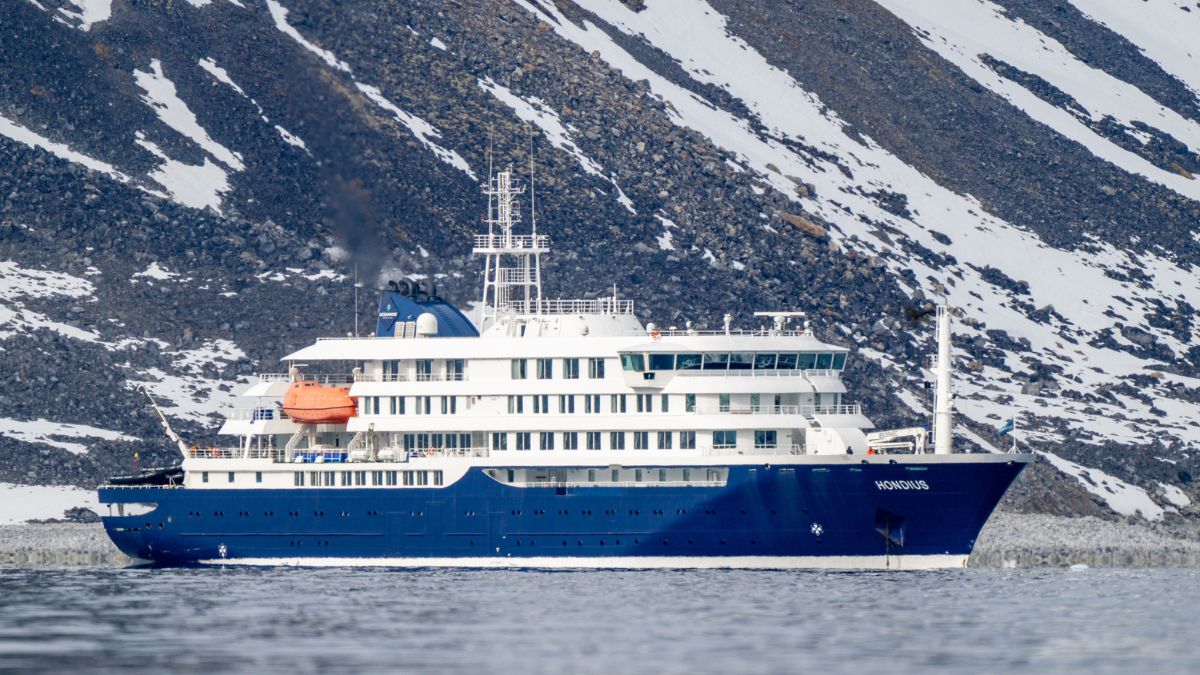
The ‘MV Hondius’, one of the most advanced polar expedition vessels in the tourism industry, has become an unwitting focal point of international maritime news following a hantavirus outbreak on board during a voyage between Antarctica and the South Atlantic. Operated by the Dutch company Oceanwide Expeditions, the ship combines technical capabilities for ice navigation with a boutique cruise concept geared toward scientific and extreme nature expeditions. The health emergency, which has resulted in several deaths and cases under investigation, has placed a vessel designed specifically to operate in some of the most remote places on the planet under the media spotlight.
A state-of-the-art polar research vessel built in Croatia
The ‘MV Hondius’ was built by the Brodosplit shipyard in Split, Croatia, under construction number 484. The order was placed in 2016, and the ship was launched in June 2018 before being officially delivered to Oceanwide Expeditions in May 2019. Its maiden voyage took place a few weeks later, in June of that same year, with an expedition to Svalbard.
The ship’s name pays tribute to the Flemish cartographer Jodocus Hondius, a key figure in 16th-century European navigation and cartography. Since entering service, the ‘Hondius’ has specialized in small-scale expeditions to the Arctic and Antarctic regions.
Unlike conventional large cruise ships, the ‘MV Hondius’ was designed as a polar exploration vessel, prioritizing operational capability in icy waters, sustainability, and the scientific experience on board.
Technical Specifications of the MV Hondius
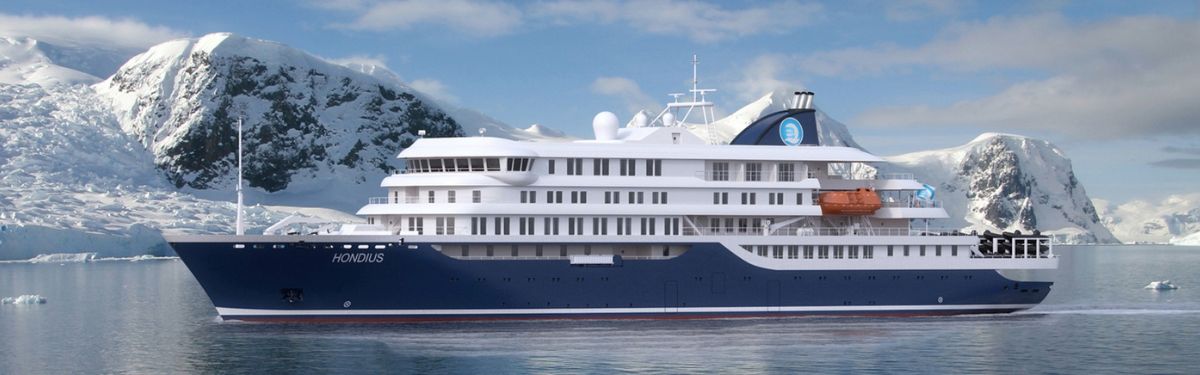
The Hondius holds a Polar Class 6 rating, a certification that allows it to navigate first-year ice during the summer and fall seasons in polar regions.
The cruise ship is 107.6 meters long and 17.6 meters wide. It has a draft of 5.3 meters and a gross tonnage of 6,603 GT. The ‘MV Hondius’ is powered by two ABC diesel engines, each with an output of 2,130 kW, enabling it to reach a maximum speed of 16 knots.
In terms of accommodation, the MV Hondius features 95 cabins across its eight passenger decks, with a capacity for 196 guests, in addition to a professional crew of between 69 and 72 people.
The interior design is based on a compact premium expedition model, with spaces designed for wildlife viewing, scientific lectures, and quick shore excursions via Zodiac boats.
Although it is an expedition ship, the ‘Hondius’ offers amenities typically found on a luxury cruise ship. Its main facilities include a panoramic restaurant, a conference room, an observatory, a specialized library, a gym, and a lounge bar with outdoor views.
The dining options are designed for extended voyages in remote locations, featuring international cuisine and menus tailored to polar expeditions. In addition, the ship is equipped with advanced stabilization systems, polar navigation technology, and specialized equipment for scientific research and wildlife viewing.
The staterooms include suites, junior suites, and double outside cabins, many of which feature large windows for enjoying the scenery.
The usual routes of the ‘MV Hondius’
Since 2019, the MV Hondius has primarily operated expedition cruises in the Arctic and Antarctica. Its regular itineraries include the Antarctic Peninsula, the South Shetland Islands, South Georgia, the Falkland Islands, Svalbard, Greenland, the Weddell Sea, Iceland, and Jan Mayen.
Oceanwide Expeditions markets these voyages as scientific exploration and extreme nature experiences, targeting an audience interested in photography, wildlife viewing, and polar tourism.
The cruise ship on which the hantavirus outbreak was detected
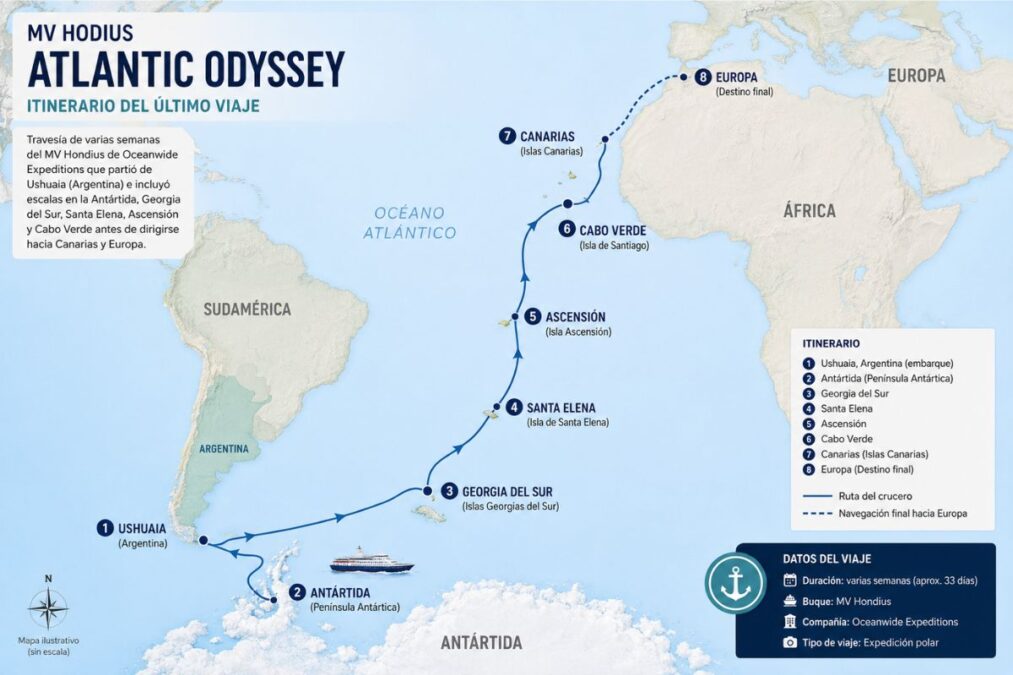
The voyage affected by the health outbreak was part of the expedition known as “Atlantic Odyssey,” a journey lasting several weeks that began in Ushuaia, Argentina, and included stops in Antarctica, South Georgia, Saint Helena, Ascension, and Cape Verde before heading to the Canary Islands and Europe.
According to preliminary investigations, the first infections may have occurred before boarding, possibly during wildlife-watching activities in South America. International health authorities are now investigating possible limited transmission among passengers due to the Andean strain of the hantavirus, one of the few variants with a documented ability to spread among humans.
The ship was subject to strict health protocols and international epidemiological monitoring after several deaths and confirmed cases were reported during the voyage.
A leader in polar tourism under international scrutiny
Until the current health crisis, the ‘MV Hondius’ was considered one of the most modern and sustainable polar expedition ships on the European market. Its compact size and scientific focus had allowed it to establish itself in the premium segment of polar exploration.
However, the hantavirus outbreak has sparked an international debate about medical and health protocols on expedition cruises operating in remote areas, where evacuation and hospital care can be particularly challenging.