








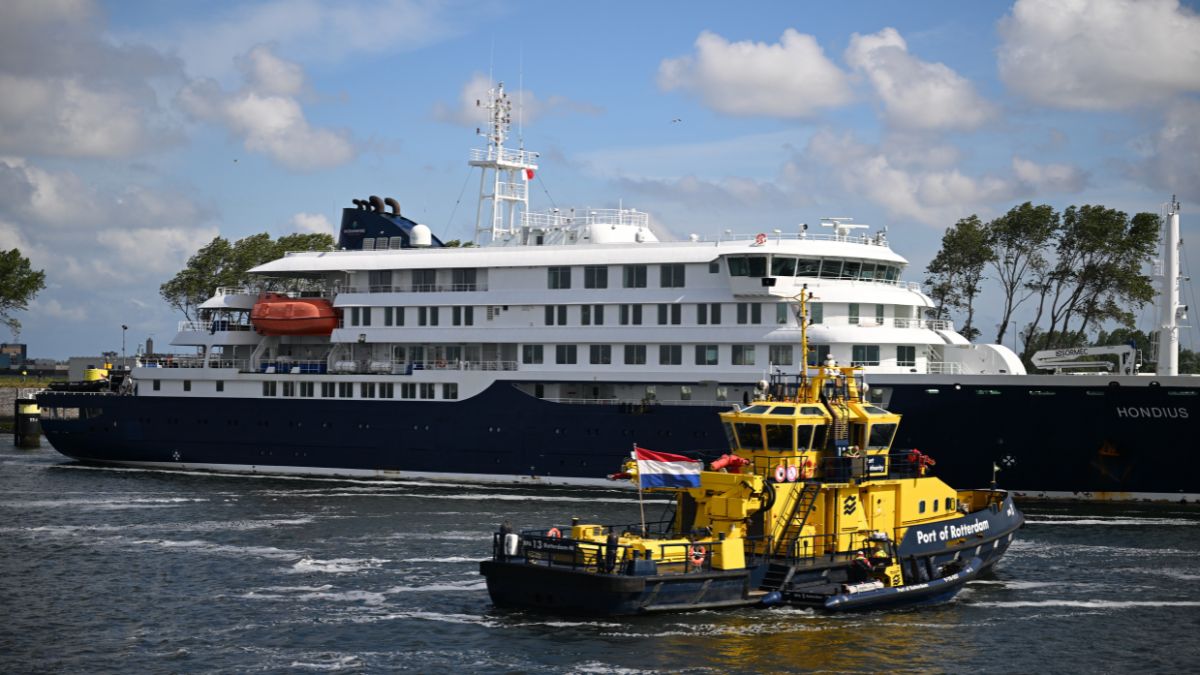
The polar expedition ship ‘MV Hondius’ has finally arrived at the port of Rotterdam after several weeks marked by a hantavirus outbreak detected on board during its Atlantic crossing. The health situation, which began during a stopover in Cape Verde and required the activation of international medical protocols, still has several European passengers under observation, including a Spanish citizen and a French tourist in critical condition.
The ‘MV Hondius’ completes a voyage under health monitoring
The MV Hondius, a ship specializing in polar and scientific expeditions, arrived in Rotterdam last weekend, bringing to a close a voyage that went from being a high-end tourist cruise to an international health incident. The hantavirus outbreak detected among some of the passengers triggered a complex epidemiological monitoring operation in early May, coordinated by maritime, health, and port authorities.
The alert was triggered after several passengers developed symptoms consistent with a severe viral infection during the voyage following departure from Cape Verde. Initial suspicions pointed to a common respiratory infection, although subsequent testing confirmed the presence of hantavirus in several cases.
Since then, the ship has operated under strict medical and preventive isolation protocols as it continued its journey to Europe. Upon arrival in Rotterdam, health officials were on hand to re-examine the crew and passengers.
Status of those affected
The Spanish passenger affected by the outbreak continues to show signs of improvement, according to sources close to the medical team consulted by Dutch media. Although he remains under specialized hospital care, his condition is no longer serious, and he could be discharged in the coming days if the improvement in his respiratory condition observed over the past few days continues.
The condition of the French passenger, who has been hospitalized in critical condition since last week, remains serious. She remains in intensive care with severe pulmonary complications associated with hantavirus cardiopulmonary syndrome, one of the most aggressive forms of the disease.
The rest of those affected have mild or moderate symptoms and are under preventive medical monitoring. Health authorities are continuing their contact tracing efforts to determine the exact source of exposure and rule out any new cases linked to the trip.
What concerns health authorities
The incident began a few days after the ship made a stopover in Cape Verde, when some passengers began to experience high fever, general malaise, and respiratory symptoms. Given the clinical progression of several cases, the ship’s medical team activated isolation protocols and began communicating with international health authorities.
During the Atlantic crossing, medical evacuations took place and remote consultations were held with European specialists in infectious diseases. The shipping company stepped up hygiene and ventilation measures and restricted movement within the ship while the epidemiological investigation continued.
Initial theories point to possible indirect exposure to rodent feces or contaminated particles during some stage of the logistics or supply chain prior to shipment, although authorities have not yet officially confirmed the exact source of the outbreak.
Hantavirus is a zoonotic disease transmitted primarily by infected rodents. Human infection usually occurs through inhalation of contaminated particles present in enclosed or poorly ventilated spaces.
Although cases are relatively rare in Europe, certain variants can cause severe respiratory illness with a high rate of complications. Detection in an international maritime setting such as an expedition cruise ship further complicates epidemiological surveillance due to passenger mobility and interaction across different countries.
Experts consulted by European media outlets point out that the risk of human-to-human transmission is still considered very low for most variants detected outside South America.
Rotterdam implements controls following the ship’s arrival
The arrival of the ‘MV Hondius’ in Rotterdam was coordinated between the Dutch port authorities and the national public health services. Some of the passengers disembarked under specific medical recommendations and with individualized monitoring.
Port operations proceeded as usual, although under extraordinary health screening and document inspection measures. Dutch authorities have emphasized that the situation remains under control and is being monitored, ruling out any risks to the general public at this time.
While the epidemiological investigation continues, the case involving the MV Hondius has become one of the most significant health incidents recorded this year in the expedition cruise sector.

