








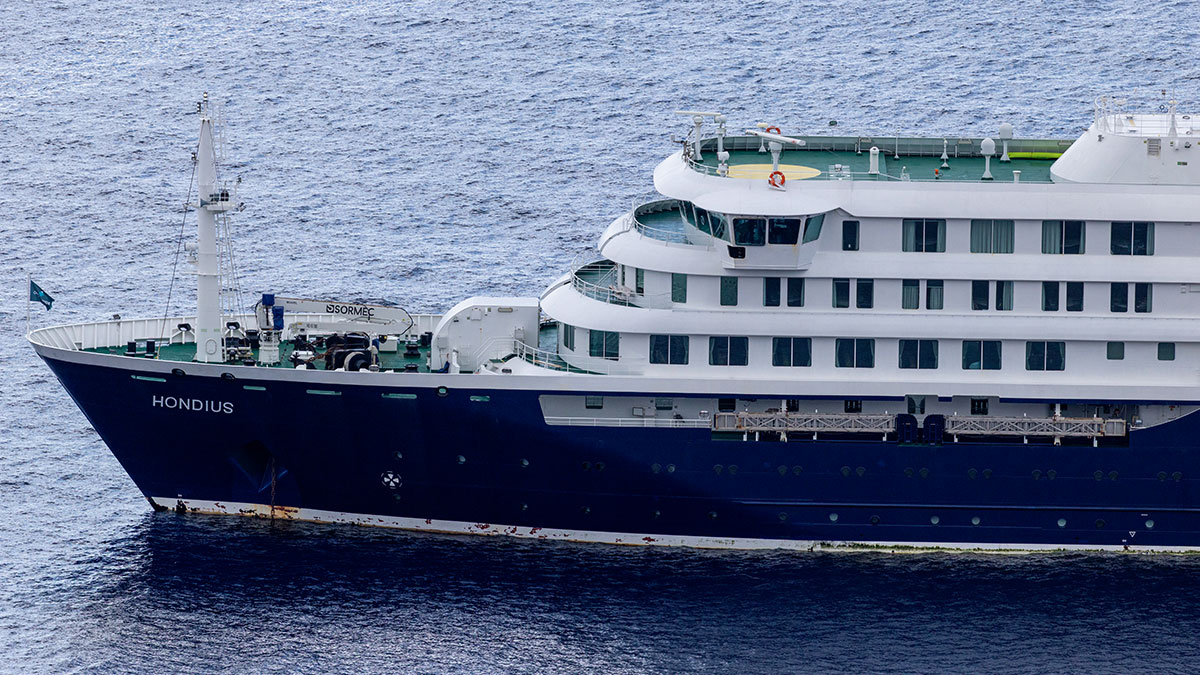
The cruise ship MV Hondius, the scene of one of the most complex health crises recorded on the high seas since the pandemic began, is now approaching the Canary Islands as Spain finalizes the operation to evacuate and repatriate the 147 people still on board. The ship, affected by a hantavirus outbreak that has already claimed three lives and resulted in several confirmed cases, is scheduled to anchor this Sunday off Granadilla de Abona, in Tenerife, under the coordination of the Ministry of Health, the Ministry of the Interior, the Ministry of Defense, the WHO, and European authorities.
The disembarkation will not take place via a conventional docking procedure. According to the plan devised by the government, the ship will remain anchored off the coast, and passengers will be transported in groups by small boats to the mainland to avoid any contact with the port area and the local population. Subsequently, each country will be responsible for repatriating its citizens, while diplomatic negotiations continue with more than twenty countries involved in the operation.
There are 14 Spanish citizens among the passengers. The government has already confirmed that they will be transported from the Canary Islands to Madrid on a medicalized military aircraft and will remain in quarantine in the isolation unit at the Gómez Ulla Central Defense Hospital. The Ministry of Health also maintains that isolation may be made mandatory if necessary to protect public health, in accordance with current health legislation.
The case has sparked significant international tension since several ports refused to allow the MV Hondius to dock during its Atlantic crossing. Ultimately, Spain agreed to allow the ship to dock at the request of the World Health Organization, citing humanitarian reasons and compliance with international maritime law. In recent days, some of the infected patients were evacuated to the Netherlands and other European countries, while the WHO continued to track passengers who had previously disembarked at various ports of call.
Health authorities insist, however, that the risk to the general public remains low. The strain detected is the Andean hantavirus, the only variant known to spread between humans; however, experts note that transmission requires close and prolonged contact and does not follow a pattern comparable to that of highly contagious respiratory viruses.

