








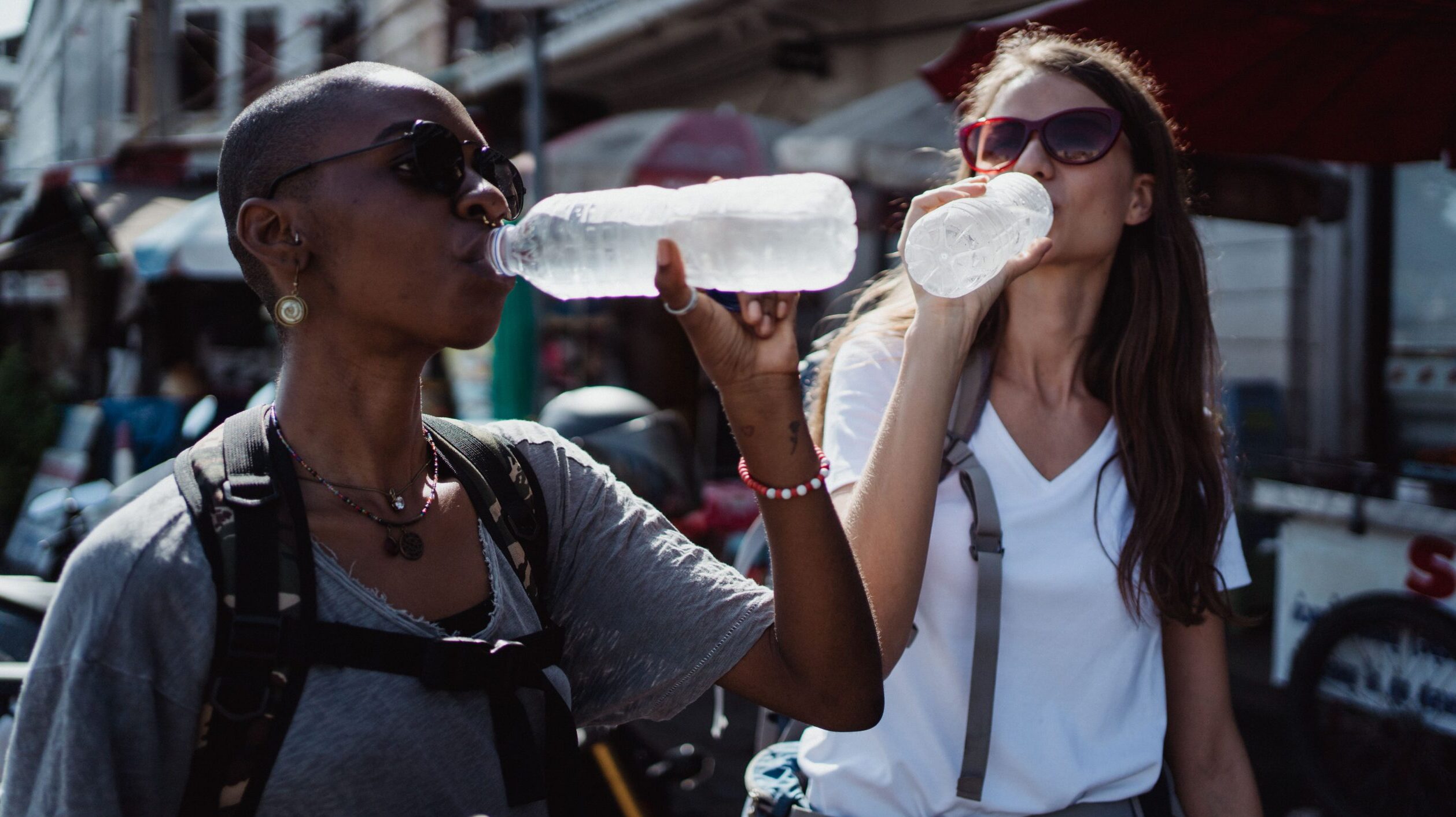
Slowly but surely, climate change is reshaping the habits and customs of our societies. Economic activity, too, is not immune to the demands of global warming. This is even more true in a territory like the Balearic Islands, which are part of the Mediterranean region, an area especially sensitive to the changes the planet is experiencing. The increasingly frequent and prolonged heat waves that affect the islands every summer are impacting the development of many sectors and forcing them to readjust their operations.
One of the sectors where this impact is most evident is tourism, the cornerstone of the economy of the Balearic Islands. Tour operators from Germany and the United Kingdom – the archipelago’s two main source markets – have long been warning of changes in traveler preferences. The rise in average temperatures is the main—and only—factor explaining the redistribution of tourist flows throughout the year: the number of visitors during the low season has been increasing, while summer figures have stabilized at their previous levels. Therefore, the growth is concentrated in the off-season months, although this is also happening in other destinations with milder summer temperatures.
The German Travel Agents Association (DRV) has indicated that last summer marked a turning point regarding the ‘loss of comfort’ reported by customers, which was directly linked to the rise in temperatures in July and August. The association acknowledges that this is an increasingly significant factor in its customers’ travel decisions, and that those who travel during these months are increasingly opting for destinations like the Bavarian lakes or the Baltic Sea. Alltours, for example, has long been promoting the Polish coast as a summer destination.
For its part, other prominent industry voices, such as DER Touristik, have warned that if more is not invested in modern and adequate air conditioning systems to ensure a pleasant stay in hotels and other tourist facilities, customers will end up opting for other alternatives. In fact, the German tour operator has stated that it will remove hotels that do not meet these requirements from its premium catalogs. The German tour operator giant, TUI, reports that complaints about not being able to sleep during tropical nights are on the rise and that destinations like the Scandinavian countries are becoming increasingly attractive as a serious alternative during the summer.
Their counterparts in the United Kingdom are taking a broadly similar line. The UK’s industry trade association, ABTA, points to a growing search for ‘cool’ destinations in response to the Mediterranean becoming increasingly tropical, and industry heavyweights like Jet2Holidays and TUI UK itself confirm this increasingly widespread sentiment among their customers. In this regard, customer satisfaction surveys are leading to a reorganization of national travel catalogs, with an increasingly prominent presence of destinations like the Alps for Germans, and Norway and the Baltic states for the British.
The impact on the tourism sector
A recent study by CaixaBank Research concludes that the heat waves of recent seasons are having a decisive impact on the travel decisions of tourists visiting Spain. In short, this poses a serious obstacle to customer loyalty. “Tourists who had experienced exceptionally high temperatures during their stay were less likely to return the following year. Specifically, when the deviation of the average temperature from its historical reference exceeded 8°C—which we considered an extreme heatwave—the probability of a repeat visit decreased by 13.8 percent. Although these statistics were collected in the post-pandemic seasons, “updating this analysis with data from 2024 and 2025 confirms that this pattern was not an isolated incident, but a trend that persists over time.”
The findings, which focus on tourist destinations along the Mediterranean coast, show that tourists respond to heat waves in two ways. “On the one hand, they are less likely to return to Spain. On the other hand, without changing either the type of primary destination or the time of year they travel, they opt for cooler destinations.” In line with what European tour operators have already pointed out, the study concludes that “adapting the range of services offered will become increasingly crucial to maintain competitiveness.“ Therefore, it recommends “improving thermal comfort in accommodations and public spaces, increasing shaded areas, enhancing energy efficiency, adjusting opening hours, and diversifying indoor and outdoor activities.” as these “are measures that can reduce the impact of heat on the tourist experience and maintain the loyalty of international tourists to Spain.”
Sectors linked to tourism, such as private rental transport and the restaurant industry, are witnessing this shift in tourists’ habits. Tour guides are banned at certain times of the day, according to the Balearic Business Federation of Transport (FEBT), and the same is beginning to happen with outdoor terraces. “For years, we haven’t had anyone sitting on the terraces during peak hours; people are looking for air-conditioned indoor spaces,” explains Juanmi Ferrer, president of the Mallorca Restauración-CAEB association. He also complains about the obstacles public authorities impose on businesses that want to equip their terraces with cooling systems like water misters. “Those who could invest can’t; we’ve even been forced to remove the canopies and put up sunshades; this has been happening for years.”
His counterpart at PIMEM-Restauración, César Amable, echoes this sentiment. “Businesses with a pleasant, well-air-conditioned interior attract more customers; if there’s air conditioning in a hotel or at home, you don’t leave.” Business owners’ strategies are therefore focused on channeling resources toward interior renovations, especially considering the legal obstacles to carrying out these outdoor works.
The impact on workers
The heat waves are also taking a toll on workers’ health, which has led to an increase in sick leave and inspections by the Balearic Institute of Occupational Safety and Health (Ibassal). The Institute has already conducted more than 300 inspection visits as part of this summer’s heat wave campaign. Regarding visits to construction sites, inspectors are actively monitoring exposure to direct sunlight outdoors, the performance of heavy-duty tasks, and strict adherence to prevention protocols. In fact, the Ibassal has distributed 2,200 neck coolers between 2025 and 2026 to protect people working in conditions of sun exposure.
For workers operating outside Palma Airport, clear and continuous communication channels have been established between AENA and ground handling companies to analyze and resolve issues in this area, which have been repeatedly pointed out by the unions. The regional government has requested that the canteen be reopened so that staff can take shelter from the heat during the busiest hours.
“The Regional Government will continue to support companies and workers during these months of high temperatures. We will continue to provide information, advice, and conduct workplace visits. Protecting workers’ health is a priority, and prevention remains the best way to avoid accidents and stay safe,” said Regional Minister of Labor, Catalina Cabrer.
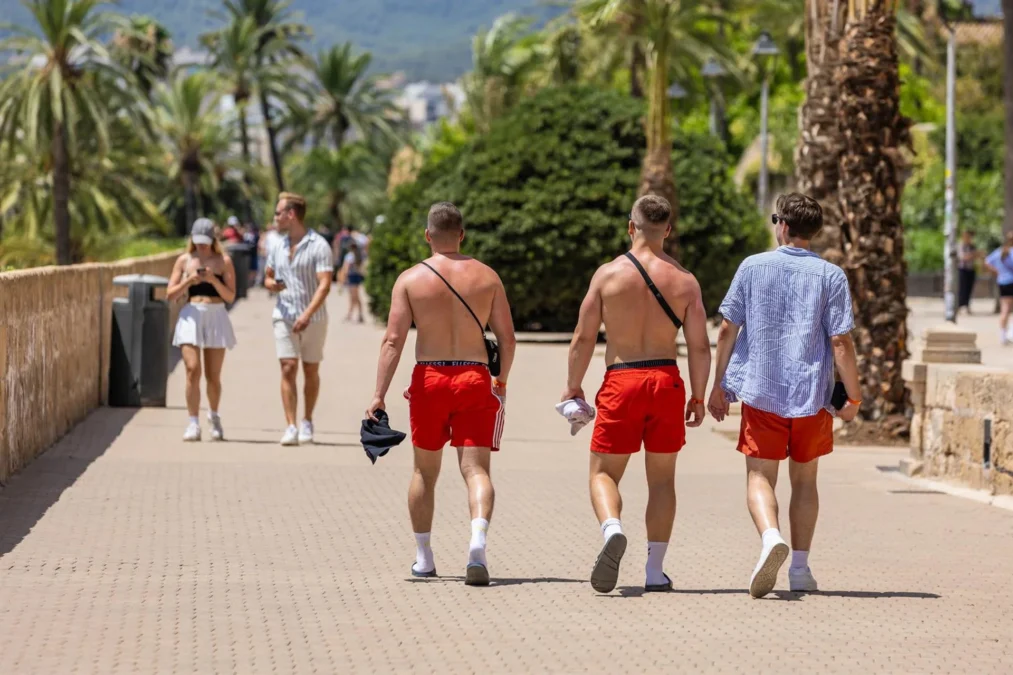
As for tour guides, the industry’s professional association states that the demand for services has been met, although extreme precautions are taken during guided tours. “We, the guides, are self-employed and work under conditions everyone knows: if you don’t work, you don’t get paid. This situation makes it even more important that we take all necessary precautions when we are exposed to the sun or extreme temperatures,” emphasized the association’s president, Bien Rosales.
Meanwhile, the Balearic Association of Companies for the Installation, Maintenance, and Repair of Automatic Doors (Arpima) states that companies have adjusted their opening hours to avoid peak hours. According to its president, Rafel Sotomayor, “we start a little earlier, but there are explicit instructions to stop work immediately whenever a danger to workers is detected.” For his part, Pep Maria Rigo, president of the Balearic Association of Energy, Air Conditioning, and Refrigeration Technicians (Abtecir), notes that, in general, companies are moving up their work schedules and adopting continuous shifts. “Protocols for outdoor work are being implemented due to the extremely high temperatures,” Rigo added.
Though for the primary sector
Another sector especially vulnerable to adverse weather conditions is the primary sector. In the case of livestock farmers, there is a growing number of animal deaths due to high temperatures, especially in the pig sector. In June alone, there were already 6% more deaths than during all of 2025. “Animals that are sick or simply not in the best physical condition have not been able to withstand these high temperatures,” says Toni Mestre, president of the Pig Farmers’ Association, who had to bury up to a dozen sows between January and June, “more than in all of 2026, and the reason is the extreme heat.” In addition, the heat waves “are accompanied by longer days, and this has a direct impact on the animals’ health and reproduction.”
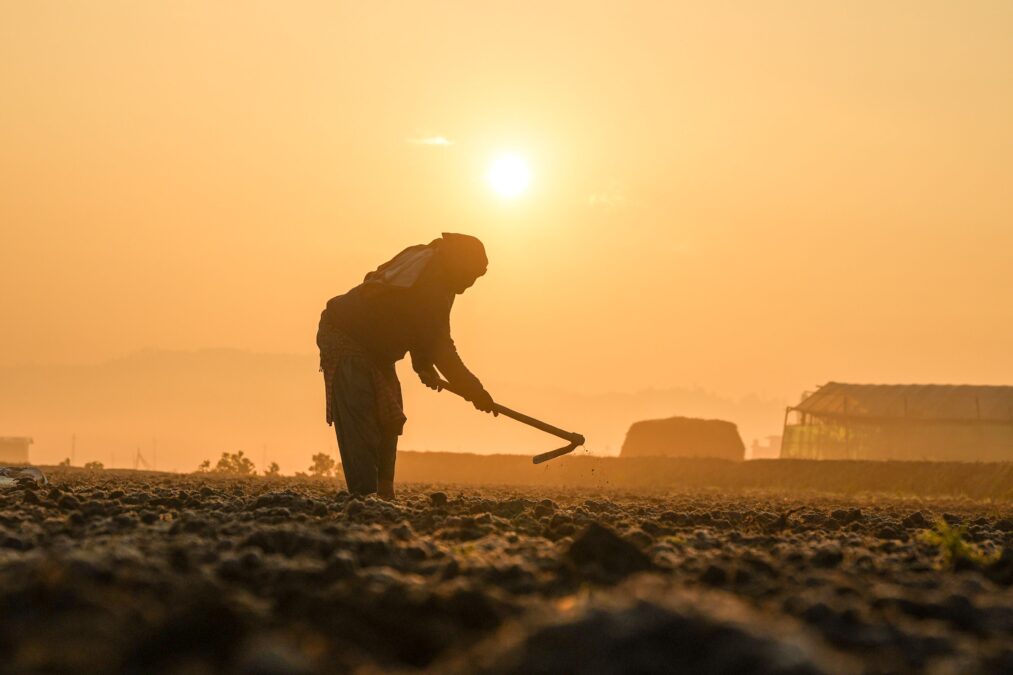
Miquel Coll, president of the Association of Organic Farmers of Mallorca (Apaema), points out that four types of trees are being affected in different ways. “The carob tree and the olive tree are the ones that adapt best, but in the case of the former, black carob pods have already been detected, when this normally happens around September,” he said, adding that this is a sign that “the tree is under stress.” Olive trees are also producing less than usual, as are almond and fig trees.