








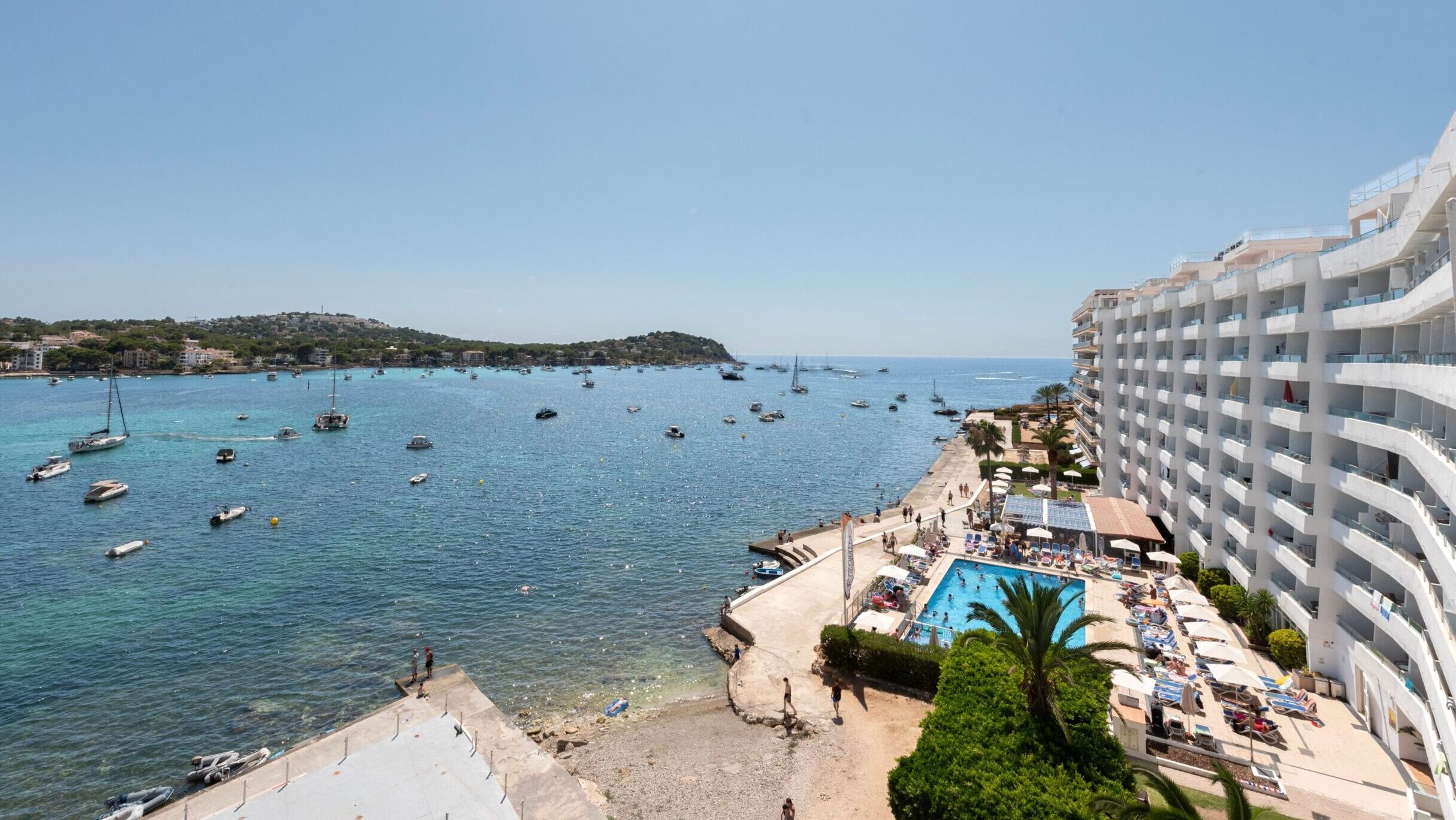
The hotel market in the Balearic Islands has once again been confirmed as one of the leading destinations for international investment in Spain. During the first half of 2026, the archipelago accounted for 27 percent of all hotel investment recorded in the country, consolidating its position as the region that attracted the most capital in a fiscal year that, if the current pace is maintained, could end with a new historic record.
The figures from the Investor Beat report, prepared by Cushman & Wakefield, place hotel investment in Spain at €2.53 billion between January and June, a 36 percent increase over the same period last year. Of this total, almost half was channelled to the Balearic and Canary Islands, which together accounted for 48 percent of the value of all transactions carried out.
The relevance of the Balearic Islands reflects the current boom in Spanish vacation destinations, driven by strong tourist demand and sustained interest from investment funds and hotel operators in assets with appreciation potential and high profitability prospects. This situation continues to clearly attract the interest of international investors.
After a 2025 that already broke records, with more than 4 billion euros invested in hotels in Spain, the consultancy believes that 2026 could surpass this figure thanks to several large-scale transactions that are currently under negotiation. According to Cushman & Wakefield, the strength of the Spanish tourism sector remains the main attraction for investors, who are focusing on both high-end establishments and repositioning and modernization projects.
Mallorca is hosting some of the most important operations of the year.
The importance of the Balearic Islands is also evident in the deals closed during the first half of the year, which include some of the most significant transactions. Among these is Calena Partners’ purchase of three hotels owned by HIP for around 200 million euros. Two of these properties are located on the island of Mallorca: the Barceló Ponent Beach and the Fergus Style Tobago, while the third is the Corallium Beach by Lopesan, in Gran Canaria. In total, the deal includes about 870 rooms.
Additionally, the report also highlights certain changes in market trends. While luxury properties continue to attract considerable interest, many buyers are exploring budget hotels and secondary locations, where there is more room for growth, as well as to generate value through renovations or repositioning. At the same time, major hotel chains have re-emerged as prominent asset buyers, reclaiming an investor role that had lost momentum in recent years, which were characterized by strategies focused more on management than ownership.
In total, during the first six months of the year, 88 hotel transactions were completed in Spain, involving 12,200 rooms; these figures consolidate the sector’s position as one of the main drivers of real estate investment and place the Balearic Islands, once again, at the center of attention for international tourism investment.
Reviews
Luis Arsuaga, Partner in charge of Capital Markets and Co-Director of Cushman & Wakefield Hospitality in Spain: “The strong performance of the tourism sector continues to be the main driver for investors: Spain is consolidating itself as one of the most attractive tourist destinations in the world, which is driving interest in both luxury assets and repositioning projects.”
According to Bruno Hallé, partner and co-director of Cushman & Wakefield Hospitality in Spain, “strong demand from tourists and the quality of assets coming to the market are keeping investor interest at very high levels. In this context, hotel chains are once again positioning themselves as investors interested in acquiring assets, reversing the ‘asset-light’ trend.”


