








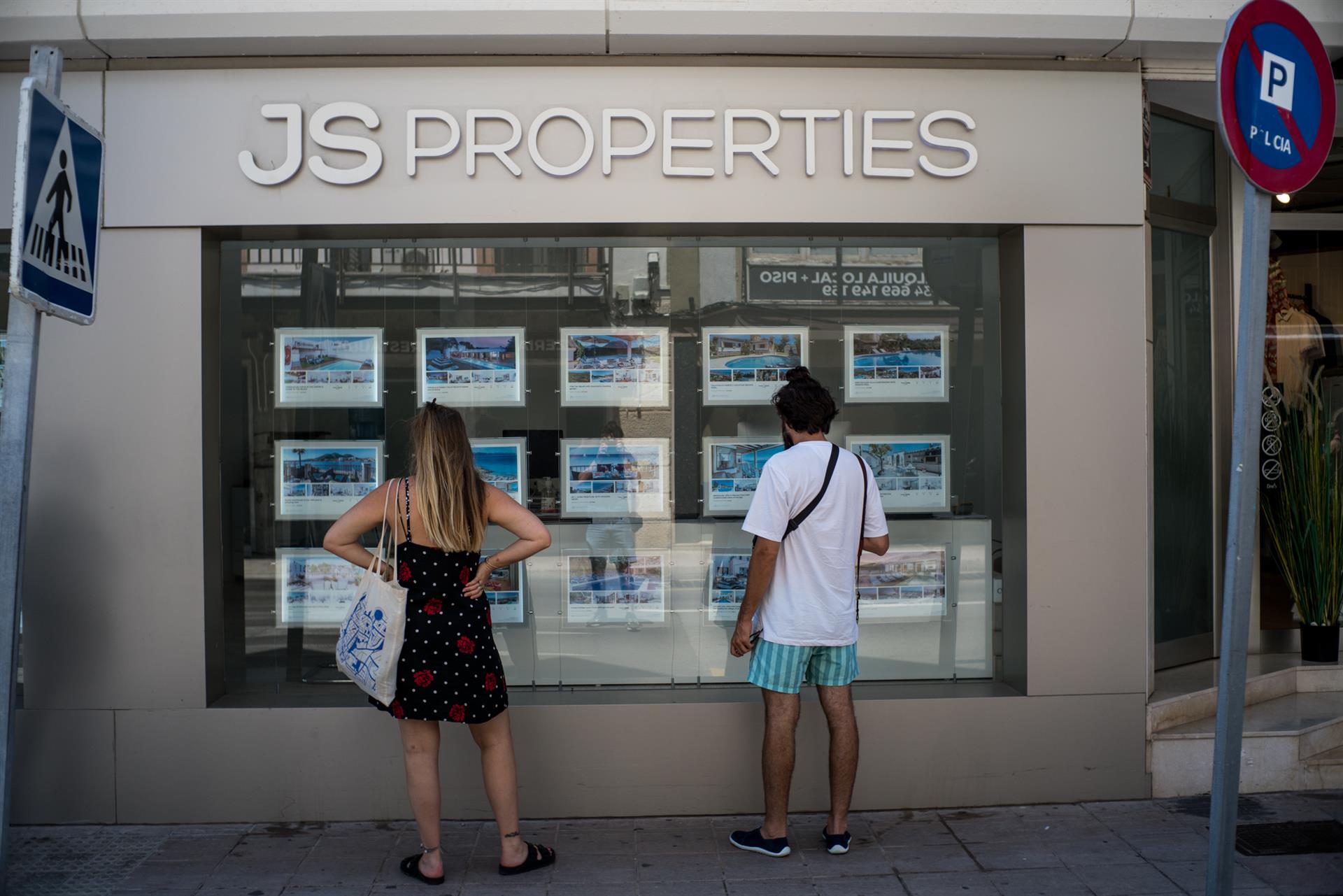
The average housing price in the Balearic Islands stood at around 3,780 euros per square meter during the second quarter, which represents a 14 percent increase compared to the same period in 2025 and a 1.1 percent increase compared to the previous quarter.
This is confirmed by the IMIE statistics on local real estate markets compiled by Tinsa, which highlight that the archipelago is the most expensive region, ahead of Madrid – at almost €3,650 per square meter – and the Basque Country – at around €2,710 per square meter.
The same report also details price trends in provincial capitals; in Palma, prices have risen by 11.2 percent over the last year and 0.7 percent this quarter, reaching just over €3,470 per square meter. In this regard, it is surpassed by cities such as Donosti – over €5,150 per square meter – Madrid – €4,680 per square meter – and Barcelona – €4,460 per square meter.
Another figure provided refers to the average amounts of mortgages taken out, and the Balearic Islands also top the ranking with an average loan of about 325,400 euros. This would mean an average monthly payment of just over 1,400 euros. Based on these figures, it can be deduced that the percentage of income an average household in the Balearic Islands would have to dedicate to mortgage payments in the first year for a property financed at 80% of its value is 56.8% of income in the Balearic Islands and 53.8% in Palma.
Overall, the Balearic Islands would be the 17th province in Spain with the lowest number of home sales registered over the past year relative to its housing stock, with a rate of 22.1 transactions per 1,000 homes, a figure far from the 39.9 registered in Alicante. On the other hand, it ranks tenth in terms of construction activity, with a rate of 5.3 new homes with building permits per 1,000. Guadalajara tops this list, with 11.1 per thousand.
The most pronounced price increase in all of Spain since 2006
In Spain, prices for new and existing homes continued their upward trend during the second quarter of 2026, with a quarterly increase of 3.7 percent, bringing the year-over-year increase to 15.2 percent.
In this regard, the data confirm that it is the “highest year-over-year rate” since the third quarter of 2006 and is 11.8 points higher than the general inflation rate for the economy. Furthermore, the year-over-year growth in prices for new and existing homes has accelerated every quarter without interruption since the fourth quarter of 2024, according to Tinsa data.
Currently, the average price of housing in Spain is close to its historical high in nominal terms (down 0.7 percent); however, if the effect of accumulated inflation is removed to make the two periods comparable, housing prices are 33 percent below the historical high in real terms. “The strong population growth in recent years has coincided with a shortage of residential supply, which continues to push up housing prices,” said Cristina Arias, director of the Research Department at Tinsa by Accumin.
Additionally, Arias explained that demand remains at “solid levels,” despite experiencing a “slowing of growth.” However, the director emphasized that, despite this nascent slowdown in sales, the volume of completed homes “continues to fuel price pressures,” revealing that supply remains “scarce.”
As for the analysis by autonomous community, the majority have seen new and resale housing prices increase by more than 10 percent, with the highest increases recorded in the Valencian Community (20.7 percent), Castile-La Mancha (20.3 percent), the Canary Islands and Cantabria (18.2 percent), and the Region of Murcia (18.1 percent). By province, Tinsa notes that prices continue to show “sharp increases” across the board, with year-over-year variations this quarter ranging from 0.8 percent to 24.8 percent.
In addition, the number of provinces has remained the same, with 10 registering increases of more than 10 percent over the last year, led by Toledo (+24.8 percent), Albacete (+21.1 percent), Gipuzkoa (+20.8 percent), Valencia (20.7%) and Alicante (+20.7%). Finally, the study reveals that 34 of the 52 Spanish provincial capitals have experienced year-over-year growth of more than 10% (compared to 30 in the previous quarter), with the largest increases recorded in Albacete (+23.5%), Soria (+23.4%), Pontevedra (+19.3 %), Santander (+18.1 %) and Santa Cruz de Tenerife (+18.0 %).


