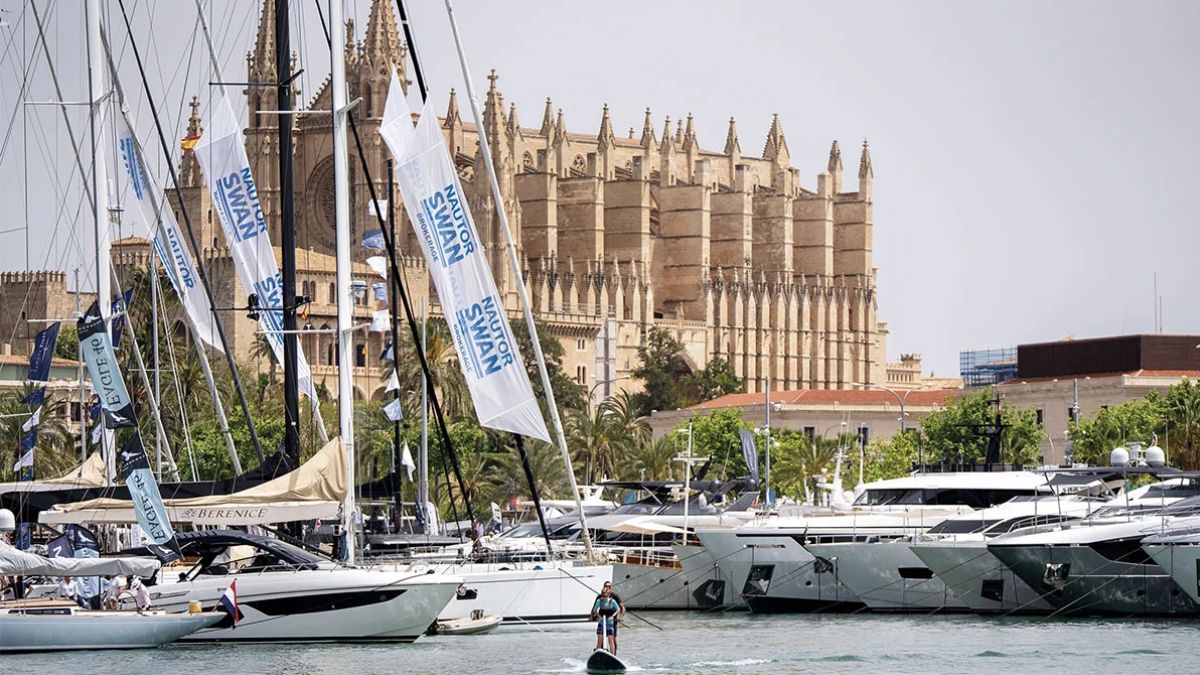
A total of 310 companies from the nautical sector will gather from April 29 to May 2 at Moll Vell in Palma for the latest edition of the Palma International Boat Show.
The show, with over 40 years of history, has become an “essential” platform for establishing the Balearic Islands as a “strategic nautical hub in the Mediterranean,” according to a press release from the Regional Ministry of Business, Self-Employed Workers, and Energy.
The regional minister for the sector, Alejandro Sáenz de San Pedro, presented the upcoming edition of the fair this Friday and emphasized that the event is "a reflection of the sector in Spain" and more specifically "in the Balearic Islands."
In that regard, he explained that the archipelago is not so much focused on boat building, but rather on all subsequent processes, from repair and maintenance, distribution, marinas, services, and the entire auxiliary industry organized around the nautical sector.
For the minister, the fair and the sector “have grown hand in hand,” with a collaboration that has not only turned the event into a gathering that grows “sustainably every year” but also ensures that 90% of participating companies “return.” Furthermore, it has also facilitated “the strengthening of a strategic business sector for the island’s economy.”
This edition of the Palma International Boat Show will feature a "comprehensive and highly diverse" exhibition that has made it an "international benchmark" with 310 exhibitors and 600 boats—275 at sea—making the fair the "largest exhibition of large-length sailboats in Europe."
Furthermore, there will be direct representation from some of the “most prestigious” shipyards on the international scene, which will present their latest developments and innovations in Palma.
It is worth noting that the exhibition is characterized by the innovation of the products on display, featuring a mix of large, small, and medium-sized vessels, brokerage services, technical services, and some of the sector’s most cutting-edge offerings.
Thus, the Palma International Boat Show features three distinct areas. Two of them, Shipyards & Equipment and Superyacht Village, are located at the traditional Moll Vell venue, while the Superyacht New Build Hub will be at Marina Port de Mallorca.
This new location has brought the exhibition closer to Moll Vell and doubled the number of boats on display, as it will feature 20 premium berths and more than twenty exhibitors on land, a fact that establishes it as “a key meeting point for the large sailing yacht new-build industry.” As a new feature, the two venues are connected by sea and land at half-hour intervals, and a single fair ticket grants access to all areas.
The launch event was attended by the president of the Port Authority, Javier Sanz; the director general of Industry and Industrial Parks, Alfons Gómez; the manager of the Balearic Islands Regional Development Agency (ADRBalears), Silvia Delgado; the president of the Balearic Yacht Brokers Association (BYBA), Marta Iglesias; the president of the Balearic Marine Cluster, Guillermo García; the president of the Association of Nautical Companies of the Balearic Islands (Aenib), Jaume Vaquer; and the CEO of IPM Group, Patrick Reynés.
García presented the new edition of the Mediterranean Superyacht Forum, organized by the Balearic Marine Cluster with sponsorship from ADRBalears and in collaboration with The Superyacht Group. The event will take place on April 28 and 29 at the Palma Auditorium, kicking off the agenda for the Palma International Boat Show, which also features a comprehensive program of talks on sustainability and innovation, regatta presentations, and other activities.
With the aim of assessing the contribution of the boat show to the Balearic Islands, the organization will once again collect the necessary data so that the General Directorate of Economy and Statistics can calculate its economic impact.
The first study confirmed that it generated an economic impact of 20.1 million euros and contributed to the deseasonalization and improvement of tourism during a month in the off-season. Last year, the updated study showed a 4.5% increase, resulting in a total economic impact of 21 million euros.