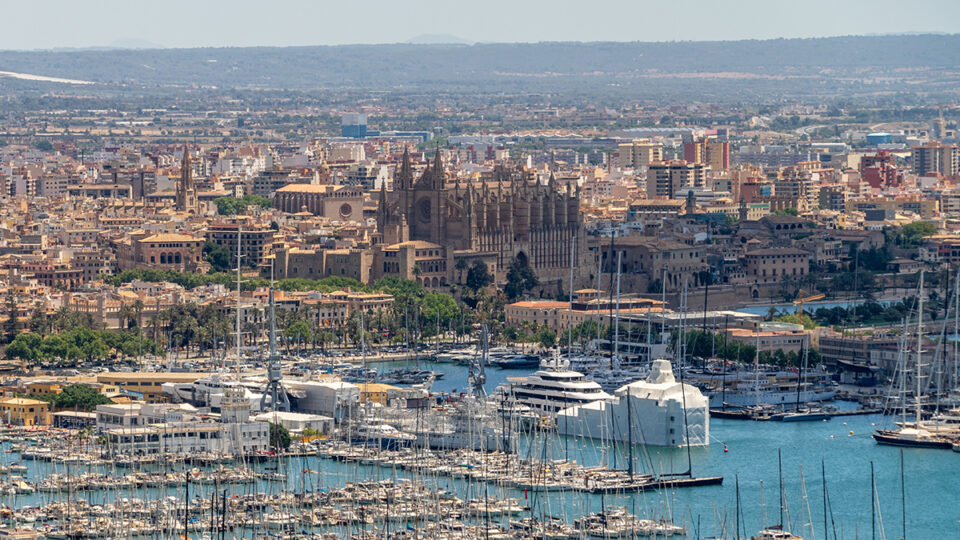








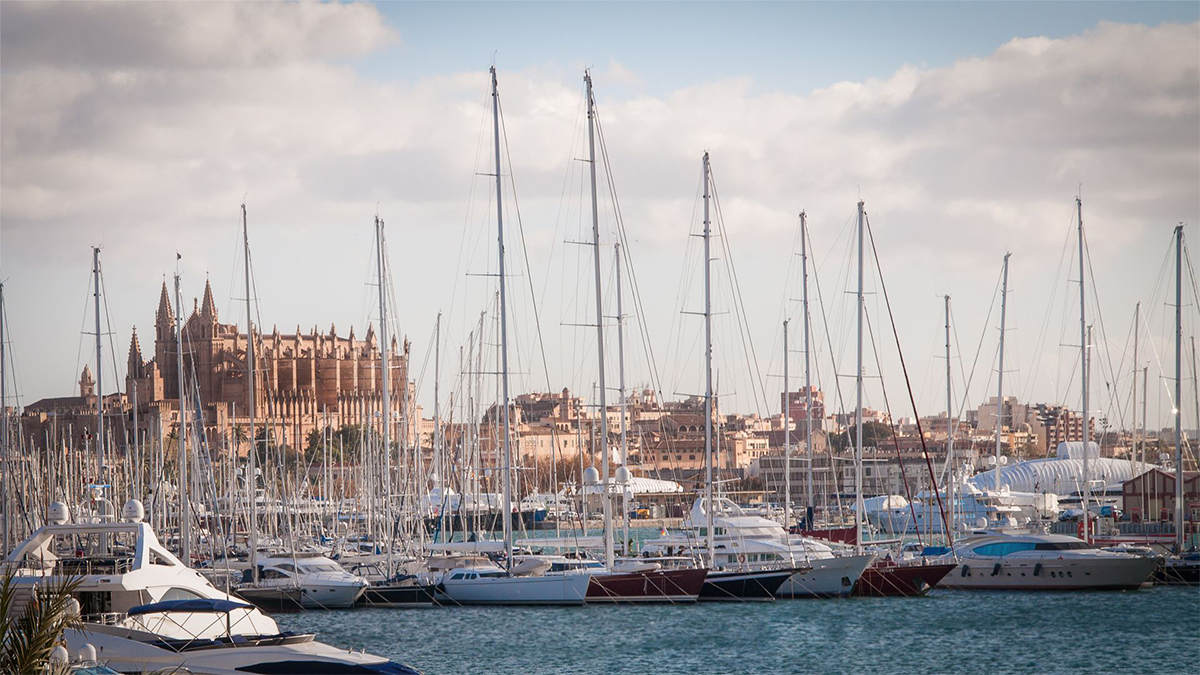
The Mediterranean Sea remains the undisputed epicenter of recreational boating for Spanish and Latin American travelers, accounting for 81.5% of all recorded trips in 2026. Within this strategic landscape, Palma de Mallorca not only maintains its dominance but has also cemented its position as the most-booked port of the year, surpassing top-tier direct competitors such as Marina Alimos–Kalamaki (Greece) and Olbia (Sardinia).
In a year marked by rising energy costs and shifting tourism patterns, the Balearic Islands have demonstrated remarkable resilience as a nearby destination offering high added value, according to the latest end-of-season report prepared by the GlobeSailor agency
While the global average price for bareboat charters has risen 10.1% year-over-year, reaching 4,932 euros per week, Palma de Mallorca offers an average listed rate of 3,677 euros per week (excluding extras).
This positioning places the Balearic capital in a very attractive sweet spot within the Mediterranean arc, notably below destinations such as Gouvia Marina in Corfu (4,998 euros) and maintaining a competitive edge over Adriatic ports such as ACI Marina Split (2,382 euros), thanks to the islands’ air connectivity and port infrastructure.
The catamaran continues to set the course, and customers are demanding better service
An analysis of customer behavior in Spain and Latin America in 2026 reveals a profile of travelers who prioritize space, comfort, and advance planning.
In terms of boat preferences, catamarans continue to lead in demand, accounting for 58.2% of reservations, although their share is down 1.9 percentage points from the previous year. Monohulls account for 34.4%. Among the most popular models are the Lagoon 46, Lagoon 42, and Bali 5.4 in the catamaran category, while the Oceanis 46.1, Sun Odyssey 440, and Oceanis 40.1 are among the most sought-after monohull sailboats.
The sailing calendar shows a marked concentration during the summer. August was the month with the most departures, with 104, followed by July, with 96, and June, with 73. July and August together account for 48.1% of the total. Advance planning remains important: 24.5% of reservations are made before January. May, meanwhile, is gaining ground as a month for booking, rising from 8.1% of reservations in 2025 to 12% in 2026.
Resilience in the Face of a Geopolitically Complex Year
The results of the nautical sector in 2026 take on particular significance when viewed within the macroeconomic context. After a promising start to the year in January and February (+16% in global bookings), the outbreak of conflict in Iran in late February, the blockade of the Strait of Hormuz, and the resulting rise in fuel prices caused a 23% plunge in March.
“Even customers who weren’t directly affected by flight disruptions to Asia and the Indian Ocean chose to postpone their trips due to the uncertainty,” explains Olivier Albahary, director of GlobeSailor.
However, the pleasant spring weather and the shift of long-distance travelers toward closer and safer Mediterranean destinations helped reverse the trend. Although the customer segment from Spain and Latin America closed with a decline of 9.2% compared to 2025, the company managed to boost its overall performance to a final growth rate of 7%, reaffirming the Balearic Islands’ role as an indispensable driver of the European blue economy.