








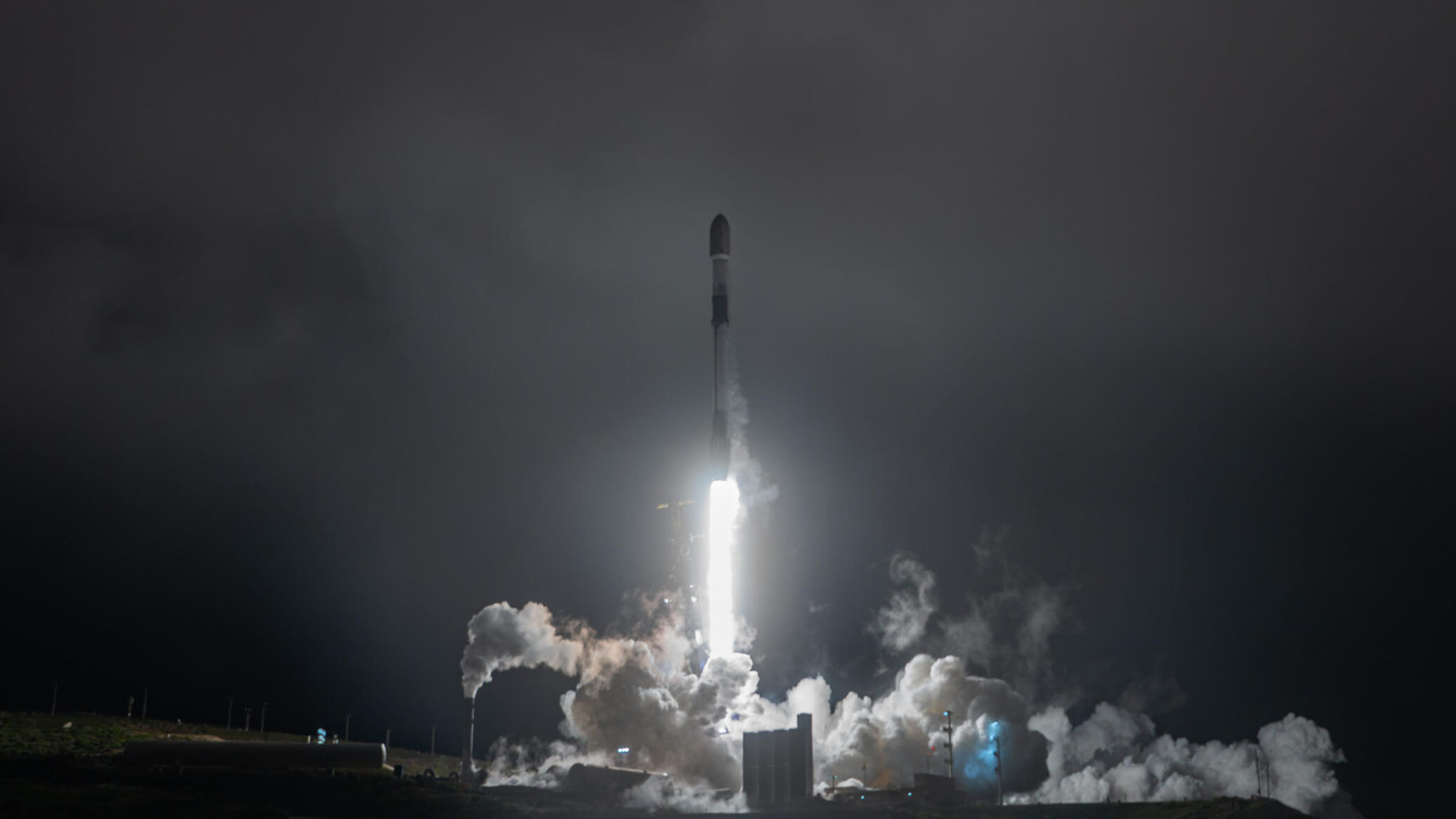
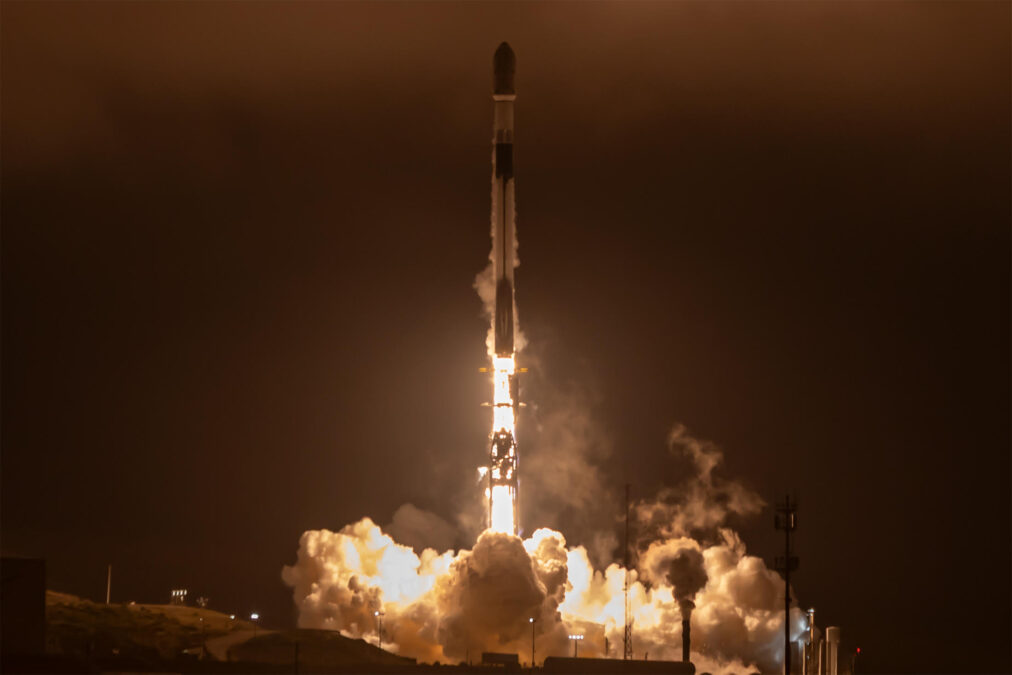
Rafel Jordà has just put his seventh decimeter satellite into orbit. This young man from Mallorca, who is not yet 40, has already participated in 16 launches, the most recent being that of Posidonia last July. This is the first satellite that can truly be considered the property of the Balearic Islands, with funding from the regional government channeled through the Next Generation European funds. Its mission will be to capture images of the islands to monitor the effects of climate change, although the data it collects have many other interesting applications for the Balearic Islands, such as the study and management of tourist flows, to name just one example. This project is also intended to be a pioneering benchmark for R&D investment in the islands. It’s no surprise that Jordà hopes it will serve as a catalyst to propel the archipelago toward technological progress and economic diversification.
What does it take to put a satellite into orbit?
The key element is people. We need people who can design technologies, develop them, and test them. We also need to understand users’ needs – what types of data are required to solve which problems, what kinds of connectivity systems are needed, etc. – and orient the entire project toward meeting those needs. And then, of course, the usual requirements for any project: funding, good management, and a “can-do” attitude.
What will the mission of the Posidonia be?
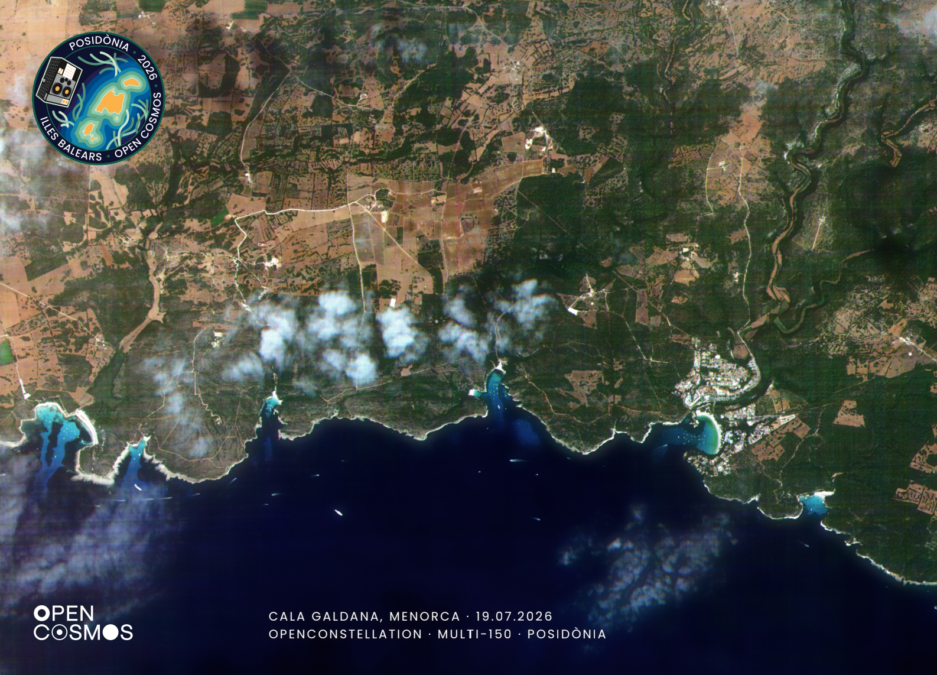
It is an Earth observation satellite; what it does is take photographs with different types of cameras that gather information, pixel by pixel, about what is happening on the ground. With these measurements, we will be able to better understand the effects of climate change, observe coastal erosion, monitor the risk of wildfires, and assess the impact on the landscape during periods of cold air masses (DANA)…
Why the name Posidonia?
The name was chosen by the children of the Balearic Islands. It simply received the most votes from the students—and by a wide margin. We also thought it was a fantastic name.
Who are their clients?
The Balearic Government, large companies seeking data for infrastructure or natural resource management… In the case of Posidonia, it’s a project with a rather unique funding structure, as it involves European funds channeled through the Government, followed by a capital contribution from us amounting to almost one million euros. And we invested in it because I couldn’t stand the idea of other parts of the world starting to have these tools while we didn’t, that we wouldn’t have satellites in space. The total budget exceeds 4 million euros.
How long does it last?
We launch it to an altitude of about 590 kilometers, which means it will naturally decay over the next three or four years. The satellite leaves no space debris behind; it burns up completely upon re-entering the atmosphere, like a shooting star.
Does this project have the potential to make a major breakthrough in the Balearic Islands and boost R&D activities?
This is how it has to be; it has to break new ground. The President of the Balearic Islands, Marga Prohens, has already said that it is a flagship project and a driving force for the Balearic Islands’ technology and innovation ecosystem. Use cases are essential today for island regions like ours. I believe we have a great opportunity for the Balearic Islands to lead the monitoring of the Mediterranean Sea. That’s why the name is so fitting. Monitoring spills, the arrival of small boats… Anything we can see from up there. Posidonia is a first small step in this direction, but now we have to complement it with more technology and more capabilities. The potential to achieve things using technology developed in the Balearic Islands is enormous; we have to seize it so that this project becomes a pillar for this industrial and technological growth.
Furthermore, it should help refine the debate on climate change and tourist flows.
Exactly. If we measure things and see what causes what, we can act and solve the problem. It’s absolutely vital to identify the real responsibilities and figure out how we can all use this information to do what’s best for our islands. We’ve found a one hundred percent proactive hospitality sector that is committed to measuring things using rigorous data. They are the first ones interested in taking care of what we have and in promoting decision-making based on real measurements. If you make decisions that don’t get to the root of the problem—the cause—you won’t solve that problem. There are arguments that, while not malicious, can be based on misunderstandings.
What is the resolution of the Posidonia cameras? Can they identify people on the street?
These images don’t have enough resolution to identify individuals, but you can tell how many cars are at specific points and the volume of cargo in one area versus another. This satellite will take one image per day; if we want a more precise global view, we need to create a network. And this is where, if the Balearic Islands contribute another set of satellites, we can have them work together as part of what is known as the Open Constellation – a network managed by Open Cosmos, in which different countries and companies contribute their own satellites so that everyone has access to more data more frequently. This would be a resounding success, but with minimal investment, we could maximize the results.
What is Open Cosmos’s position in the European space technology industry?
At the European level, we are the leading development company. There are four or five companies of this type in Europe, and we are the leading emerging company in this field, both in Earth observation and in telecommunications.
How many satellites does Open Cosmos have in orbit?
We’ve launched many. We have a total of 16 in orbit. This year we have massively increased satellite production, because we have secured the telecommunications spectrum and now we produce practically one every two days – a frantic pace. As for Earth observation satellites – the Poseidon type – we have 52 in the delivery pipeline. And as for telecommunications satellites – the mouth-to-mouth type – a similar number. This year we will approach the 100-satellite mark.
And how many are there in total in space right now?
The truth is that more and more are being launched. Open Cosmos is one of the European companies with the highest number of planned launches. But there are American companies like SpaceX – owned by Elon Musk – that launch thousands. If I remember correctly, a decade ago – when the more commercial space race began – there were about 2,000 or 3,000 satellites. Now those numbers have multiplied by ten or twelve.
Who regulates space?
Space does not belong to any country, but to everyone. Everything above the Kármán line [the conventional boundary marking the start of outer space], which is located at 100 kilometers, belongs to all of us. What needs to be done, however, is to manage the electromagnetic spectrum used in space. This is because, although satellites occupy space, they eventually re-enter the atmosphere or are placed into a safe orbit; what limits the use of space, however, is radiofrequency interference. There is an organization like the ITU (International Telecommunication Union) that regulates licenses for the transmission of electromagnetic signals for telecommunications purposes. It is headquartered in Geneva, Switzerland. They decide to whom the licenses are granted. Additionally, each country must maintain its own registry of satellites that are operated or launched from its territory.
How is the expansion of Open Cosmos going?
The company has grown enormously. We now have more than 400 employees and four factories in Europe. We have acquired an Argentine company and opened subsidiaries in Japan and the United Arab Emirates… We are beginning to expand outside of Europe. We have been profitable for about five years, so we are on a path of sustainable financial growth. We have structured the company into three divisions: the satellite infrastructure division, which designs, manufactures, and operates satellites; the data and artificial intelligence division, which processes the data from these satellites and transforms it into information—such as agricultural production indices or fire probability indices—and a third division, which is the telecommunications division. We have been granted a global license that takes precedence over those held by SpaceX and Amazon to launch a European constellation of Ka-band satellites, which deliver gigabytes of data per second to the terminal – that is, very high bandwidth.
What long-term economic and business benefits do you see for the Balearic Islands?
I believe this is clearly one of those types of projects that drive the change in the economic model we need in our islands. In the Balearic Islands, our per capita income depends heavily on tourism, but there is additional entrepreneurial potential to be developed. This is not about replacing one sector with another, but about fostering growth in each of these different areas to build a more diverse, robust, and resilient economic model, capable of withstanding any external factors we may face. We want the innovation and technology sector to experience significant growth, which, in turn, will drive the growth of the economy of the entire Balearic Islands.
What was it like to be there at the launch of the Posidonia?
It was really exciting. I always get excited about launches, even though I’ve already been through 16 of them.

