








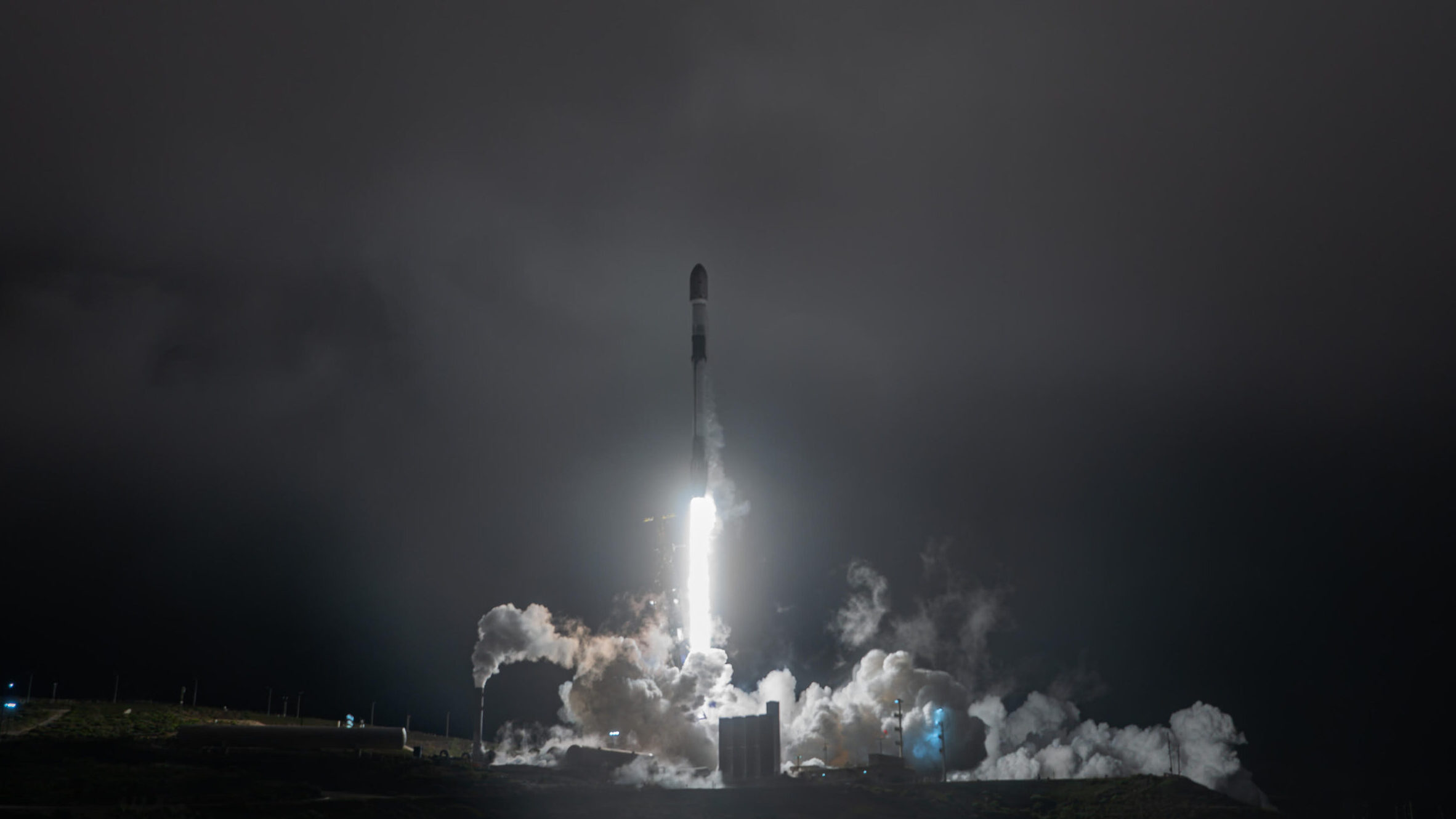
Open Cosmos, the satellite engineering company founded by Rafel Jordà from Mallorca, is entering a new phase of expansion and growth. The company has just secured a €300 million funding round that will allow it to expand its mass satellite manufacturing capacity and accelerate the provision of intelligence and connectivity services through the expansion of its brands and service lines: ConnectedCosmos, OpenConstellation, and DataCosmos.
The agreement confirms the company’s position as one of the fastest-growing satellite manufacturers in Europe. Open Cosmos has now recorded five consecutive years of profitable growth and a high success rate in on-orbit missions for clients such as space agencies, major energy and infrastructure companies, and European governments.
In fact, this very September it was announced that the UK Government has selected Open Cosmos, through the Government Commercial Service (GCS), as an officially certified and verified partner to provide satellite connectivity via its low Earth orbit (LEO) constellation, ConnectedCosmos. This is a key decision for the British government as it looks to build its own space connectivity network.
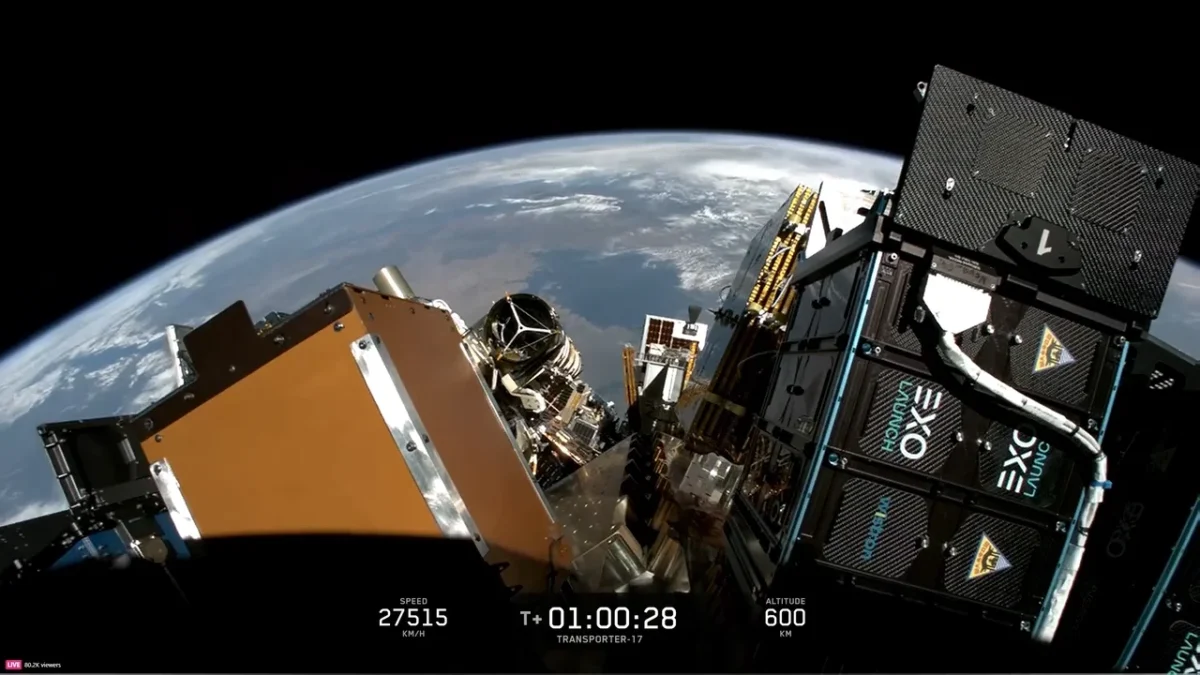
Just this summer, the company made headlines by putting Posidonia into orbit, the first satellite of the Balearic Islands, the result of a project funded by the European Union and organized by the Government of the Balearic Islands, designed to collect strategic data to improve areas such as land management, emergency response, the monitoring of climate change and data-driven decision-making. The company contributed one million euros to the funding. “We invested in it because I couldn’t stand the idea of other parts of the world starting to have these tools while here in the Balearic Islands, we didn’t have any, that we didn’t have a single satellite in space,” Jordà explained in a recent interview with Forbes Baleares.

Open Cosmos currently has the capacity to manufacture one satellite per day at its four factories in Europe. It has recently launched next-generation satellites for its OpenConstellation, a shared satellite constellation aimed at reducing Earth observation data delivery time from 48 hours to just 30 minutes. It will also allow for on-board AI processing and inter-satellite communications for real-time intelligence services.
The company emphasizes that “space is increasingly becoming a crucial element of sovereignty and strategic autonomy for both businesses and governments.” In fact, it states that global venture capital investment in the space sector reached $11.3 billion during the first half of 2026, nearly $1.2 billion more than during all of 2025. This reflects investor confidence. Among these are the European public administrations themselves, at both regional and national levels, who see space infrastructure as a key niche for competitiveness, both now and in the future; the importance of this makes it advisable to develop their own management technology and reduce dependence on other actors, such as China or the US.
The needs of European governments
“Governments increasingly require secure satellite communications, Earth observation, and real-time operational intelligence without the cost or complexity of building their own space infrastructure,” the company states, explaining that over the last decade, Open Cosmos has developed the necessary technology to create an intelligence layer around the Earth “where satellites observe, connect, and collaborate to better understand the world.” In this way, an OpenConstellation satellite could detect a rise in temperature over a forest and use its built-in AI to identify it as a potential fire, before transmitting the information to emergency services.
Jordà, the company’s founder and CEO, points out that “space infrastructure is becoming as crucial as energy, digital networks, and transportation: governments and businesses increasingly require secure communications and operational data transmitted through resilient systems.” However, he notes that the infrastructure alone is not enough, as “the real value lies in the intelligence that transmits what is happening on Earth in real time and the global connectivity needed for its distribution.”
Regarding its recent agreement with the United Kingdom, Jordà stated that “the British government recognizes the need for a modern satellite network under the country’s sovereign control, one that not only provides high-speed connectivity but also offers secure data transfer and layered architectural options to ensure future-readiness.”
The funding round, which raised 300 million euros, was led by European investors. Participants included Lightrock, ETF Partners, the Catalan Institute of Finance (ICF), Entrepreneurs First, and two large international pension funds. Other participants include Convex Group, the National Strategic Security Investment Fund (NSSIF), Phoenix Court (home to LocalGlobe and Latitude), and Claret Capital Partners.
Ashish (Ash) Puri, a partner at Lightrock, highlighted that “at Lightrock, we are delighted to lead the funding round for Open Cosmos and to support this European leader in its next stage of growth within the space economy.” He also highlighted the Mallorca-based company’s “excellent track record in missions, manufacturing capability, and scientific expertise” as key factors supporting his decision. These qualities “position it to become a global leader in this vitally important sector, and we look forward to supporting the company on this journey.”
For his part, Patrick Sheehan, managing partner of ETF Partners, points out that “Europe has the conditions to create world-leading space companies” and that “Open Cosmos is already an exceptional company, and we believe it has the potential to become one of Europe’s leading infrastructure companies.”

