








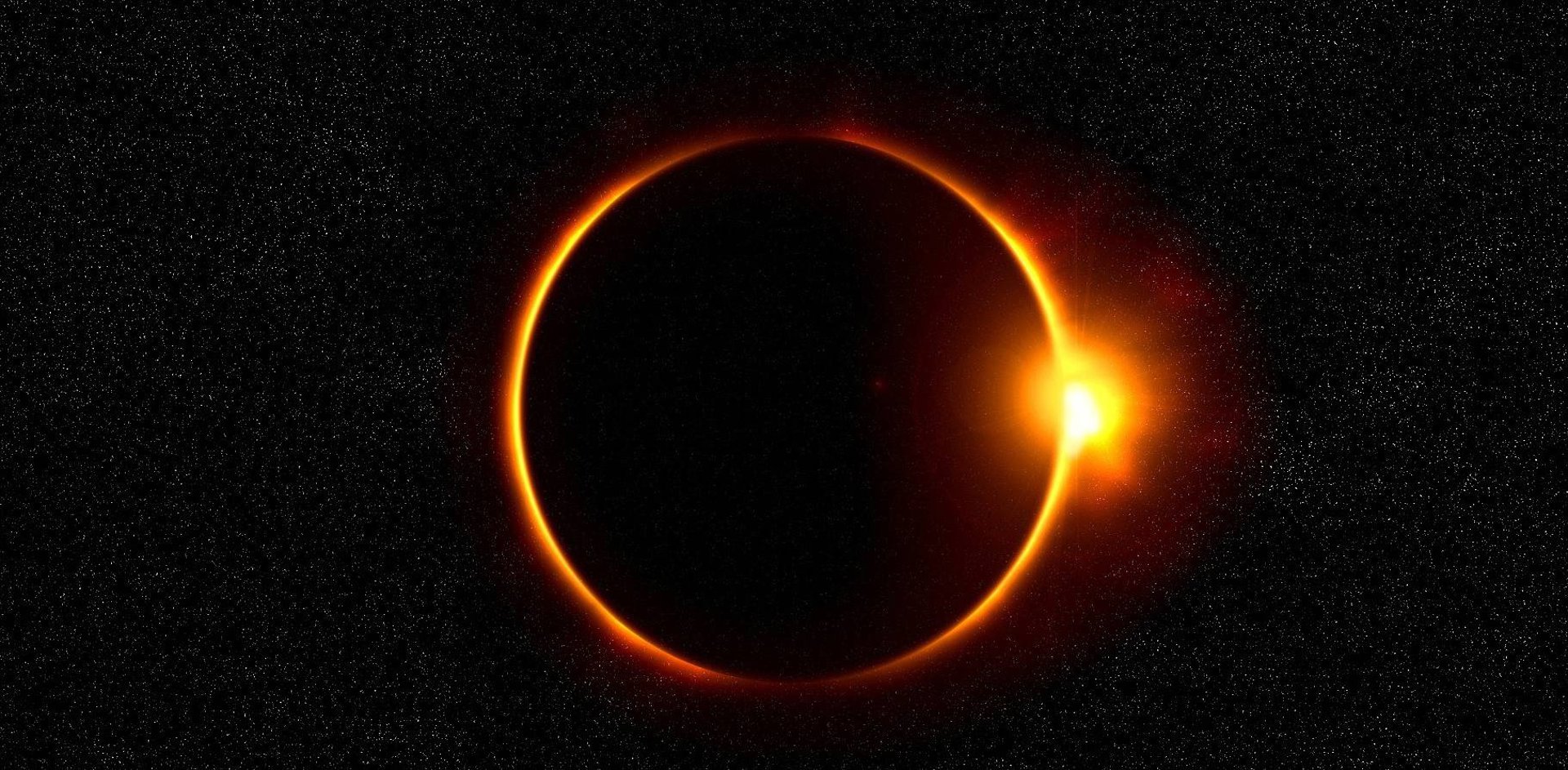
The Government of the Balearic Islands and AstroMallorca launched ‘Horizon Eclipse 2026’ on Tuesday, a new free digital tool that will allow residents and visitors to check if the total solar eclipse of August 12, 2026, will be visible from a specific location and plan for its observation in advance, with the aim of avoiding unnecessary travel and potential risks.
The app, initially developed by AstroMallorca for the internal use of its members and partners and now open to the general public with the support of the regional government, is part of the initiatives promoted by the Commission for the Management of Activities Related to the 2026 Total Solar Eclipse.
During the presentation, Pablo Gárriz, Director General of Emergency and Internal Affairs, emphasized that the tool is not intended to indicate the best place to observe the phenomenon, but rather to provide accurate information so that everyone can make responsible decisions.
“If you have the opportunity to enjoy the phenomenon from home, from a place near your hometown, or from your vacation rental, it will always be a better option than having to get in the car and travel to other parts of the islands,” he said. He added that the goal is “to provide useful and accurate information so that people can make decisions in advance and avoid unnecessary travel,” thus also helping to prevent “unnecessary gatherings of people in locations that are not the most suitable.“
For his part, Tomeu Mas, the astronomy communicator for AstroMallorca, highlighted that the app was developed to answer one of the most common questions from the public: from where will the eclipse be visible. “I think the best place, if you can and have the opportunity, is to experience it from your own home,” he said. Although it was initially conceived for scientific purposes, he explained that it has evolved into a public information tool to help people plan the event. “It’s not the definitive tool; it’s a first step that’s pretty useful for making plans from here,” he noted.
The platform allows you to select a location using the device’s geolocation, by entering coordinates manually, or by choosing a point on a map. With this information, it calculates the key moments of the eclipse, including the various contact phases and the moment of maximum solar occultation, and determines whether the eclipse will be visible from the chosen location, taking into account the actual horizon profile.
It also includes a compass to check, while in the field, the exact direction in which the eclipse will occur and to identify any potential obstacles, as well as a simulation feature that will allow you to check, in the days leading up to the event, where the sun will set from the selected location.
Horizon Eclipse 2026 is available for free in Catalan, Spanish, English, and German and can be accessed from mobile phones, tablets, and computers via the website www.horitzo2026.com.
Currently, there are no travel restrictions.
Regarding the security measures planned for the eclipse, Gárriz explained that the regional government is not currently considering any movement restrictions or road closures, although he noted that any restriction on freedom of movement would require an emergency or a risk to be justified.
“At this stage of the planning process, the regional government does not plan to impose any restrictions or closures,“ he said. However, he noted that his department continues working with other authorities and the tourism sector to identify potential problem areas where large numbers of people may gather, especially in the Serra de Tramuntana.
As explained, various mobility management measures are being considered, which could include specific signage or time restrictions based on public safety requirements. He also announced that in the coming days a map will be presented showing about thirty safe observation zones, where maximum capacity limits could be established, as well as restricted observation areas reserved for the scientific community.
Awareness and outreach campaigns
At the same time, the Eclipse Committee continues to carry out awareness campaigns aimed at both local residents and visitors. In addition to the eye health campaign launched in March, new initiatives have been introduced focusing on maritime safety and the protection of the natural environment, especially in preventing wildfires.
The informational materials, available in five languages, include specific recommendations for water sports and for observing the phenomenon in natural areas. Additionally, the Balearic Islands Tourism Strategy Agency (AETIB) is carrying out information campaigns aimed at the tourism sector and monitoring the eclipse’s international impact to adapt its communication campaigns accordingly.
The Commission also promotes outreach initiatives to bring science closer to the public, including the ‘Shadows of the Eclipse’ photography contest and a series of audiovisual materials designed to explain this astronomical phenomenon in an educational way; it is considered one of the most significant events that will be visible from the Balearic Islands in the coming decades.


