






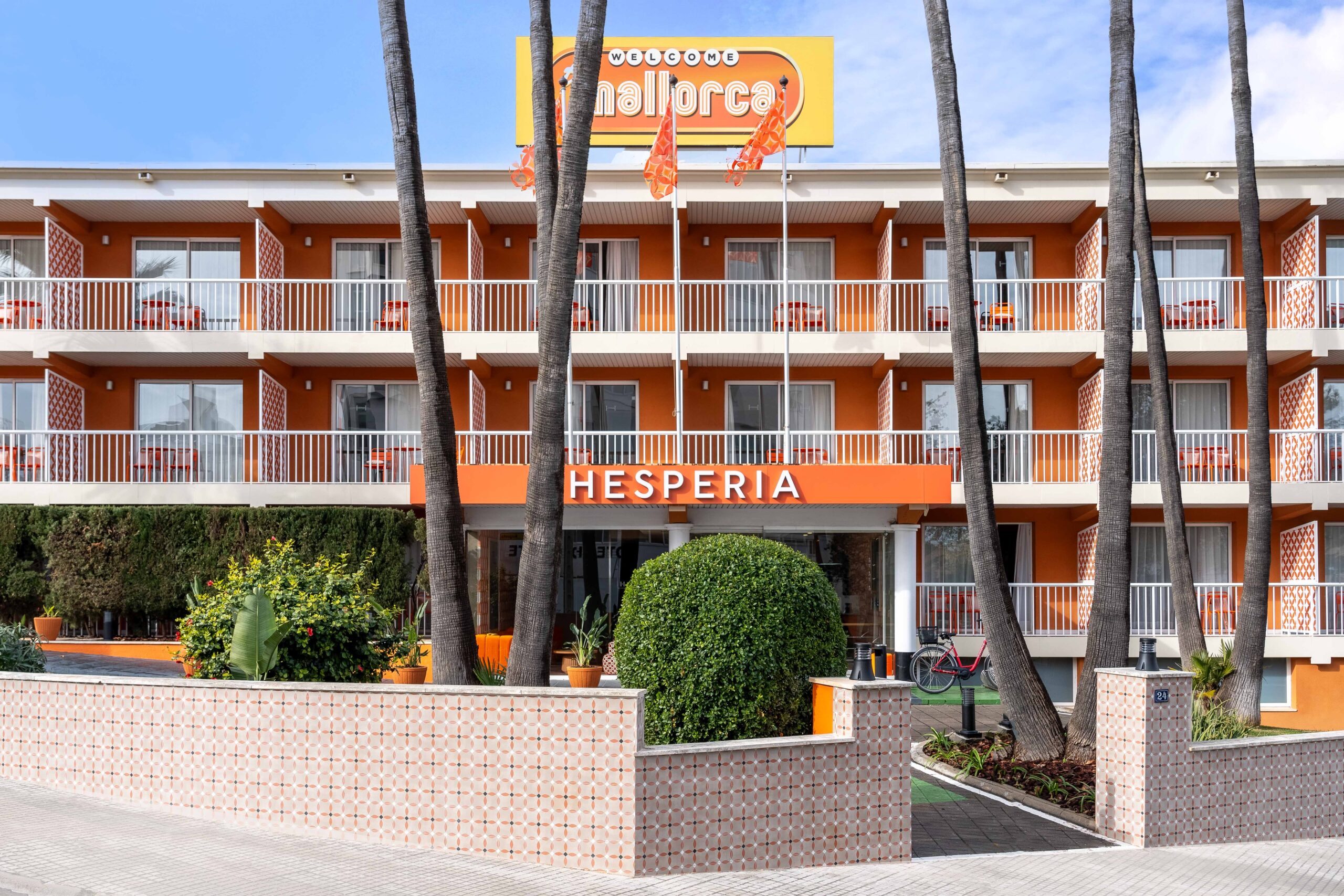
Last Thursday, Hesperia Mallorca celebrated its reopening with the event ‘Nit a la fresca: the true essence of the Mediterranean,‘ an evening set in 1970s Mallorca, marking the beginning of a new chapter for the hotel in Palma. The event brought together representatives from the tourism, business, cultural, and institutional sectors of the Balearic Islands, as well as executives from Hesperia World. The celebration combined aesthetic references from that era with contemporary elements and featured live musical performances, vinyl DJ sets, a culinary offering based on local products, and acrobatic shows by the pool.
During the presentation, the company unveiled the hotel’s new image and the “Ses Trobades” project, a regular program of cultural, artistic, gastronomic, and musical activities that will take place throughout the year. The initiative aims to transform the hotel into a meeting space open to both its guests and the Mallorcan community.
Hesperia World’s General Manager, Gonzalo Alcaraz, noted that the reopening is part of a strategy aimed at strengthening the hotel’s connection with the local community and expanding its role beyond traditional hotel operations. As he explained, the goal is to integrate the hotel’s offerings with the destination’s culture and identity. “With the reopening of Hesperia Mallorca, we are taking another step forward in our commitment to the Hesperiencial philosophy: a way of understanding hospitality that goes beyond simply offering accommodation, to connect authentically with the destination. The hotel has been designed as a living space where every detail connects with the local culture and the authentic Mediterranean spirit,” he stated.
In this regard, the launch of ‘Ses Trobades’ is part of this line of action and involves the regular organization of events linked to the island’s art, culture, gastronomy, and music. Tommy Ferragut, Director General of Tourism for the Council of Mallorca, also spoke at the event, highlighting the importance of initiatives like this to promote a model of tourism more closely linked to local identity. Ferragut stated that projects like ‘Ses Trobades’ help strengthen the relationship between the tourism sector and the local community by promoting local culture and products.
The island’s representative stated that this is “a project that exemplifies how culture and local products can serve as a bridge between tourism and the local community.” Ferragut emphasized that initiatives like this “demonstrate the tourism sector’s involvement and commitment to Mallorca and show that building a more authentic and sustainable destination does not depend solely on public initiative, but also on public-private collaboration and the joint efforts of all involved parties.”
Also attending the reopening were José Antonio Castro, President of Hesperia World; Oliver Benanal, the company’s Commercial Director; and Iván Castro, Director of the Hesperia Mallorca, along with other representatives from the tourism, business, and cultural sectors. The musical entertainment featured the group Los Brindis, who performed songs inspired by the Spanish repertoire of the 1960s and 70s, while DJ Miquel Font provided the music for the second part of the evening.
The culinary offering, created by Chef Mikhail Dunaev, focused on locally sourced ingredients and recipes inspired by Mediterranean and Mallorcan cuisine. The menu included tapas, food stations, local wines, Muntaner vermouth, and a variety of sweet and savory dishes.
With this reopening, Hesperia Mallorca begins a new chapter in which it will combine its hotel operations with a program of cultural and social events, through initiatives designed to encourage participation from the local community and promote activities linked to the region.
Hesperia is one of the most established hotel brands in the Spanish market and is part of Grupo Inversor Hesperia (GIHSA). It currently operates a network of 14 properties, including hotels and apartments, across ten domestic destinations, with a total of more than 1,500 rooms.
The company focuses its activities primarily on the mid-range urban and vacation segment, with three- and four-star hotels located in strategic destinations. Its offering combines traditional hotel management with a growing emphasis on experiences linked to the local environment, a trend that is becoming increasingly significant within the tourism industry. In recent years, the brand has focused part of its strategy on creating spaces capable of meeting the needs of both leisure travelers and the corporate segment, emphasizing aspects such as location, the functionality of its services, and its connection to the destination.