








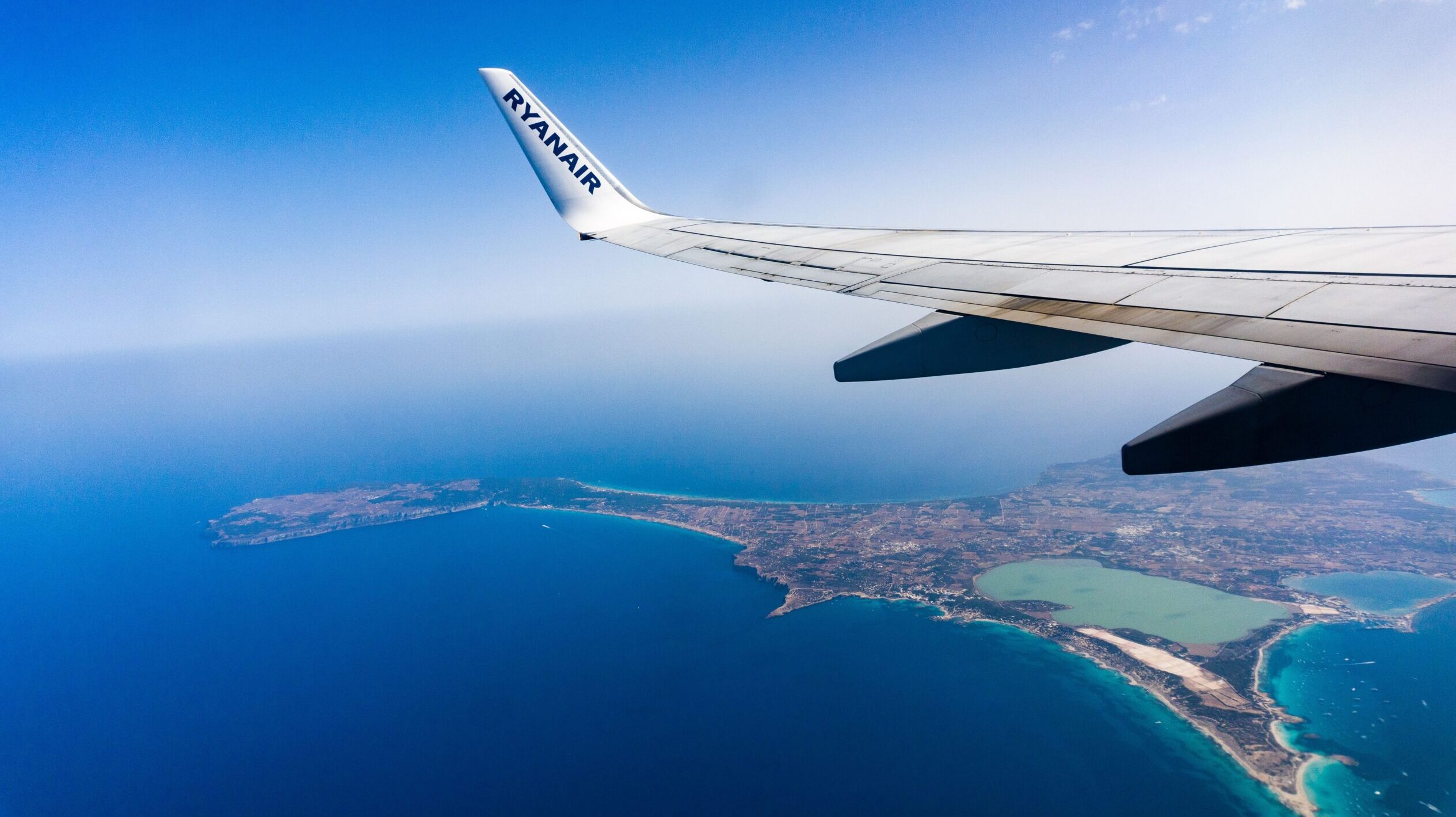
Palma Airport is entering the decisive stretch of the summer with 19.5 million passengers and the debate over overcrowding on the horizon. Son Sant Joan recorded 4.6 million passengers in July, 2.2% more than a year ago. This growth confirms the strength of tourism demand in Mallorca, although it also intensifies the debate over the limits of a model that is once again straining infrastructure and services. Meanwhile, Ibiza Airport neared 1.5 million passengers (up 3%) and is on track to surpass last year’s passenger record. Through July 2026, it has already surpassed 5.2 million, a 3.1% increase compared to 2025.
This marks another milestone in air traffic, confirming the Balearic Islands’ status as one of the Mediterranean’s leading tourist destinations. According to data from Aena, this growth has been driven by both the domestic market and, in particular, international connectivity. Domestic flights through Palma carried 925,900 passengers, 2.8% more than a year earlier, while international traffic reached 3.7 million travelers, an increase of 2.1%. The rise in passenger numbers has also been accompanied by increased airport activity. In July, Son Sant Joan handled 32,198 flight operations—including landings and takeoffs—a 2.4% increase compared to July 2025.
The year-to-date figures reinforce this trend. Between January and July, Palma Airport handled 19.5 million passengers, a 2.2% increase over the same period last year. During those seven months, 143,017 flight operations were also recorded, a 1.6% increase.
The data from Palma comes in the middle of the peak season and points to moderate but sustained growth. The Balearic Islands’ tourism sector is thus facing a summer that, rather than being marked by a dramatic surge in visitor numbers, is characterized by the consolidation of demand levels that are already extraordinarily high.
In mid-July, hotel occupancy in Palma was around 83%, with particularly positive expectations for July and August, when international tourist arrivals peak. The trend in air traffic is particularly significant for the Balearic Islands because the airport serves as one of the main barometers of the islands’ tourism economy. More flights and more passengers mean increased activity for hotels, restaurants, transportation, retail, and leisure, but they also place greater strain on infrastructure that operates near its limits during the summer months.
Beyond its operational capacity
In fact, even before the summer, Palma was already among the Spanish airports closest to reaching their operational capacity, with an estimated utilization rate of 99.4% for the period analyzed. Furthermore, Son Sant Joan will exceed its capacity on 18 days this August—that is, for more than half the month—according to a report by Eurocontrol. The Balearic capital’s airport is the only Spanish airport on this list—compiled by the intergovernmental organization responsible for managing air traffic in Europe—of those where imbalances between demand and capacity are expected throughout both August and September.
Between August 3 and 31, Son Sant Joan Airport will exceed its capacity 18 times. On ten of those occasions, it will exceed capacity for more than two consecutive hours, and on the remaining eight, for just two hours. In September, between the 1st and the 27th, Palma Airport’s capacity will be exceeded on at least eight occasions—three for more than two consecutive hours and five for two hours. The list—though some airports have even worse forecasts—also includes the airports in Athens, Corfu, Heraklion, Kos, and Chania in Greece; Istanbul’s Sabiha Gökçen Airport (Turkey); and Gatwick in London.
Son Sant Joan’s growth is also taking place at a particularly sensitive time for the Balearic Islands. Record-breaking tourism activity coexists with an increasingly intense debate over the islands’ capacity to absorb further increases in visitor numbers. In 2025, the Balearic Islands received more than 19 million visitors, compared to a resident population of around 1.2 million. The magnitude of this disparity largely explains why the debate has shifted from focusing solely on how many tourists arrive to centering on how much tourism the region can sustain.
Social tension has become particularly evident this month. On August 8, around 2,500 people protested in Sóller against mass tourism and a growth model based on high visitor numbers. The protests brought to light issues such as pressure on public services, housing, traffic, and environmental conservation.
The Balearic Islands government itself has acknowledged that the islands have reached the limit of their growth capacity and has argued for the need to combat unregulated tourism and manage the sector’s development differently.
The July figures thus highlight one of the major contradictions of the Balearic economy: tourism continues to grow and generate economic activity, but the model that enables this growth is facing increasing social and territorial pressure.