








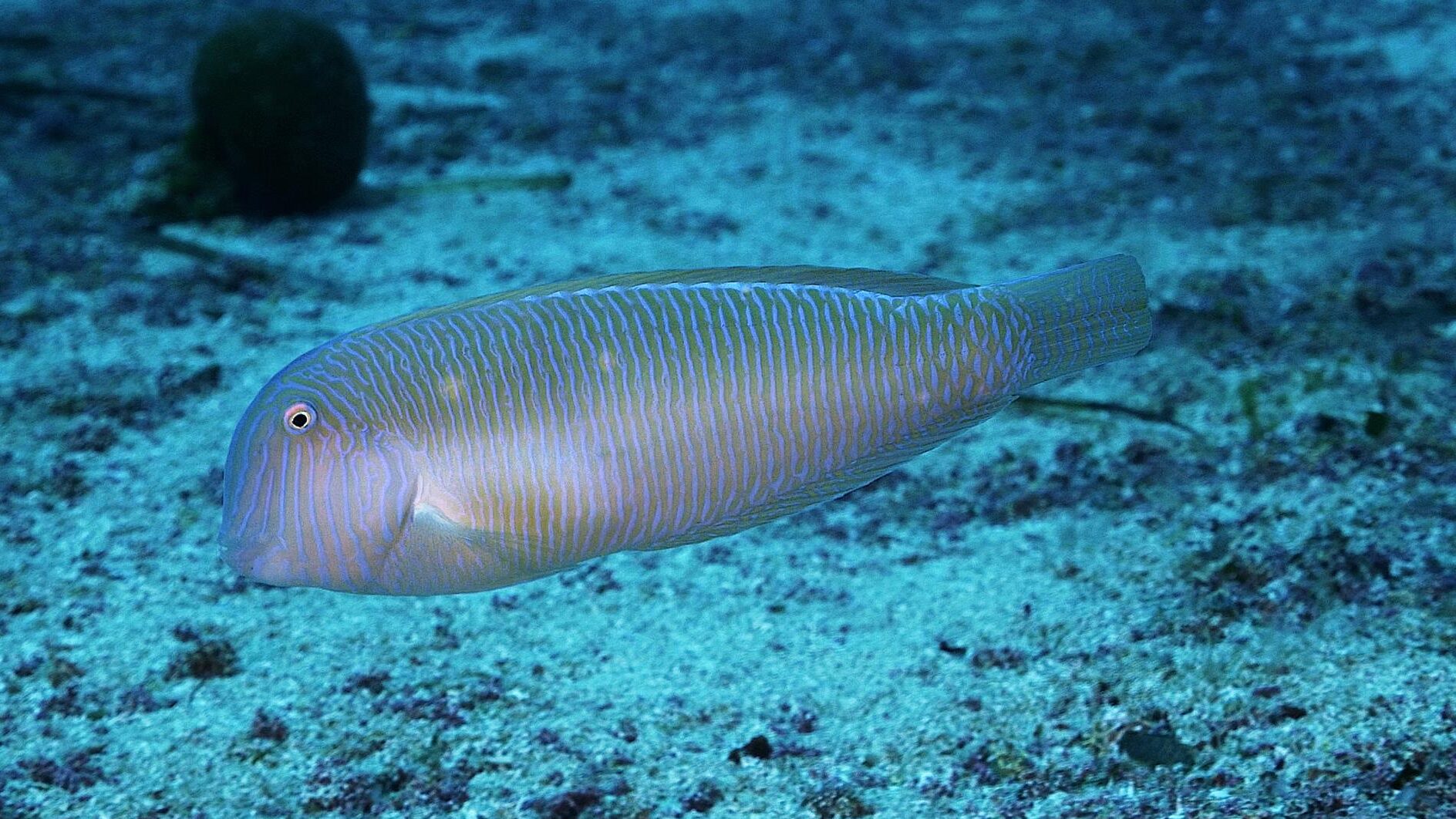
The sea bream fishing season reopens this Tuesday, September 1, after a five-month ban and with the stock fully recovered. In Mallorca, the specimens analyzed by the regional government have gone from weighing an average of 26 grams in 1999 to 70 grams in 2025 – almost three times as much.
The fishing season will remain open until March 31, 2027, and will begin simultaneously along the entire coast of the Balearic Islands, including the marine reserves. The only exception will be the Malgrats High Protection Zone, where fishing for red porgy will not be allowed to begin until October 1.
The evolution of this species has become one of the clearest examples of the results that can be achieved through sustainable fisheries management over time, based on scientific criteria. The monitoring carried out over more than three decades has allowed us to assess the impact of the measures adopted and adjust fishing pressure in line with population trends. “Today we have larger fish and a recovered population,” said Joan Simonet, the regional minister of Agriculture, Fisheries and Environment. The goal now, he added, is to maintain this situation and ensure that future generations can continue to enjoy a fishing tradition deeply rooted in the Balearic Islands.
From Overfishing to Recovery
The turning point came in the late 1990s. Monitoring of grouper stocks, initiated by the Directorate General of Fisheries in 1994, led in 1999 to the identification of an overfished situation, reflected in a gradual decline in the average size of the fish.
The solution came in 2000 with the introduction of a fishing ban by the Regional Government and the Ministry of Agriculture. Since then, fishing has been closed between April 1 and August 31, coinciding with the species’ breeding season. More than two decades later, indicators show a positive trend. Since the closure was introduced, the average size of the wrasses has gradually recovered on all islands and, since 2013, has remained above the level recorded in 1994.
The most recent data allows us to measure the extent of the change. In 2025, the average size of specimens analyzed directly by the regional government of Mallorca was 168 millimeters, compared to the 124 millimeters recorded in 1999. This represents a 35 percent increase. The difference is even more significant when considered in terms of weight: the average weight per individual increased from 26 grams in 1999 to 70 grams in 2025.
The justification for this measure is simple: to prohibit fishing during the breeding season in order to promote the renewal of the population. Studies conducted by the Marine and Aquaculture Research Laboratory (Limia) and the Mediterranean Institute for Advanced Studies (Imedea, CSIC-UIB) have confirmed that the closed season has contributed both to restoring population levels and to increasing the average size of the fish.
Current data suggest that the population is near its maximum possible level in an area subject to fishing activity. Fish about 180 millimeters long are found mainly in areas where fishing is prohibited. The Directorate General of Fisheries expects this season’s results to be similar to those of 2025.
50 snails per person per day
The reopening of the fishing season comes with clear restrictions. The maximum allowed catch is 50 sea bream per person per day. The regional government will also step up inspections in the main fishing areas to coincide with the start of the season, with the aim of preventing illegal fishing and detecting any potential violations.
Violating the ban is considered a serious offense and can result in a minimum fine of 151 euros per fish, an amount that can increase considerably depending on the circumstances. Fishermen’s responsibility is therefore a key factor in maintaining the progress that has been made. As Simonet has pointed out, complying with both catch limits and closed seasons is essential to ensuring the continued viability of this fishery.
The red porgy is not just a species that has recovered thanks to fishery management. It also plays a prominent role in recreational fishing in the Balearic Islands. Since 2019, about 6,600 catch reports have been recorded in the marine reserves. In terms of number of specimens, the red grouper is the species most often caught by recreational anglers in the archipelago’s fishing fleet. In terms of weight, it accounts for 15.7 percent of the annual catch.
In marine reserves, fishermen are required to record their catches and report them to the Government’s Marine Resources Service, preferably through the ‘Diary de Pesca’ mobile app. In state-managed marine reserves, catches are recorded using ‘PescaREC’, the Ministry’s app.
The trend in the sea bream population leads to a clear conclusion: a traditional activity can be sustained when pressure on the resource is accompanied by limits, closed seasons, and scientific monitoring. In 1999, the data indicated an overfished situation. More than 25 years later, the size and weight of the fish show a substantial recovery.
Now the challenge is different. The question is no longer how to restore an exhausted population, but how to maintain it when the results are favorable and the pressure on the resource continues. The reopening of fishing on September 1 marks the resumption of an activity with a strong social and cultural dimension in the Balearic Islands. But it also puts to the test the model that has allowed the species’ recovery: catch limits, a seasonal closure, and continuous scientific monitoring.


