






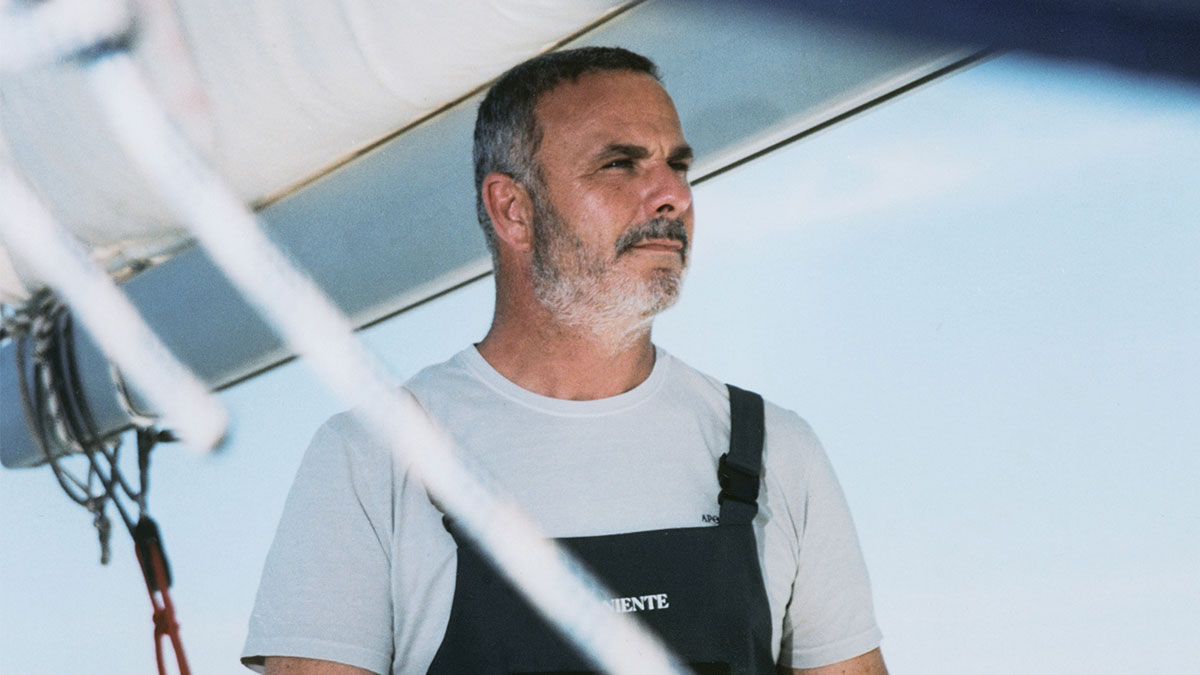
Ángel León is a restless soul and a sailor through and through who found his calling in the water. From his stronghold at Aponiente, he tells us about the visceral battle to revive the San José marshes and his obsession with sea rice—a journey to the limit guided by observation and the whims of nature. The genius from Cádiz, who shuns grand speeches to embrace the silence of the ocean, also recounts his humanitarian crusade in South Africa and confesses to an almost mad need to sail solo in order to quiet his mind and devote himself, with absolute devotion, to life.
Let’s start by talking about the recent transformation of Aponiente, where several hectares of marshland have been restored.
Aponiente is located in a tidal mill. We obtained the plans from the miller who lived here two centuries ago, and we’ve spent three and a half years restoring the salt marsh to its original state. We’ve reclaimed 20 hectares of marine habitat where we’ve stocked sea bream, sea bass, shrimp, prawns, and blue crabs. We use only one hectare for our own consumption; the rest is open to the public. The biggest challenge has been striking a balance between what we thought we could control in nature and how uncontrollable it actually is. When it rains, the salinity drops and the fish die; that’s why we generate a current using electric tidal mills. Also, it takes our fish almost three and a half years to reach one kilo because they’re fed a natural diet. We’ve also learned from the birds: we used to stock the ponds from scratch, but 5,000 seagulls came and took everything, so we started stocking them with just 200 grams. You learn balance through observation—and the hard way.
Why was it so important for the customer to already be experiencing the marsh, and what stage is the “sea cereal” project currently in?
There’s no longer any need for the chef to tell war stories. Now, diners sit in the middle of a marsh where sailors, biologists, fishermen, chefs, and the dining room staff all mingle. Everything you eat is alive and dies for you, in an experience that brings you closer to nature—one where words fade away. Your experience places you among a group of crazy people who believe that the sea holds all the protein of the future. As for “sea cereal”—derived from Zostera marina—in September I’m going to plant my first crop of this cereal ever. We’re going to plant exactly one hectare to quantify how much is harvested in a year and see if it’s a viable product for large-scale cultivation.
Your work took you to South Africa with Amura. What responsibility does haute cuisine have toward vulnerable communities?
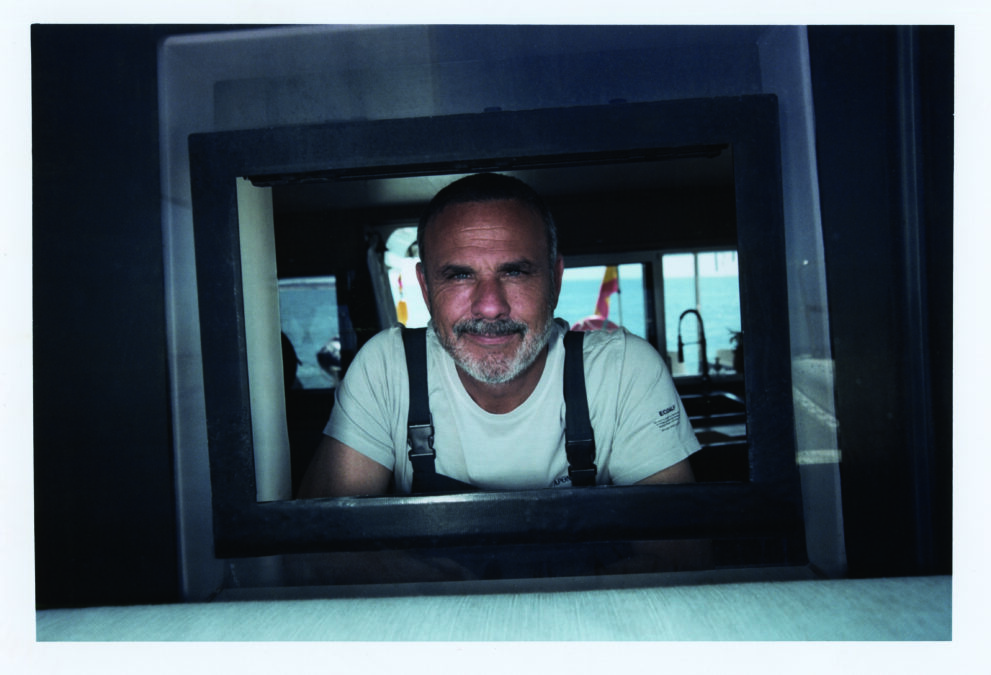
I’d been offered some unusual locations to open my restaurant (Japan, Berlin, London, Dubai…), but I never thought about opening anywhere outside of Aponiente. With South Africa, it was love at first sight. I have a very special connection with Africa because Cádiz is just 10 kilometers from Morocco; it’s a place where I don’t feel like a stranger—the trees, the light, and the way of life are the same. South Africa was a new ocean that resembled my own Atlantic. Amura is a beautiful project. You arrive in a part of the world where people are thirsty for knowledge and have real needs. When you’re in need, you pay much closer attention to what the chef tells you because you know that’s where the future of your life, a career, and stability might lie. It’s truly wonderful to see that dedication.
It’s essential to ask yourself about your most personal connection to the sea.
For me, the sea is a way of life and transcends logic. I’ll be afraid when the sea is no longer enough in my life, because it is everything. The sea has saved me; I’ve been hyperactive since I was born, unable to sit still and read for more than a minute. I had a vivid imagination and became obsessed with a world that would never end because of its vastness. As a child, I used to go fishing with my father; I’d come home and cut open the fish’s bellies to find out what they ate. I’ve had my own boat for 12 or 13 years. I get up at 6 a.m. and stay out in the middle of Cádiz Bay at dawn, drinking coffee and catching squid, sea bass, or snapper. It’s the only time of day without cell service, when I can really listen to myself. I like to sail alone; you’re supposed to go out to sea with someone, but I like shared silence, and very few people have the wisdom to know when not to speak. Three years ago, I fell into the sea while alone and broke my tibia and fibula; I still sail alone, thinking that I might break something and that’s just the way it is—that’s life. When I’m sailing, I clear my mind of all thoughts; I’m floating, surrendering to whatever is happening right there and then. It’s the only moment in my life free of negative thoughts.
THE FULL INTERVIEW IS IN ISSUE 7 OF NAUTIK, NOW ON SALE.