








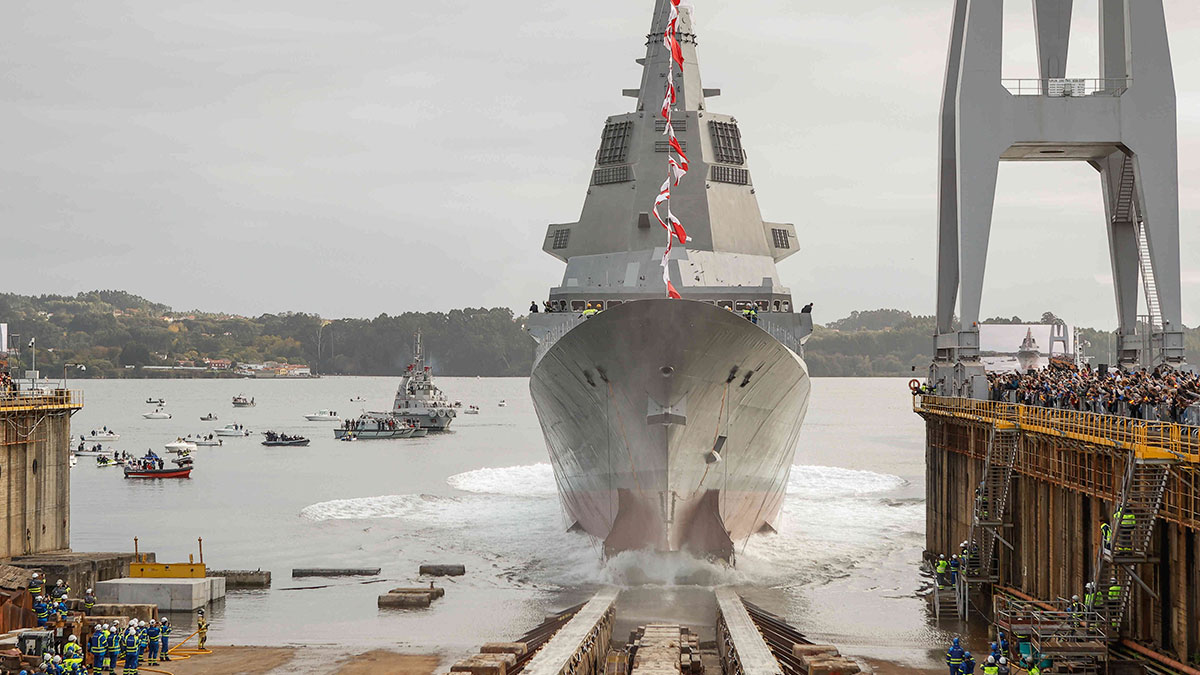
The launch of the F-112 Roger de Lauria in Ferrol on October 27 provided Navantia with the best possible showcase. The second of the Spanish Navy’s five F-110 frigates was launched four months ahead of schedule, and the company is seizing the moment to market the design outside of Spain.
Two frigates in one
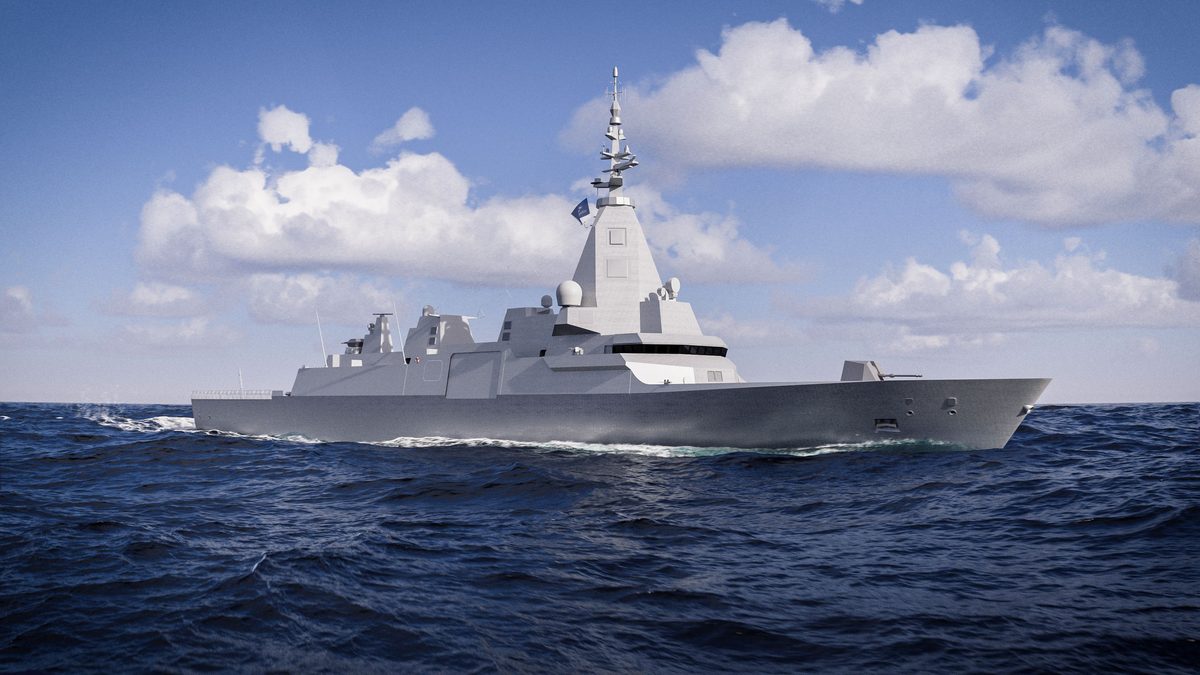
Navantia’s F110 frigates, intended for the Spanish Navy and other potential buyers, are multipurpose escort vessels with anti-air, anti-surface, and anti-submarine capabilities. They are designed primarily to carry out missions related to force protection and the projection of naval power, and can operate in conjunction with other units. Their versatility also allows them to perform maritime security functions and provide support to civilian authorities.
Navantia describes the F110 as a significant leap toward the concept of the 21st-century Smart Ship. The ship incorporates state-of-the-art combat systems, advanced sensors, and electronic warfare capabilities, making it a versatile and efficient platform for addressing today’s threats. Among its most notable features are its multi-mission space, the integration of new sensors, and hybrid propulsion (CODOE).
Superiority in combat with a smaller crew
The F110’s design is centered on combat superiority, data processing, and cybersecurity. It is designed to integrate with other systems and platforms, which improves coordination and efficiency in joint operations, and features cybersecurity technology to protect against digital threats. The program also aims for reduced crew requirements and a lower life-cycle cost (LCC), while being sustainable, accessible, and scalable.
A digital twin of the ship and 3D printers on board
One of the major innovations is the Digital Twin, developed by Navantia in collaboration with the Spanish Navy and the DGAM. It is a virtual replica of the ship that uses technologies such as cloud computing, machine learning, and the Internet of Things (IoT) to support its maintenance and operation, improve decision-making, and enhance crew instruction and training.
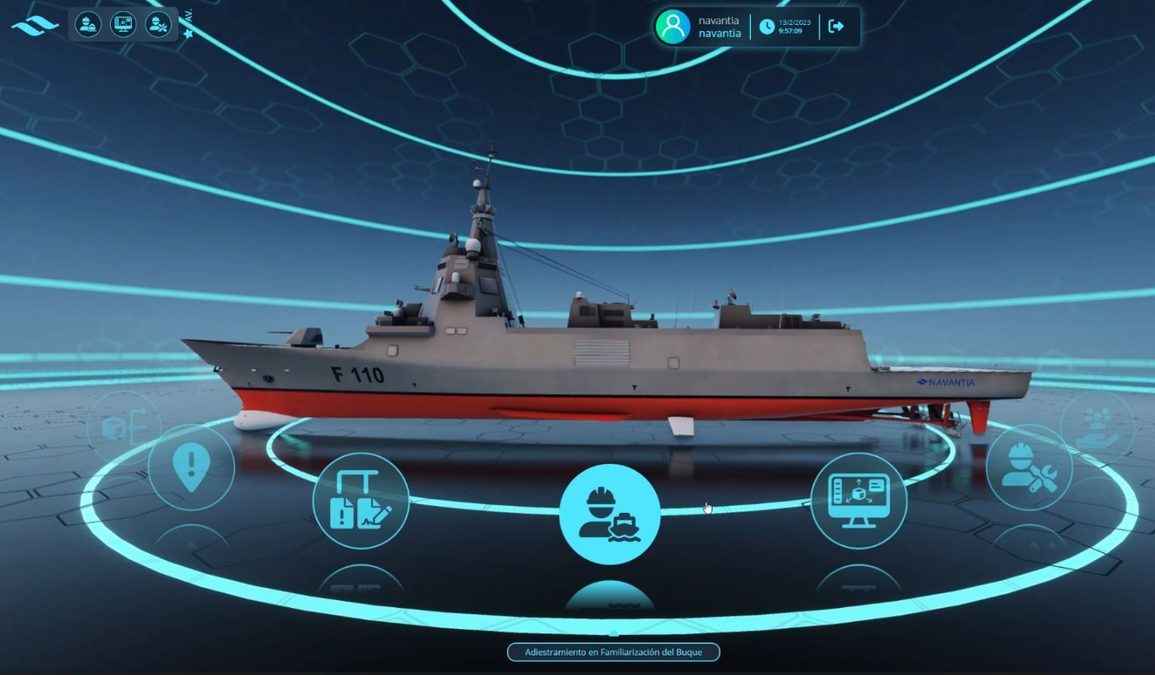
The F110 will carry 3D printers on board to manufacture some of its own spare parts. This is the result of developments carried out in collaboration with the Navy and Navantia’s Center of Excellence for Additive Manufacturing (CEFAN), located in Puerto Real (Cádiz).
Fewer Cables, More Intelligence
The Integrated Services System (SSI), developed in collaboration with the universities of Vigo and A Coruña, significantly reduces the amount of cabling on the ship through a neural network based on 2,000 light points. It integrates lighting, public address systems, monitoring, cameras, wireless services, and sensors into a single system and facilitates interaction with the crew.
Leverage for Transformation in Ferrol
The F110 program is also the driving force behind Navantia’s Digital Transformation Plan at the Ferrol shipyard. Thanks to innovative concepts such as the Digital Twin, the shipyard will become an international leader in frigate construction, with a new digitized Block Factory and a Digital Twin Center of Excellence. The F110 incorporates Industry 4.0 technologies that improve the ship’s construction, operation, and lifecycle.
Open Markets
According to Navantia, the F110 will represent a qualitative leap forward for the Navy’s capabilities and for the industrial and technological potential of the company and its entire supply chain. It also contributes to Spain’s strategic autonomy, helps ensure a cutting-edge industrial and technological base, and opens up new export opportunities.
Denmark, Belgium, the U.S., and the Middle East are on the list of potential customers. In the United States, the cancellation of a significant portion of Fincantieri’s Constellation-class ships has reopened a door that had closed in 2020, although there is no active procurement process, and South Korea’s Hanwha operates its own shipyard in Philadelphia. In Chile, Navantia will showcase the F-110 and the ALFA light frigates at ExpoNaval 2026 (Santiago, December 1–3), in a country that requires its ships to be built domestically.


