








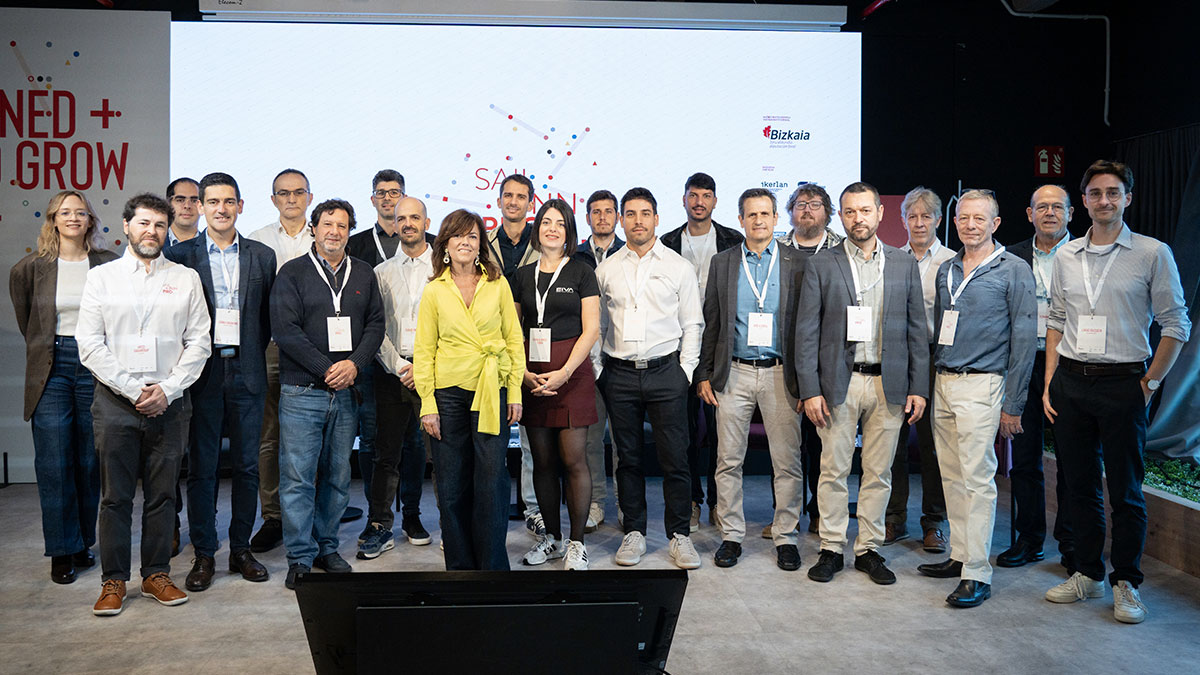
The nautical and maritime industry already has the technology needed to develop autonomous, electric, and connected vessels. However, bringing them to market requires progress in regulation, standardization, and industrial production. This is one of the main conclusions from the seventh edition of SAIL INN PRO 2026, held on October 29 at the B Accelerator Tower (BAT) in Bilbao, with the Provincial Council of Bizkaia as the main institutional partner.
During the event, representatives from government agencies, companies, technology centers, and startups discussed the main challenges of the sector’s technological transformation, ranging from autonomous navigation to electrification and onboard data management.
One of the key issues has been the regulation of autonomous ships. Hernán Javier del Frade, an advisor to the General Directorate of the Merchant Marine and coordinator of the national working group on autonomous ships, explained that the International Maritime Organization’s MASS Code has been in effect on a voluntary basis since July 1, to allow the sector to gain experience. He also revealed that Spain is developing a national certification program for operators of autonomous vessels, a first of its kind worldwide.
Electrification was the focus of another session at the conference. Participants emphasized the need to standardize connectors and charging protocols, improve integration with the power grid, and increase price competitiveness. Solutions were also presented, such as the electrical system developed by IKERLAN for a modular vessel consisting of a tugboat and a barge, equipped with 1.2 MWh of batteries.
Cybersecurity, new materials, and quantum computing rounded out the technology program. Among the applications discussed were the optimization of port operations, the improvement of hybrid propulsion systems, and the development of new materials and batteries.
Six startups present their projects to companies and investors
The event featured six startups that presented solutions applied to various areas of the maritime industry. Among them were Whale Dock, which is developing a system to lift large-tonnage vessels out of the water based on Archimedes’ principle, and Zerua.Tech, whose artificial intelligence platform optimizes fuel supply to anchored ships to reduce waiting times, fuel consumption, and emissions. The latter’s technology is already being integrated into the Port of Algeciras.
Also featured were Mareva, a new shipyard in Bizkaia that designs compact motorized catamarans, and Aerboard, with a thermoformable composite panel made from cardboard and bio-based resin.
The event highlighted the industrial and business opportunities offered by electrification, autonomous navigation, and digitalization. According to Urtzi Sagarribay, co-founder of SAIL INN PRO, the goal of the conference is to connect companies and industry stakeholders to drive their growth and develop strategic projects from Bizkaia.


