







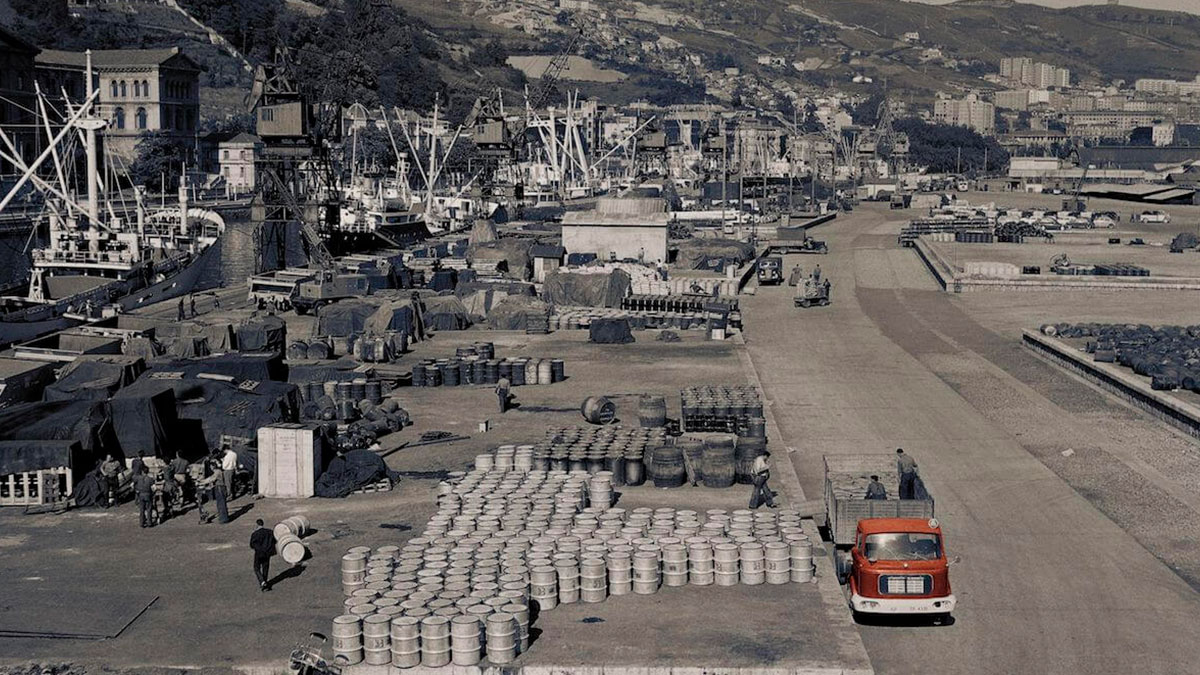
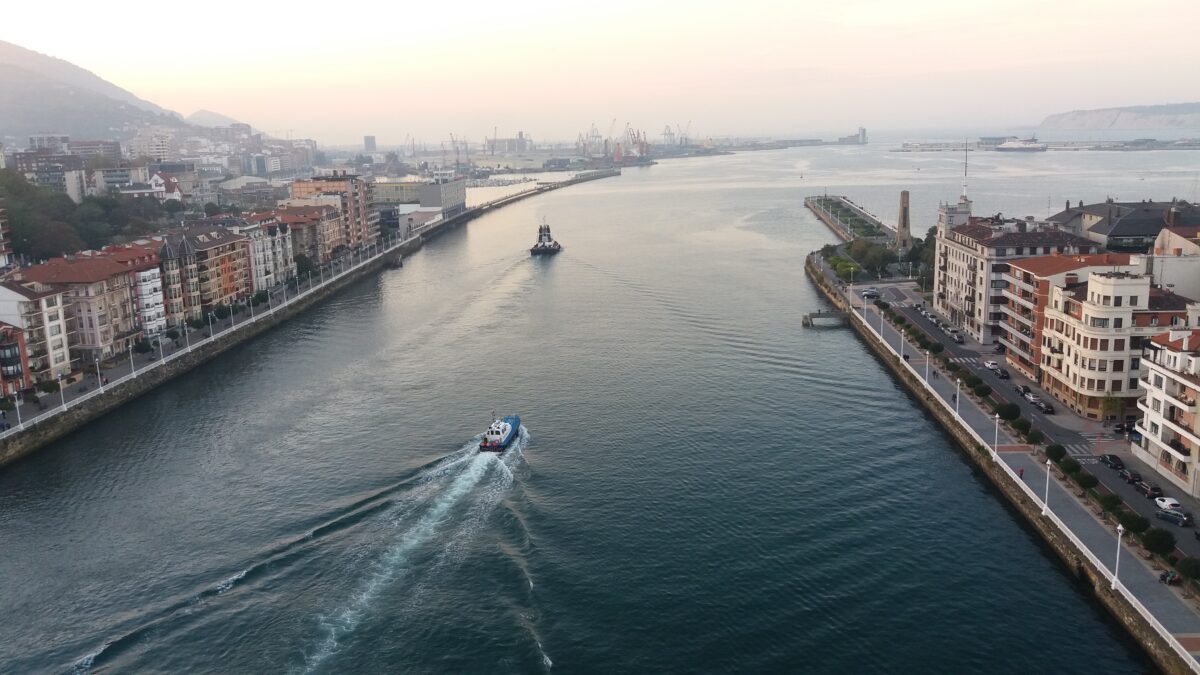
Until the industrial restructuring—and a little beyond that point in time—the Bilbao estuary had a ritual that set its rhythm: the passage of large ships under the Bizkaia Bridge, on their way to their first voyage out to sea. Freshly built in the shipyards along the estuary’s banks, they would sail up that stretch of water that flows from the very heart of the city out to the Cantabrian Sea, or return there for repairs or to be beached in locations that are almost impossible to imagine today for anyone who didn’t experience it firsthand—such as the area around San Mamés, the “Cathedral of Soccer” and home of the legendary Athletic Club.
That industrial Bilbao—the one with the shipyards and blast furnaces—seemed like a thing of the past. However, the port that inherited that legacy—now relocated downstream toward the mouth of the river—has carried on, and it has just reminded us that this city’s maritime heritage and importance are still very much alive.
A sign for the entire Basque economy
The news, based on the data, is this: the Port of Bilbao closed the first half of 2026 with its highest year-over-year growth in 22 years. And this is not an isolated figure, but rather good news for all the ports in the Basque Country. There are eight ports in Gipuzkoa and nine in Bizkaia, although only two of them are commercial: Pasaia-Pasajes, east of San Sebastián, and Bilbao, west of the capital of Bizkaia. In other words, when Bilbao performs strongly, it drives a significant portion of the Basque Country’s maritime economy.
Between January and June, the Port of Bilbao handled 17,317,427 metric tons, a 12.3% increase over the same period in 2025, representing a difference of nearly 1,900,000 metric tons. This is the largest year-over-year increase recorded for that period of the year in the past 22 fiscal years.
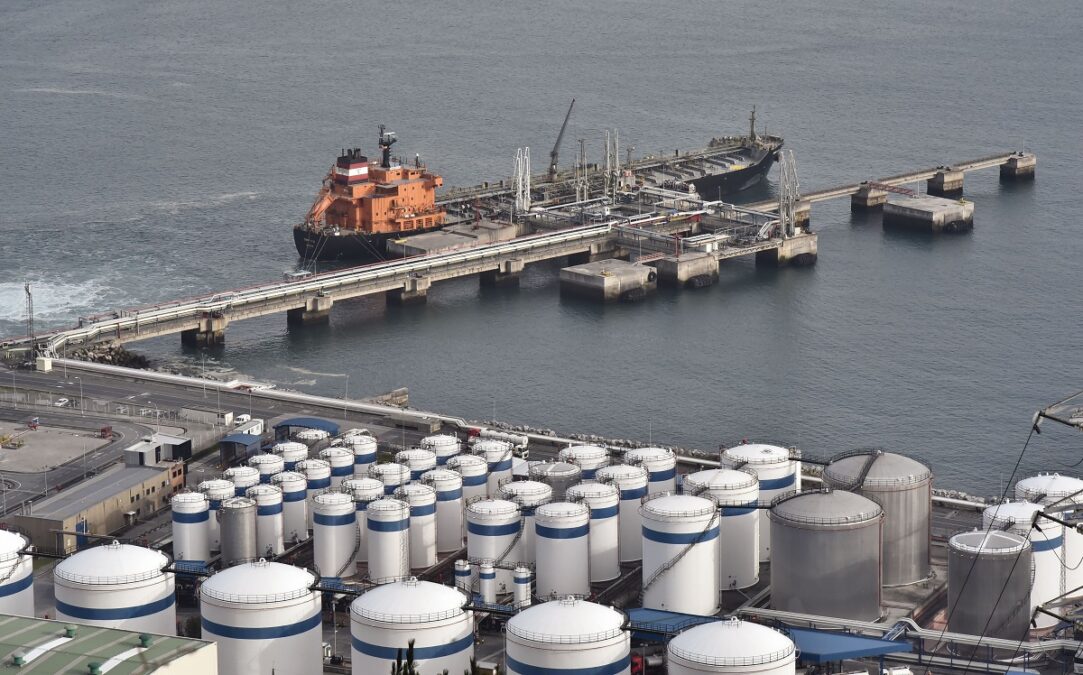
The path to that figure has not been linear. January began with severe storms that hit virtually all of the country’s ports, resulting in a 9.5% decline compared to the previous year. But between February and June, Bilbao rebounded strongly, recording its highest cargo volumes in the last 18 years for that period. The main driver was liquid bulk, which rose by 24%, while containerized cargo grew by 2.7%. Among ships carrying cargo in metal containers, the port welcomed the largest container ship in its history just this week: the MSC Ruby, operated by MSC, a vessel 366 meters long, 48 meters wide, and with a capacity of 13,000 TEUs.
A Solid Recovery or a Mirage?
It’s not all good news without some caveats. Port officials themselves have called for caution: part of this uptick could be due to companies building up inventory, a phenomenon similar to what occurred last year with the tariffs imposed by Donald Trump. We’ll have to wait until the second half of the year to confirm whether this is a structural recovery or a one-time effect. Investment and a Look to the Future
Beyond the current situation, the port remains firmly committed: the investment planned for 2026 totals 87.1 million euros, of which 48% had already been spent as of June 30. The timing is almost perfect. The Port Authority’s Business Plan also calls for a cumulative investment of 308.8 million between 2026 and 2030.
Among the most notable initiatives is the implementation of the OPS (Onshore Power Supply) system, which will allow ships to connect to the onshore power grid while in port and thus shut down their auxiliary engines: a step that has been widely discussed in recent times and will be decisive in the decarbonization of maritime transport. The first phase, at Pier A5 of the Espigón Central, has already been completed with an investment of 4.5 million euros.
By destination, Spain has been the main market for goods shipped from Bilbao—particularly chemicals, diesel, and gasoline—followed by the United Kingdom, Belgium, and the Netherlands. On the import side, the United States tops the list of countries of origin, followed by Mexico and Brazil.
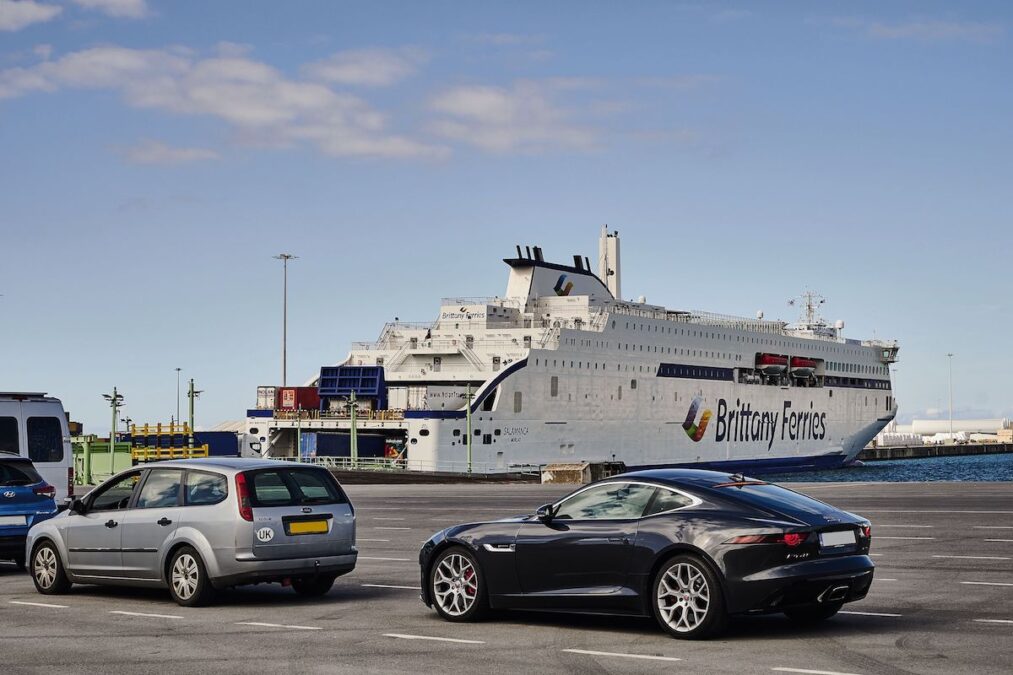
From the shipyards to the liquid bulk trade that drives the Basque economy today: the Bilbao estuary and its port, two centuries later, continue to write their history with their sights set on the sea, with facilities that are growing ever larger, commensurate with their importance, which also includes regular services to the United Kingdom and cruise ships that are increasingly interested in the Basque Country: Last year saw another record for this type of vessel, with nearly a hundred port calls recorded at its passenger terminal on the Arriluze pier in Getxo.