







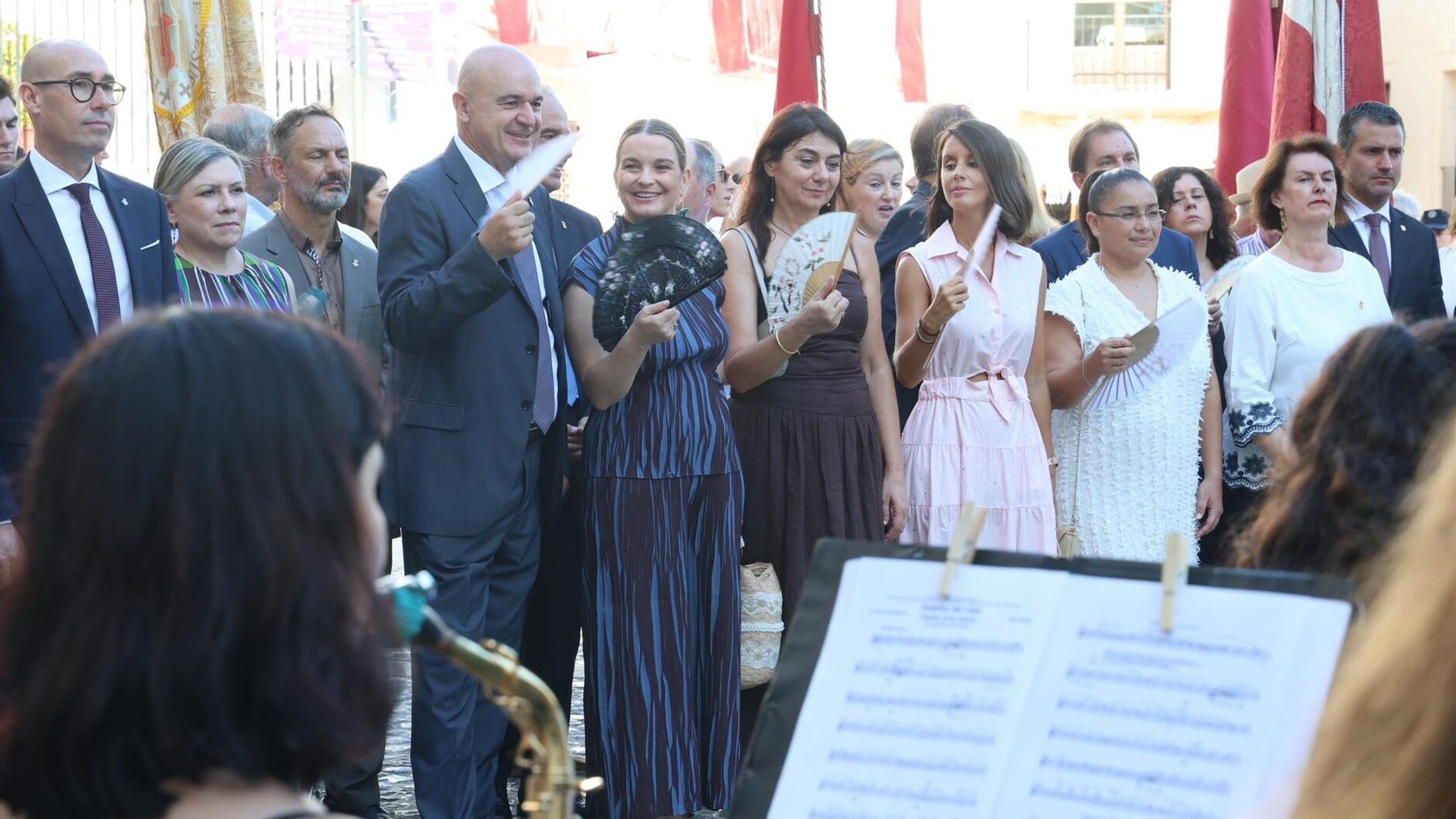
This Saturday, August 8, Ibiza looks back on its history to celebrate Saint Ciríac, patron saint of the Pitiüses Islands. The festival commemorates the Catalan conquest of 1235 and, almost eight centuries later, offers the island an opportunity to reflect on what it wants to preserve and the future it is willing to build. The President of the Regional Government, Marga Prohens, has today paid tribute to the legacy of the generations who have made Ibiza the open and free land it is today, with its own identity and full of opportunities. Prohens participated in the Festes de la Terra, which she described as the best opportunity to showcase the unique way of life of the people of Ibiza.
“A date to proudly commemorate a fundamental part of our history: the arrival of a new culture, a new language, and a new religion, and to recognize all the generations who have preserved and passed on this legacy so that Ibiza is what it is today: an open, free land, with its own identity and full of opportunities,” he said.
The head of the regional government has congratulated the president of the Ibiza Council, Vicent Marí, “for facing the island’s challenges with the necessary maturity and responsibility, without turning a blind eye and listening to the needs of the people of Ibiza.” Accompanied by the first vice president of the Balearic Government and Minister of Economy, Finance, and Innovation, Antoni Costa, and the president of the Formentera Council, Óscar Portas, Prohens attended the mass celebrated by the Bishop of Ibiza and Formentera, Vicent Ribas, and the dance performance by the Federation of Dance and Folk Culture Groups of Ibiza and the Amics de sa Música choir.
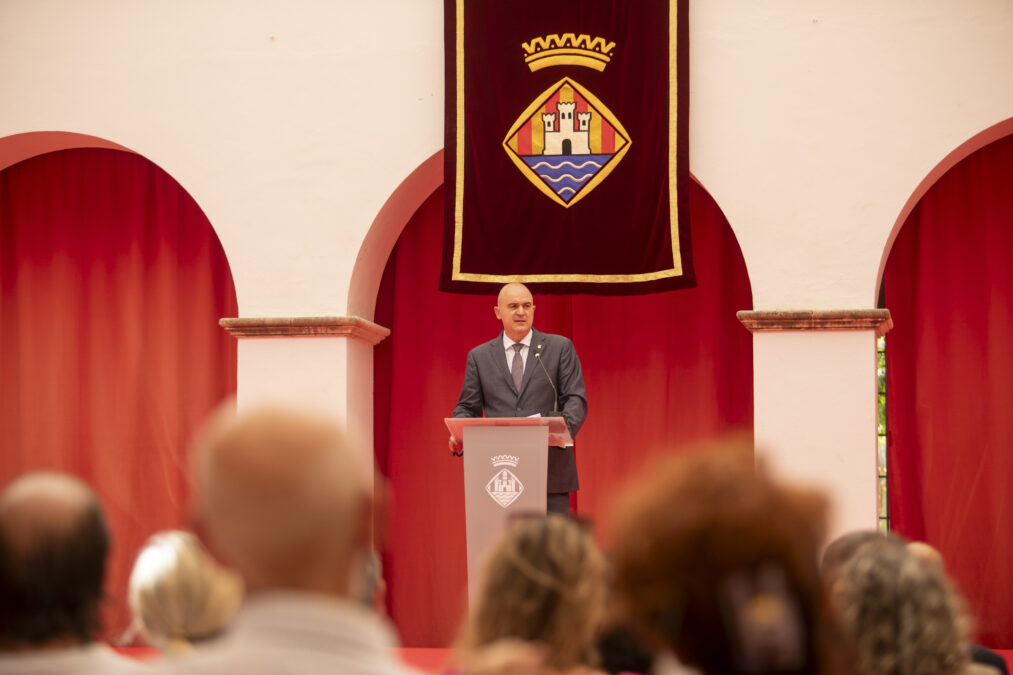
The question of what Ibiza’s future should be was precisely the central theme of the official speech given by the president of the Ibiza Island Council, Vicent Marí. Beyond the celebrations, Marí raised one of the main challenges facing present-day Ibiza: how to manage the demographic growth that, in just over three decades, has doubled the island’s population, without jeopardizing what makes it unique.
The issue, in fact, goes far beyond a simple figure. Ibiza has very specific physical limits. The amount of water it can produce, the number of available homes, the capacity of its roads, the electricity supply, public services, and the land that can withstand more pressure are not growing at the same rate as the population.
Marí therefore described managing this growth as “the main responsibility” of today’s generations. He called for the debate to be approached “calmly and rigorously”: Ibiza is an island that generates opportunities, attracts talent and economic activity, but it is precisely this success that, in his view, makes it necessary to be more careful when deciding how the island should grow.
One of the key issues in this debate is housing. The Council President argued that public policies must prioritize residents, especially families, young people, and workers who are finding it increasingly difficult to find a place to live.
Among its proposals is the requirement that certain housing policies aimed at residents include a minimum of ten years of registration on the municipal registry. The goal, according to Marí, is to strengthen social cohesion and prevent Ibiza from losing the professionals who are essential to its functioning, from healthcare workers and teachers to security personnel. It is no small matter on an island whose international appeal has radically transformed the real estate market. The challenge, in this regard, is to ensure that Ibiza’s success does not end up driving away those who make the island function year-round.
Tourism, yes, but on a different scale
Tourism also played a prominent role in the speech. Marí spoke out in defense of an industry he considers essential to the economy and to the opportunities Ibiza has generated over the decades, but he drew a clear line: “not at any price.”
The model he advocates involves a form of tourism that respects residents, uses legal services, and helps preserve the island’s natural and cultural heritage. In this regard, he highlighted the measures adopted to combat unauthorized practices and the initiatives to regulate tourist flows, which, he said, “are already yielding results.”
The same logic applies to the airport. The president of the Council again rejected any expansion that, in his view, could amount to a disguised increase in the island’s tourist capacity. Ibiza needs a proper airport, he said, but not one that would bring more passenger pressure and increased activity without first hearing the opinions of the island’s own residents.
An island at the limit of its resources
Growth also has a less visible but crucial aspect: resources. Marí called for the continued modernization of the water cycle, progress in the use of desalinated water, and the promotion of treated water reuse for aquifer recharge.
It also highlighted public transport, following a 22 percent increase in the number of passengers on the new service and the fact that it carried more than one million passengers in June and July alone. The Government of the Balearic Islands has also opened the door to new funding for public transport on the island.
At the same time, the president emphasized the importance of institutional cooperation in addressing problems that an island, on its own, would struggle to solve. He cited waste management as an example and thanked the Government of the Balearic Islands and the Council of Mallorca for their collaboration in facilitating waste transport.
One of the most powerful moments of the speech was when he addressed the issue of migratory pressure. Marí recalled the deaths recorded this week on the route between Algeria and Ibiza and warned that the constant arrival of boats, and in particular of unaccompanied minors, has pushed the island’s reception services and facilities to the limit.
The president acknowledged the work of social services professionals, educators, and emergency services, but called on the central government to implement an immigration policy that combines border controls with sufficient resources. “We can’t take on any more,” he said, arguing that the island councils cannot shoulder a responsibility of this magnitude on their own.
Saint Ciríac as a starting point
The speech concluded by returning to the reason why the Ebusitan society had gathered today: Saint Ciríac. The commemoration of the events of 1235 serves, almost eight centuries later, as a reminder of an identity forged over time, but also as a starting point for reflecting on what kind of Ibiza future generations will inherit.
With the solar eclipse taking place on August 12, Marí also encouraged people to enjoy the event safely, using certified glasses and following official recommendations, at a time when the island is also facing a high risk of wildfires. The final phrase was, in a way, a statement of intent: celebrating the past should not mean getting stuck in it. “It is up to us to celebrate Sant Ciríac by renewing our commitment to leave a more just and orderly Ibiza for future generations,” Marí said.


