







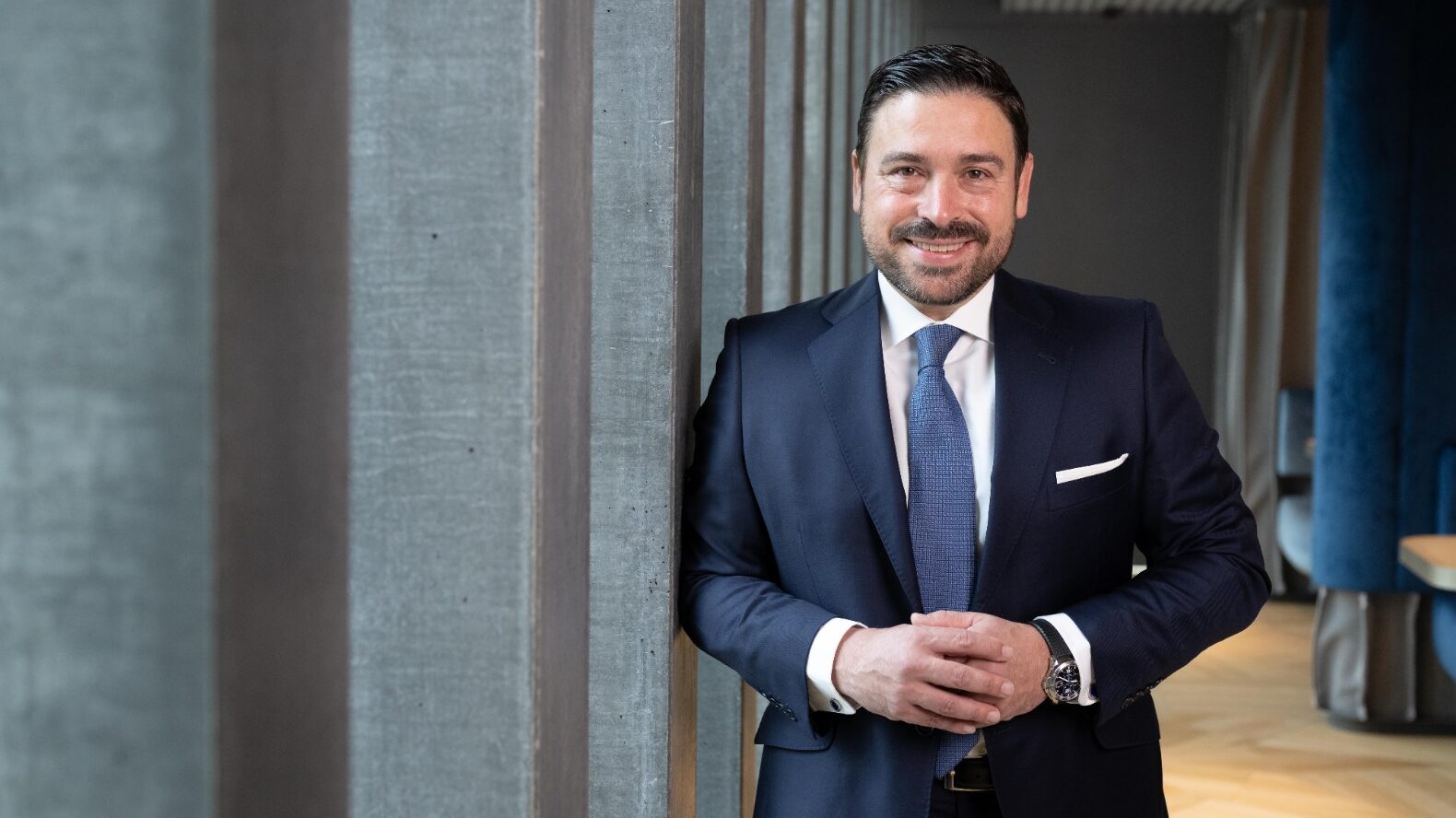
As Hyatt’s General Manager for Southern Europe and North Africa, Manuel Melenchón (Cartagena, 1972) is one of the hotel chain’s leading voices in the Mediterranean region and also offers expert insight into the evolution of the tourism sector in popular destinations such as the Balearic Islands. In this interview, he analyzes some of the industry’s current trends, such as the shifting of tourist flows between destinations, the growing prominence of last-minute bookings, the revitalization of overcrowded destinations, and the near-constant international uncertainty caused by the geopolitical context and new hotel management models.
The tourism industry seems impervious to geopolitical conflicts and other disruptions on the international stage. Has the sector become more resilient and adaptable since the COVID-19 pandemic? What are your forecasts for this season?
I don’t want to resort to clichés, but there is a sense of moderate optimism—something that has been mentioned frequently in recent weeks and months. Amid the current geopolitical uncertainty, tourism remains a very resilient industry, and in specific destinations like the Balearic Islands, we’re seeing this resilience more strongly than elsewhere. Our projections have been higher than last year’s, which is positive, but it’s true that this uncertainty is driving a growing trend toward last-minute bookings. Overall, we’ll be on par with last year, which would already make it a good season.
Has that shift in last-minute demand—which has been taking hold since the pandemic—forced a major restructuring of your logistics and the way you operate?
I think we’re already well-prepared. We’re monitoring demand patterns and adjusting our operational capacity as we go, but to be honest, it’s not something that’s having a major impact on us.
Does the fact that this is a World Cup year have any impact on the industry?
We believe it does have some kind of impact, but honestly, I don’t know if anyone is capable of assessing it.
What is Hyatt’s presence in the Balearic Islands, and what are its expansion plans?
We currently have 23 hotels in the Balearic Islands within our all-inclusive portfolio. We are organized into five collections: Luxury, Lifestyle, All Inclusive, Classic, and Essentials, which in turn comprise 36 different brands. The All-Inclusive collection has the largest presence in the Balearic Islands, but we also have Lifestyle properties in Ibiza, for example. Our goal is to continue growing in the archipelago, as it is one of the most important destinations with significant potential for international positioning. However, I want to emphasize that we want to grow strategically—that is, by adding value to the destination and partnering with the right brands and partners. We’re always evaluating new opportunities in the Balearic Islands.
The hotel industry is increasingly shifting its focus toward management rather than ownership. Is this the model of the future on a global scale?
This is the model toward which global brands are evolving, a trend that has been confirmed since Hyatt’s initial public offering in 2009. Our operating model and the fact that we’re structured around these five brand collections allow us to be better organized, gain deeper customer insights, and offer property owners the product that best suits their asset and fits best within the destination. Because today’s traveler doesn’t just choose a single night at a hotel—they choose a brand they associate with an experience.
Which partners do you work with in the Balearic Islands?
We work primarily with Blackstone and the Roc Group. We also work with Atom, Stoneweg, Hesperia…
How is the current debate on mass tourism being viewed from within the industry?
The key lies in framing the discussion around how we can make tourism a driver of growth that fosters integration. Average spending per traveler in the Balearic Islands has grown at a faster rate than the number of travelers in recent years. This is how things should be in mature destinations. As industry operators, we need to ask ourselves how we can add value. And Hyatt has the ability to bring in high-value guests who can contribute to the improvement of these destinations and who are willing to integrate into them while generating more wealth.
Is the trend of low-cost beach tourism centered on beach parties and mixed drinks being phased out?
Little by little, because I think we’re all aligned on the same goal of elevating the offering for that customer who is willing to pay more—but also to demand more. I believe that’s the way forward in a mature destination like the Balearic Islands. We have a project along these lines—Zoetry Mallorca—where we’re seeing that U.S. guests have become our main market during the summer season. And that has a lot to do with the connection to the surroundings I was talking about.
How do you view the expansion into new markets with long-haul routes, such as those launching this year to Canada and the United Arab Emirates?
For us, these are emerging markets in the Balearic Islands, but ones in which we have a very strong presence and the ability to influence—thanks to our brand reputation and critical mass—the flow of those customers to the islands. These markets broaden the range of opportunities and reduce our dependence on the main source markets, which is very positive.
The roadmap for the Balearic Islands Sustainability Pact calls for breaking up and diversifying markets to reduce dependencies. Do you agree that this should be the path forward for successful destinations?
That would be ideal, though without neglecting the markets that, by their very nature, will continue to be our main ones—which, in the Balearic Islands, are Germany and the United Kingdom, followed by Italy, France, the Nordic countries, and so on. Market diversity is enriching, and long-haul markets seeking different experiences are particularly so.
How are you dealing with the shortage of seasonal workers?
We’re working on it. We’re aware that this is a structural problem for the industry, and for us, it’s undoubtedly one of our top priorities. Ultimately, our employees are the ones who take care of our customers, and finding the right talent with the right level of commitment is what will deliver the distinctive experience we’re seeking. Identifying talent, nurturing it, and developing it are the three pillars of our brand. All stakeholders in this industry and in the public sector must be committed to attracting talent on a sustained basis.