







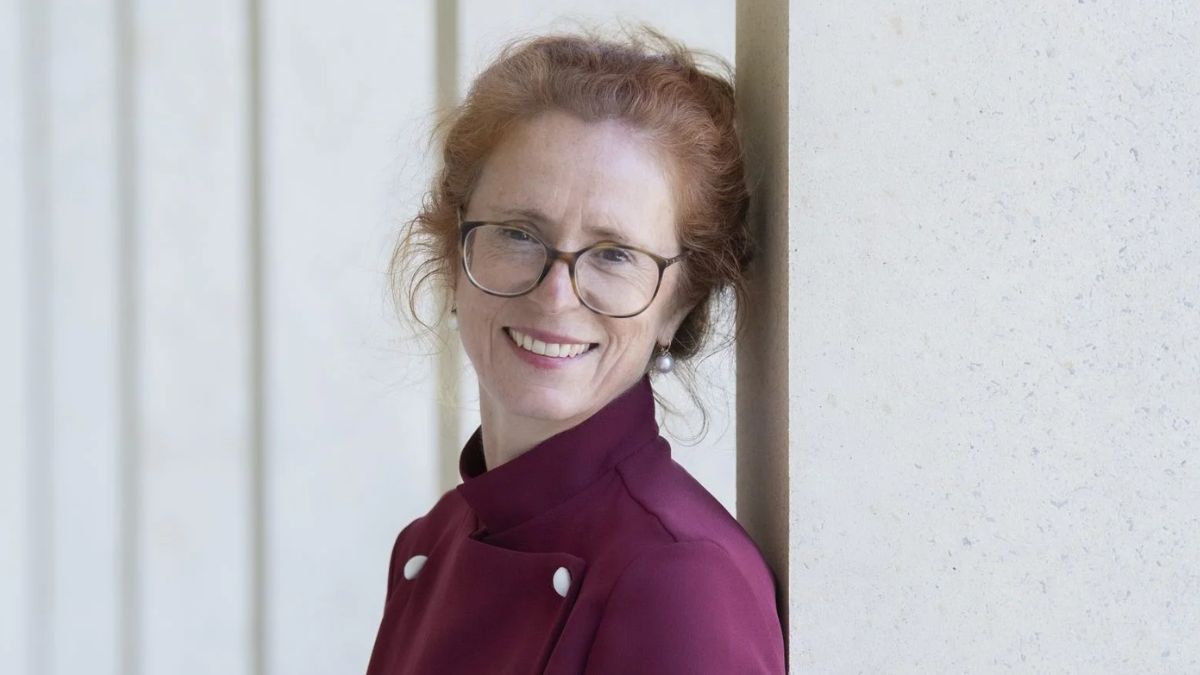
There are two things that are inseparable from meeting Manuela Wirth: that there are always other people by her side who assist her and fill in her answers, and that it is difficult to tell, based on her responses, whether her undeniable leadership is rooted in intuition or in constant rethinking. Starting with her style of dress, which is sophisticated down to the last detail: a slightly asymmetrical black dress from a luxury Japanese brand with an indecipherable label; a ring, just one, likely a diamond; and a red bun, elegantly styled yet slightly undone.
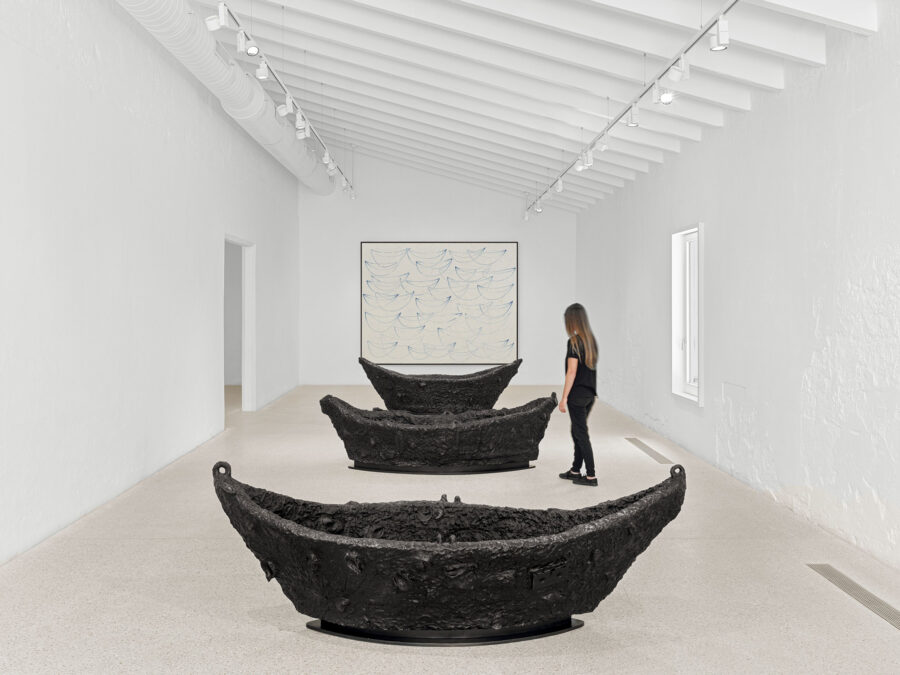
So, when explaining the merits of his new space—“and how the ecosystem was preserved”—its architect, Luis Laplace, adds that “small enclosures were designed for the black lizards that lived there. “They don’t like to share, so we came up with individual compartments, each with its own entrance and water dish.” Meanwhile, he introduces his star artist, Rashid Johnson, a member of the post-black movement. Johnson shares the key to his style, a formula that “emphasizes what it erases.”
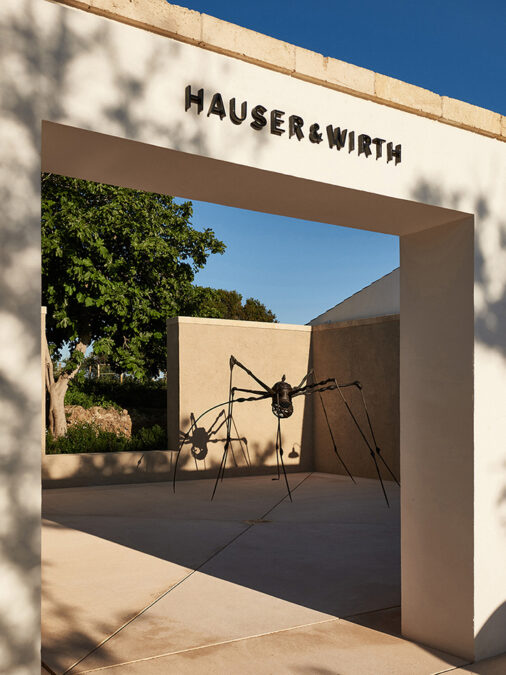
Collectors adore him, and Rashid smiles expressively. Hauser & Wirth is a Swiss family-owned company founded in 1992 by Manuela and Iwan Wirth and her mother, Ursula Hauser—a venture later joined by Marc Payot and Ewan Venters. So far this century, they have expanded from Zurich in an extraordinary way, entering the big leagues: they now have locations in “New York [three], Hong Kong, London, Southampton, Los Angeles, Somerset, Monaco, Gstaad, St. Moritz, and now Menorca.” A gallery representing more than 90 artists and estates [deceased artists], both in publishing and exhibitions. Wirth explains how “selecting the artists has been quite a process. We started with a small group, with whom we still work—imagine—Louise Bourgeois, Pipilotti Rist, Paul McCarthy… They told us about other artists. And it all happened naturally.”
THE GALLERY HOUSES MORE THAN ONE
60% WOMEN AND HAS SIGNIFICANT PARTNERSHIPS
ALSO INVOLVING WOMEN
The hostess implies that they are looking for potential classics: they focus on artists who share their vision and are endorsed by others. “Louise Bourgeois could be considered the grandmother of us all,” she says casually. “We have everyone from creators like Philip Guston, a great 20th-century artist, to a young woman, Avery Singer (b. 1987), based in NYC,” add sources at the gallery. “In the cultural industries, there have always been very powerful women like Peggy Guggenheim,” the same sources conclude. As for whether the locations of their venues are always in the middle of nowhere, Wirth notes that “the places find us. Here [Menorca], we arrived on a day trip by boat from Mallorca. Same in Somerset: we were looking for a house on the outskirts of London to spend time with the kids in the countryside on weekends.”
“Currently, over 60% of the gallery’s staff are women, but ‘it’s not a deliberate choice. We also have very strong partnerships with women. I grew up with a mother who was a collector, so I grew up surrounded by female leadership. Her collection may have been 60–80% female artists, but she collected pieces if she felt a connection to them,’” adds Wirth. Among his collectors, there is “roughly an equal percentage of men and women. My mother was drawn to textiles, that sense of tactility, but it wasn’t a strategy—it was personal taste.” In terms of management, Wirth is involved “in every aspect of the business” and handles some of the most significant sales, but he doesn’t discuss pricing.
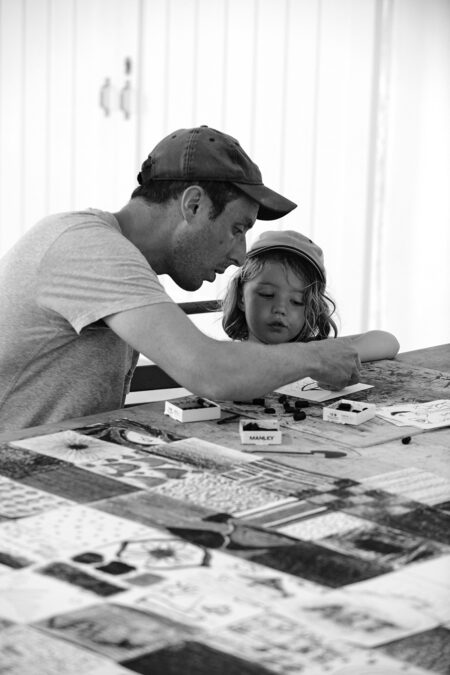
Her team confirms that “all the partners are involved in every decision, but she is the one closest to the artists.” Is this one of the keys to her success? The interviewee smiles, seeming to nod in agreement, and concludes by emphasizing intuition, never planning. Is it possible that her project is fluid and strategy-free? “Life and work are one and the same for us. We love it and we live it,” she concludes. But she never imagined her project would have such a huge impact; in fact, her earliest memory of art isn’t as a spectator, but “making art.” She is a very physical person and loves to keep playing with clay.