







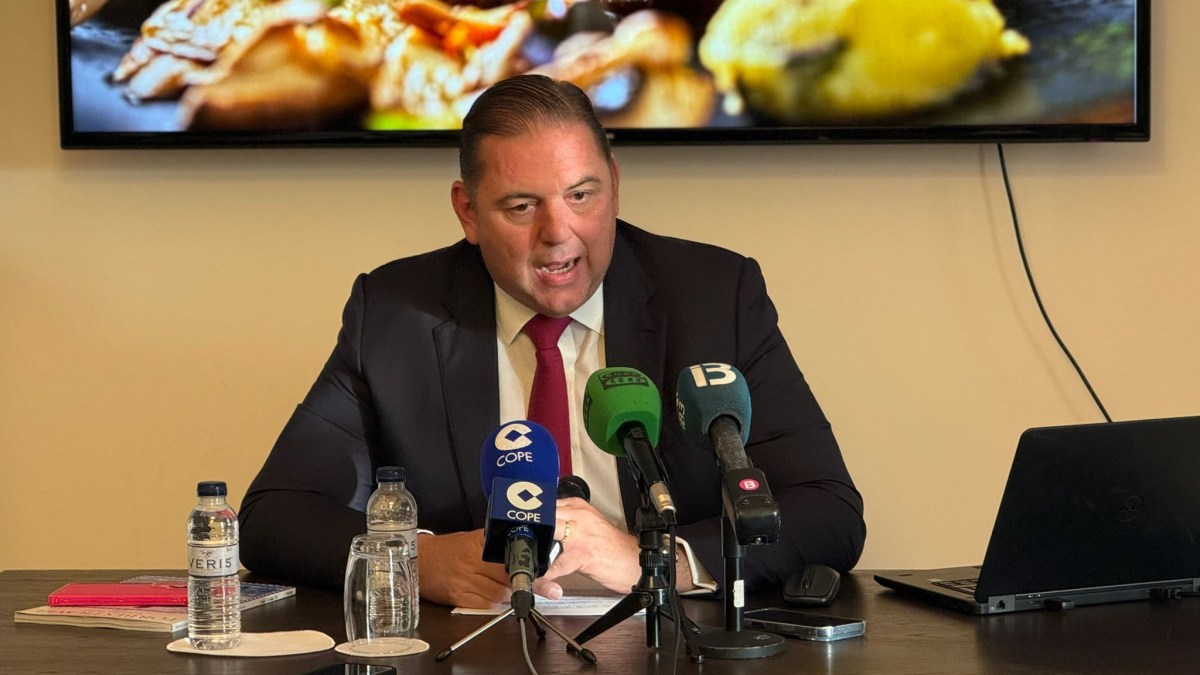
Last Saturday, April 11, Cap Vermell Grand Hotel—one of the leading names in luxury hospitality in the Mediterranean region—celebrated its tenth anniversary with a press conference in which the hotel’s CEO, Toni Mir, highlighted Mallorca’s role as an international leader in luxury tourism during a press conference marking the tenth anniversary of Cap Vermell Grand Hotel, the luxury hotel complex on Mallorca’s Llevant coast.
Mir noted that the opening ten years ago of the Cap Vermell Grand Hotel—which was nominated for Best Resort at the recent Forbes Travel Awards—marked a “turning point” in the island’s high-end offerings, emphasizing that the project has helped position Mallorca “at the forefront of international luxury.” In this regard, he noted that the goal remains to consolidate this position and make the destination a global benchmark.
The CEO highlighted the hotel’s growth and consolidation over the past decade, placing special emphasis on the role of the staff. The resort currently employs some 250 people from more than 20 countries, and he took the opportunity to acknowledge the loyalty of the staff, having recently honored 35 employees who have been with the company for more than ten years. “Luxury isn’t just about the physical surroundings; it’s about the people who make it possible,” he said.
During his remarks, Mir highlighted how the concept of luxury has evolved in recent years, shifting from a model based on ostentation to one focused on personalized experiences. As he explained, today’s customers seek “tailor-made” offerings with a stronger emotional and cultural component and a deeper connection to the local environment. In this context, he emphasized the role of the “host” as key to anticipating needs and enhancing the guest experience.
The executive also discussed changes in customer behavior following the pandemic, noting an increase in last-minute bookings and greater difficulty in forecasting demand. “These days, even booking on the day of arrival can be considered ‘last minute,’” he said. “Only 27% of our customers book more than 90 days in advance.”
Regarding forecasts, Mir noted that the hotel expects to improve its occupancy rates in 2026 compared to the previous year, with moderate increases during the mid- and high seasons (60% in May and June, a 5% increase over the same period in 2025), 65% during the high season (+2%), and 55% in September and October (+6%). However, he emphasized that the goal is not to maximize occupancy, but to maintain high standards of service. At the same time, he pointed to an increase in the average room rate, which stands at around 700 euros per night during the high season.
By market, Germany and the United Kingdom remain the main sources of customers, followed by South Korea, the United States, and the domestic market, whose recovery has been viewed positively.
A refreshed culinary experience
In the culinary sphere, Mir highlighted the role of the two-Michelin-starred Voro restaurant as one of the resort’s main international attractions, which is kicking off its eighth season with a unique 28-course menu featuring more than 240 dishes. Mir acknowledged that the goal is to earn a third star “as a natural consequence of the pursuit of excellence.”
In addition, the rest of the resort’s dining offerings are evolving, with Bravo’s new menu—which captures the essence of Spanish cuisine by reinterpreting traditional Spanish recipes—replacing the former Tapas. Meanwhile, the former Balearic is evolving into Villa Sofia, a venue where Mediterranean cuisine centers on pasta. Here, the menu combines Italian techniques with Mallorcan ingredients.
The CEO also noted that the resort has been honored with UNESCO’s Versailles Prize as one of the most beautiful hotels in the world, an accolade that, he said, represents “a responsibility to preserve this legacy for future generations.”
On the other hand, Mir warned of the short-term challenges facing the sector, such as rising energy costs, tensions in the air travel industry, and the impact of geopolitical factors on international tourism. Despite this, he defended the resilience of the luxury segment, while stressing the need to focus on added value rather than price-based competition.
Finally, Mir reiterated his commitment to developing a sustainable, high-quality tourism model in Mallorca, emphasizing the importance of sharing best practices and raising the destination’s standards. “We have room for improvement, but our ambition to be a global leader remains unchanged,” he concluded.