






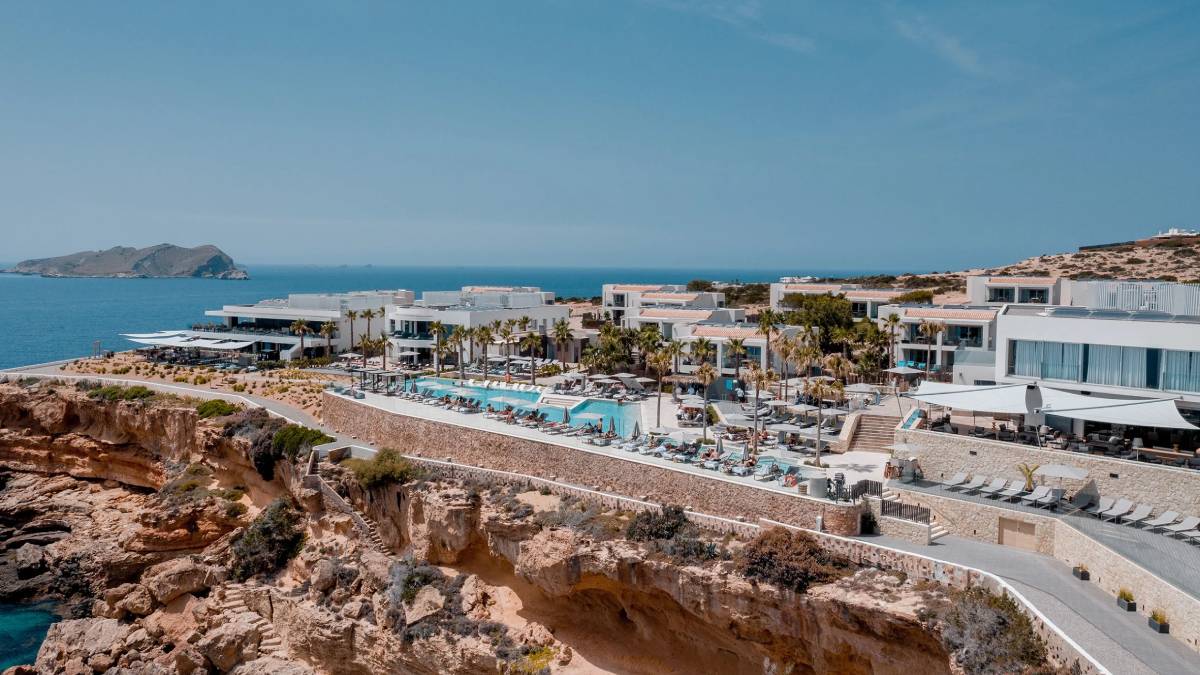
The tourism industry in the Balearic Islands can now quantify the luxury segment. Visitors staying at five-star hotels spend an average of 731 euros per day, compared to the 46 euros spent on average by foreign tourists as a whole. In other words, they spend 16 times as much as the average tourist.
These tourists contribute 2.3 billion euros to the islands’ economy. Although they account for only 8% of visitors from abroad, they account for 27% of all spending in the archipelago. By tourist area, their contribution is particularly significant in Sant Josep de Sa Talaia, where it accounts for 30% of all spending by non-residents.
These are the key findings of a report published by the University of the Balearic Islands (UIB) in collaboration with Essentially Mallorca, an association that brings together most of the island’s luxury-related businesses. Its president, Jesús Cuartero, noted that this sector was “in its infancy” just a decade ago, but is now growing “exponentially.”
In macroeconomic terms, the data collected shows that premium tourism accounts for 8% of the Balearic Islands’ GDP, as well as 7% of the archipelago’s value added and employment. This segment is beginning to reshape the tourism sector’s strategy on the islands, with the rise of five-star hotels and premium villas, as well as offerings related to wellness, leisure, culture, and exclusive experiences.
It serves as a driver for high-end dining and retail, boating, private transportation, and personalized activities. In addition, a significant portion of the investment is directed toward repositioning existing assets and upgrading their categories. With saturation emerging as a growing risk, the goal is to increase revenue without necessarily relying on new arrival records.
The report, the first of its kind on the impact of luxury tourism in the Balearic Islands, is funded by the Balearic Islands Government’s Department of Tourism, Culture, and Sports and the Ministry of Industry and Tourism, as part of the Recovery and Resilience Facility (RRF). The funding comes from the European Next Generation EU program, aimed at transforming the Spanish economy.