








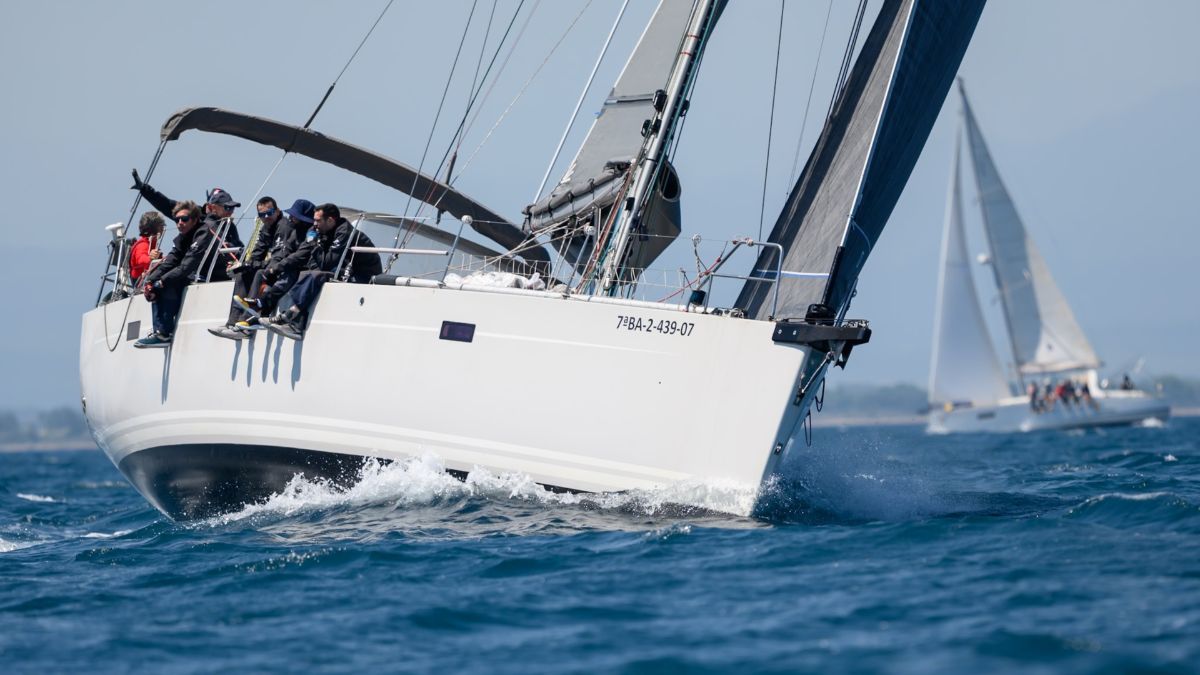
The Ruta de la Sal Rumbo Ibiza will hold its 38th edition from April 2 to 4, 2026, with some 140 boats pre-registered and nearly 1,000 sailors, cementing its status as Spain’s largest offshore regatta. The official presentation took place at the Hotel España Ocean Drive in Barcelona and brought together institutional representatives, organizers, and sponsors of one of the major events on the Mediterranean sailing calendar.
A premier regatta in the Mediterranean
The Ruta de la Sal Rumbo Ibiza will once again bring together hundreds of sailors for one of the most iconic races in Spanish sailing. The race will set sail from Port Ginesta and the Real Club Náutico de Dénia, finishing in Sant Antoni de Portmany (Ibiza), the destination that has officially lent its name to the event since 2024.
During the presentation, race director Andrés Oliva highlighted the strong network of public and private institutions supporting the event. Among them are the Consell d’Eivissa, the main sponsor, and the Balearic Government, through the Balearic Islands Strategic Agency for Sustainable Tourism.
The event was opened by Eduard Soler, director of the Hotel España Ocean Drive and representative of OD Hotels, a chain that has supported the event for years.
Innovation and Technology with the Micro Ruta de la Sal
Among the main new features of the Ruta de la Sal Rumbo Ibiza 2026 is the launch of La Micro Ruta de la Sal, an initiative focused on the development of autonomous navigation for sailing.
This project will feature an exhibition of autonomous sailboats scheduled for April 5 in Sant Antoni Bay, organized by the Barcelona School of Nautical Studies and represented at the presentation by Professor Xavi Martínez.

Promoting Women’s Participation in Offshore Sailing
The 2026 edition will also focus on promoting women’s participation in offshore sailing. Two-time Olympic medalist Natalia Via-Dufresne, head of sports projects at the Barcelona Capital Náutica Foundation, introduced the all-female crew that will compete aboard the historic sailboat Charisma, designed by Sparkman & Stephens and built in Barcelona in 1970.
A logistical and security challenge for a large fleet
The logistics of the regatta were handled by Rodrigo de Febrer, captain of Port Ginesta, one of the starting ports along with the Real Club Náutico Dénia. For his part, Javier Planas, commodore of the Club Nàutic Sant Antoni, explained the organizational challenge of hosting the two participating fleets in Ibiza, a task carried out in collaboration with Ports IB.
On the subject of safety, Barcelona’s harbor master, Javier Valencia, emphasized the importance of ensuring that both equipment and crews are well-prepared for this type of offshore race, which allows sailors to compete with the support of a large fleet and an experienced organization.
The event was closed by Joan Balaguer, vice president of the Catalan Sailing Federation, who highlighted the role of La Ruta de la Sal Rumbo Ibiza as one of the Mediterranean’s most prominent sailing events.