








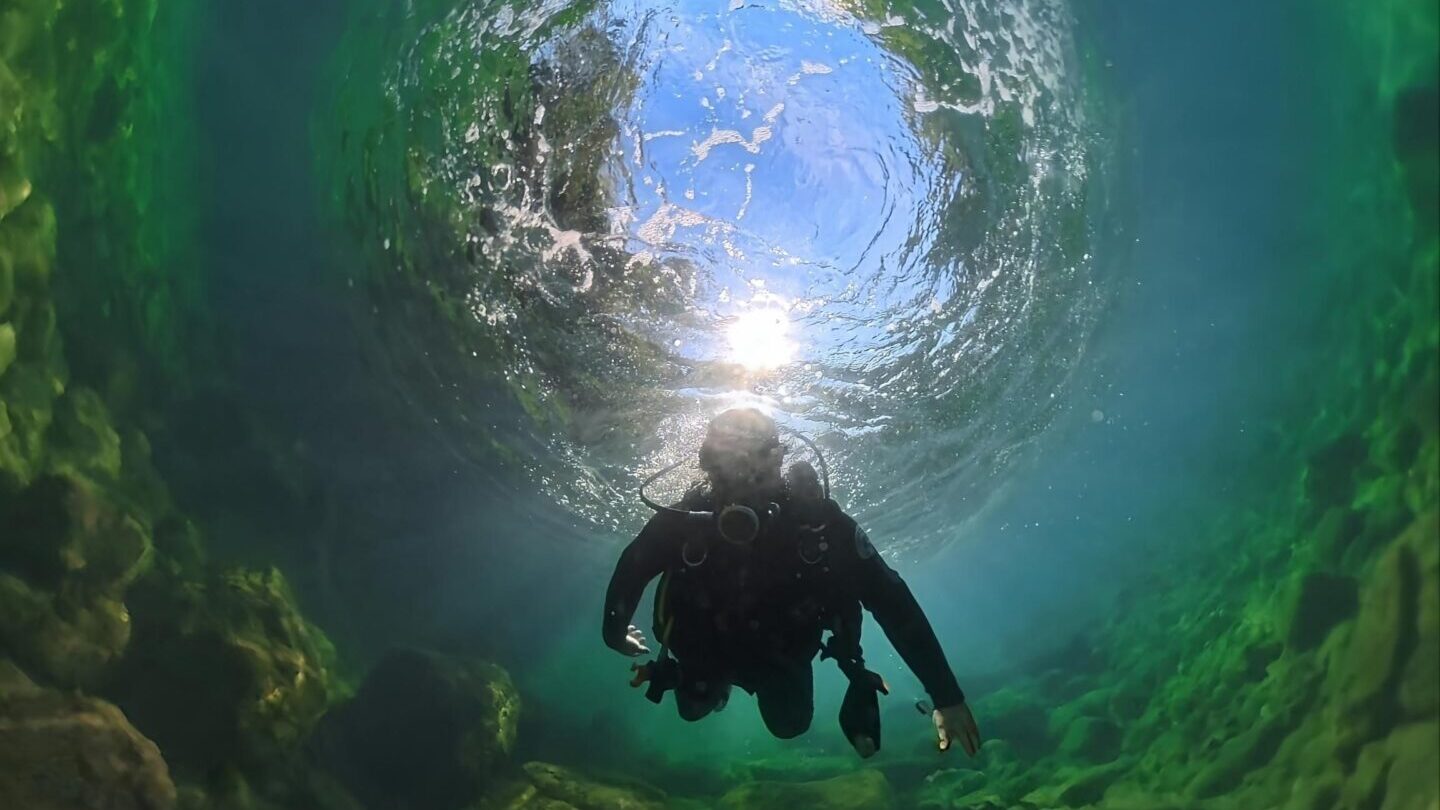
The eighth edition of the Ibiza and Formentera Maritime Forum has provided conclusions and reflections on the immediate effects of climate change in this highly sensitive part of the planet. Experts and scientists are warning about the factors contributing to this sometimes drastic change in the development of storms, squalls, and other extreme atmospheric phenomena occurring in the Mediterranean as a result of ocean warming and the high evaporation it entails, and the formation of enormous, swirling masses of clouds that feed on each other and can eventually develop into “tropical cyclones.”
The Forum examined the extreme phenomena that have occurred in recent years, the risks and impacts they entail, and the fact that they are no longer exceptional events. Scientist Samira Khodayani posed a troubling question in this regard: “Are we prepared for a more extreme Mediterranean, with systemic risk, physical dangers, heat waves and extreme rainfall, droughts, and floods?”
In recent years, Ibiza and Formentera have recorded record heat waves and extreme rainfall, indicating a clear trend toward global warming, with unprecedented temperatures and an average increase of 1.6 degrees. The world’s oceans are warming, and the Mediterranean is a prime example. The change is global, but the risk is local, causing more extreme weather events around the world and, in particular, in the Mediterranean, with greater water evaporation and the formation of large clouds, leading to more intense rainfall in shorter periods.
In this regard, Khodayani stated: “Whether an event is considered exceptional depends not only on how much rain falls, but also on where, for how long, and over what area.” Heat waves are also a deadly phenomenon for the population, with the formation of “urban heat islands”; this is not just an environmental problem, but also an economic and social one.
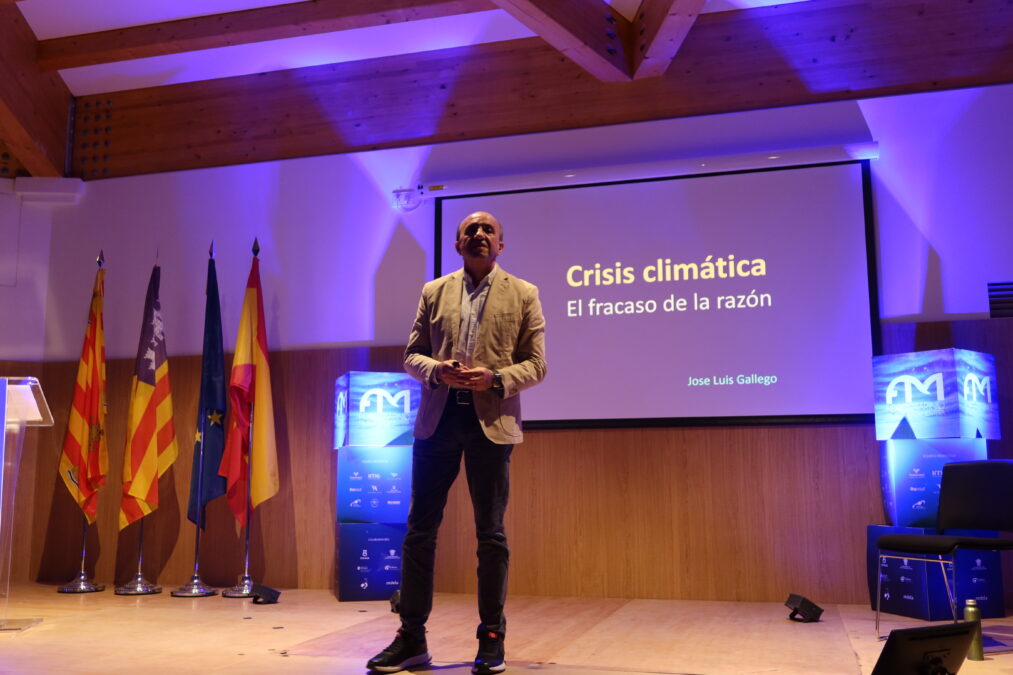
Journalist and climate communicator José Luis Gallego spoke about the history of climate change since the last century, as well as the ‘climate crisis’ and its consequences. He also reiterated the question: ‘Are we prepared for climate change? It depends on how we decide to address it and prepare for it: we will suffer its consequences to a greater or lesser extent. We must stop CO₂ emissions; otherwise, the effects will become increasingly severe. We all must take individual responsibility through a series of small acts.”
However, he offered a ray of hope: “The future is not set in stone and we can decide what kind of future we want. Climate change is the greatest market failure, and responding to it presents an opportunity for the economy. We must find the motivation to overcome the current paralysis.”
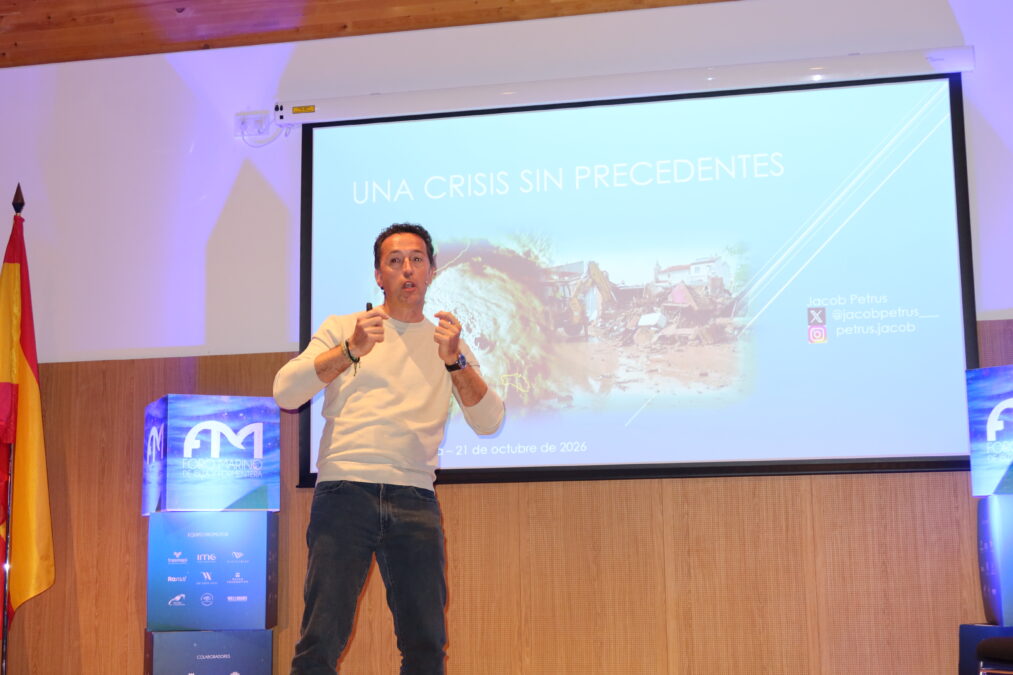
Jacob Petrus, journalist and host of the TVE program Aquí la Tierra, spoke about the changes on the horizon, qualitative decisions, measures to address the climate emergency, and the importance of environmental communication. “Just a few days ago, Ibiza broke its all-time precipitation record, with 174 liters per square meter falling in a record amount of time and causing severe consequences, which demonstrates that climate change is dangerous because it affects all aspects of our lives. We have the right to demand a healthy planet in the face of climate denial and global inaction.”
Petrus, as a meteorology expert, highlights some key points about what to expect: ‘A “tropical cyclogenesis” (tropical cyclone) can form as a result of increased pollution and loss of biodiversity, which will lead to the formation of cloud systems containing large amounts of water and energy off the Mediterranean coast. We will have a “doped” atmosphere.’
In his audiovisual presentation, he spoke about the importance of effective environmental communication and the discoveries that experts and scientists have made in recent times about extreme phenomena never before seen in the Mediterranean region.
The conclusions of this Maritime Forum do not point to a promising climate future, but reflect the reality we face and make it clear that, without corrective measures at the individual, institutional, and business levels, extreme weather events will become increasingly dangerous, as is already happening along the Valencian coast and in the islands.


