






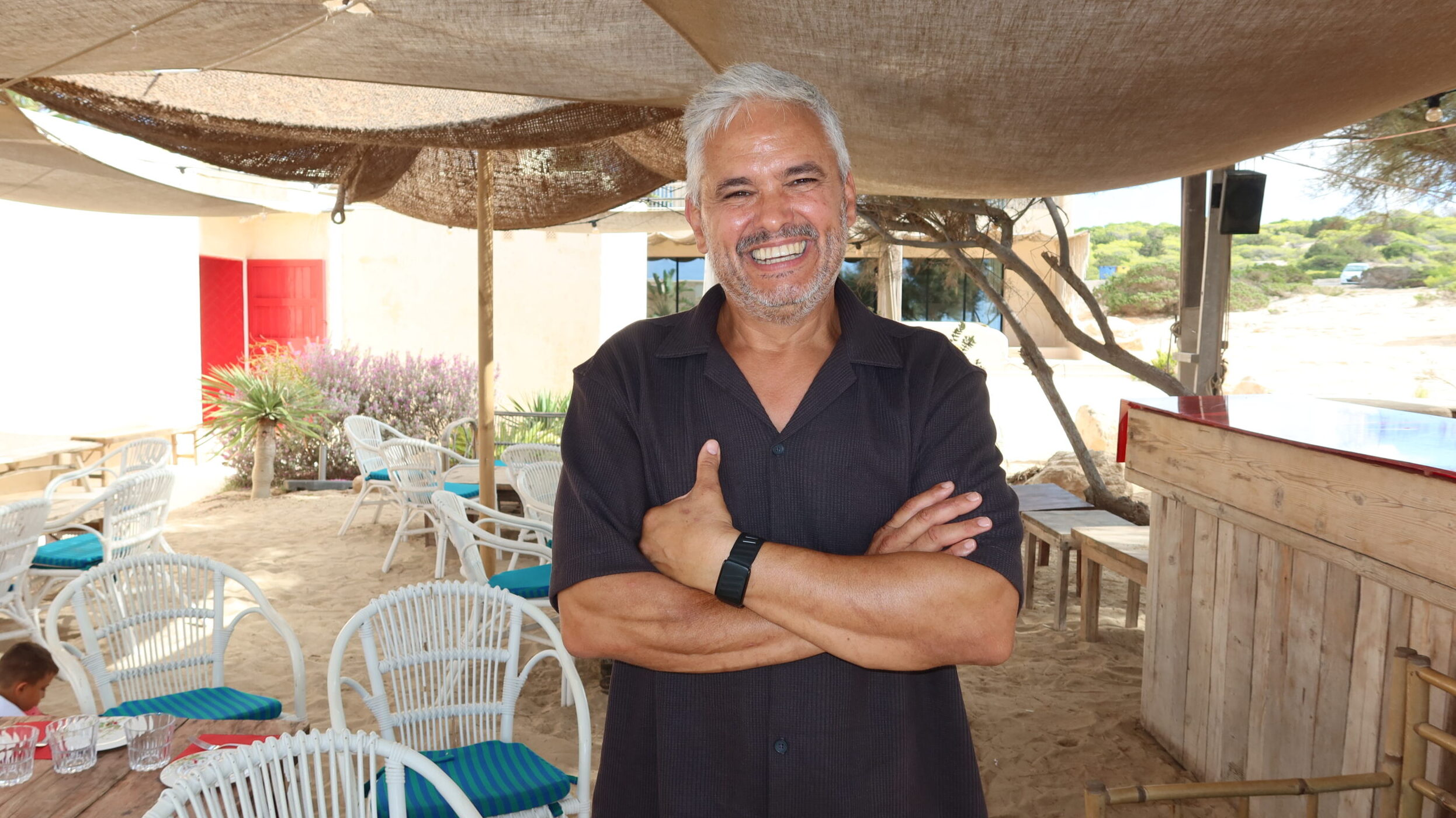
Catalan chef Nandu Jubany has just received the title of Best Chef of Formentera 2025 from the Academy of Gastronomy of Ibiza and Formentera in a simple ceremony held at the Hannah’s restaurant, with his feet in the sand, on a glorious day, with the backdrop of an impressive view of the tranquilthe beach of Migjorn. We spoke with him about the future of cuisine, his career in the industry, and the dreams he has yet to fulfill.
He traveled from San Sebastián, where he organized the catering for the launch of El Bulli’s Gènesi series with Ferran Adrià and his team, to receive this award on the island. What was that culinary experience like at the San Sebastián festival?
We prepared traditional Catalan cuisine using Catalan products and wines, with the support of the Generalitat government. Everything went very well, and afterward we took the opportunity to go eat at the Elkano restaurant.
What does the Best Chef of Formentera Award, granted by the Academy of Gastronomy of Ibiza and Formentera, mean to you?
It’s very important, because being loved in the islands is precious and it means a lot to me, as I love this island very much. We have enormous respect for it, as well as for the people here. Being awarded a prize like this is a great honor, since my children also work here, alongside a very strong team, and they feel a real sense of ownership over what we have created. I am here to contribute, nothing more.
Nothing is easy in the Pitiüses Islands, and the fact that it has been awarded a prize, even though it is not from Formentera, gives it added value.
Nothing is easy, especially in a place like Formentera, even though we feel very much at home and have come to contribute; it’s always a struggle, even though the seasonal nature of life here is complicated. Nevertheless, both my children and I are very excited about what we’re doing here; they enjoy it and feel as much a part of the island as I do.
How did your culinary project on the island begin?
I came here for the first time because of Carles Abellán. He had rented a house for the summer, but he couldn’t travel because the Barcelona Velodrome project came up, so he rented it to me; but in the end, the project didn’t go ahead and we spent the vacation together with our families. That was 20 years ago, and I’ve spent every summer here since then. Later, Abellán bought a house and settled here. Then the idea came up to open the first restaurant with Francisquiño, and we opened Can Carlitos.
And did he find an excuse to visit the island more often?
“Come to Formentera more often” was the perfect excuse. Now there are 130 of us working at the four restaurants, and it’s all become quite a serious business. It’s not exactly the dream paradise it once was, but I’m absolutely thrilled with what we’ve achieved and what we’re doing. Now I go back and forth every week.
Is there a special price for flights and ferries?
I’m a full-fledged VIP with Vueling, and they treat me the same as on ferries.
How do you manage to run four seasonal restaurants at the same time in such a small and special place?
It’s difficult to find the right recipes, the right products, and to convince workers to accept seasonal jobs; moreover, the products are more expensive than on the mainland. However, despite all this, the island has a certain appeal that people find attractive, and we always manage to find staff from the Osona region, right next to where we live, who are delighted to return for the summer culinary adventure.
How has the issue of staff accommodation and travel arrangements been resolved?
We have many houses with rooms for rent; we offer them a nice place to live and they have a three-month experience they will never forget. They work hard, but in a magical place that makes the effort and dedication worthwhile, and they usually come back. When Christmas arrives, they start calling to see if they can repeat the experience. The work is tough here, but the island gives them so much that it’s worth it. The logistics are complex, but we’ve found a system that works and we’re happy with it.
He runs four restaurants, each with its own character and unique location: Can Carlitos, Es Còdol Foradat, Pecador Formentera, and Aigua Aire. How does he manage to keep them all running smoothly?
It all came about because there was always a reason or something that captivated us. Francisquiño won us over with his personality and his way of doing things, and he convinced us to come open Can Carlitos. When we discovered the island, the opportunity arose to take over Es Còdol because the family wanted to stop running the restaurant. We realized it was a once-in-a-lifetime opportunity for any island lover and food professional like us. We couldn’t say no because it’s a unique spot on one of the island’s most iconic and authentic beaches, and it served excellent food. So we embarked on our second culinary adventure.
Then he decided to move to another island and embark on a new adventure with El Pecador in Santa Eulalia (Ibiza).
We were offered the opportunity to open Pecador in Santa Eulalia and we gave it a try, but it didn’t work out because there was too much coming and going of boats, merchandise, and people. Later on, we had the opportunity to buy another location and set up a revamped version of El Pecador in Formentera. My son Fran, who is my right-hand man, was also very excited, and later we acquired Aigua because it was near Can Carlitos and we thought we could install a large freezer, refrigerators, or use it as a storage space, and it became Aigua Aire with a new concept. We haven’t actively sought to expand in the restaurant business; we’ve simply come across business opportunities.
He also has other businesses in Barcelona and runs a large company specializing in banquets, catering, and events. How do you see the current state of Spanish gastronomy in general?
Spain has truly excellent cuisine. We are reaping the rewards of the great professionals who paved the way for all of us. We have the best chefs in the world, excellent products, and talented professionals who are the heirs of the excellent cooks who left their mark 20 or 30 years ago—a group I consider myself a part of—and we are blending other culinary concepts, like Japanese, Peruvian, and Mexican cuisine, which are enriching our own cuisine. The big problem is that young people aren’t interested in anything artisanal or that involves learning a trade; they don’t want to work in it or be part of a project like that. We have to make restaurants more attractive to everyone.
What do you think of Ferran Adrià’s television series Gènesi?
I believe it will put the country’s cuisine back on the world map and encourage young people to pursue a career in cooking.
Technology has enabled great advances in modern gastronomy, but it seems the trend is shifting back toward artisanal methods. Is this a return to our roots or a step backward?
The art of craftsmanship has never been lost. Embrace the technology and techniques that make our work easier and better. I believe we have to look to the future, see what’s coming, but without losing sight of our roots, our way of doing things, and our understanding of cuisine and our culture. Spanish cuisine is unique; we have extraordinary professionals and products, and the art of craftsmanship – things made with soul and care – will never go out of style.
Will artificial intelligence change the way we eat, understand, or appreciate food in the future?
AI is for other things; it will help us with cost calculations and purchasing, and provide us with more data so we can organize ourselves better and be more efficient when planning the summer season, for example. It won’t change the way we cook, the flavors, or our craft.
How would you describe yourself as a chef?
I create authentic, flavorful, and delicious cuisine, ranging from rice dishes and tapas to more sophisticated and gourmet offerings, always striving for perfection – with the goal of doing better today than yesterday – and providing excellent service. I like to find out what the customer wants and make sure they are satisfied, so they have a complete, memorable experience and leave the restaurant happy. I like to offer a complete experience.
Some time ago, in an interview, Ferran Adrià told me that a good waiter could earn up to 5,000 euros a month. Do you think that’s feasible today?
There are servers and cooks who already make that salary and more. It’s a business and a trade where you can make a good living if you know what you’re doing and work hard. Business owners have realized that if only they profit, there’s no future, so the profits have to be shared. I have people who have been working with me for 20 years, and I can’t let them down. They need to earn a good salary and have enough money to live well and be part of the project. Without them, I couldn’t run the businesses I have.
Do you still have dreams left to fulfill?
I’ve achieved a lot. I dream less now, but it makes me happy when people come to my places and find what they’re looking for. I dream that my team will be happy, because they have played a vital role in what we’ve achieved. I dream that the people by my side will feel they haven’t wasted their time and that they’ve done something important. I’d like to find happiness, a little more time for myself and for those who have given me their all.