







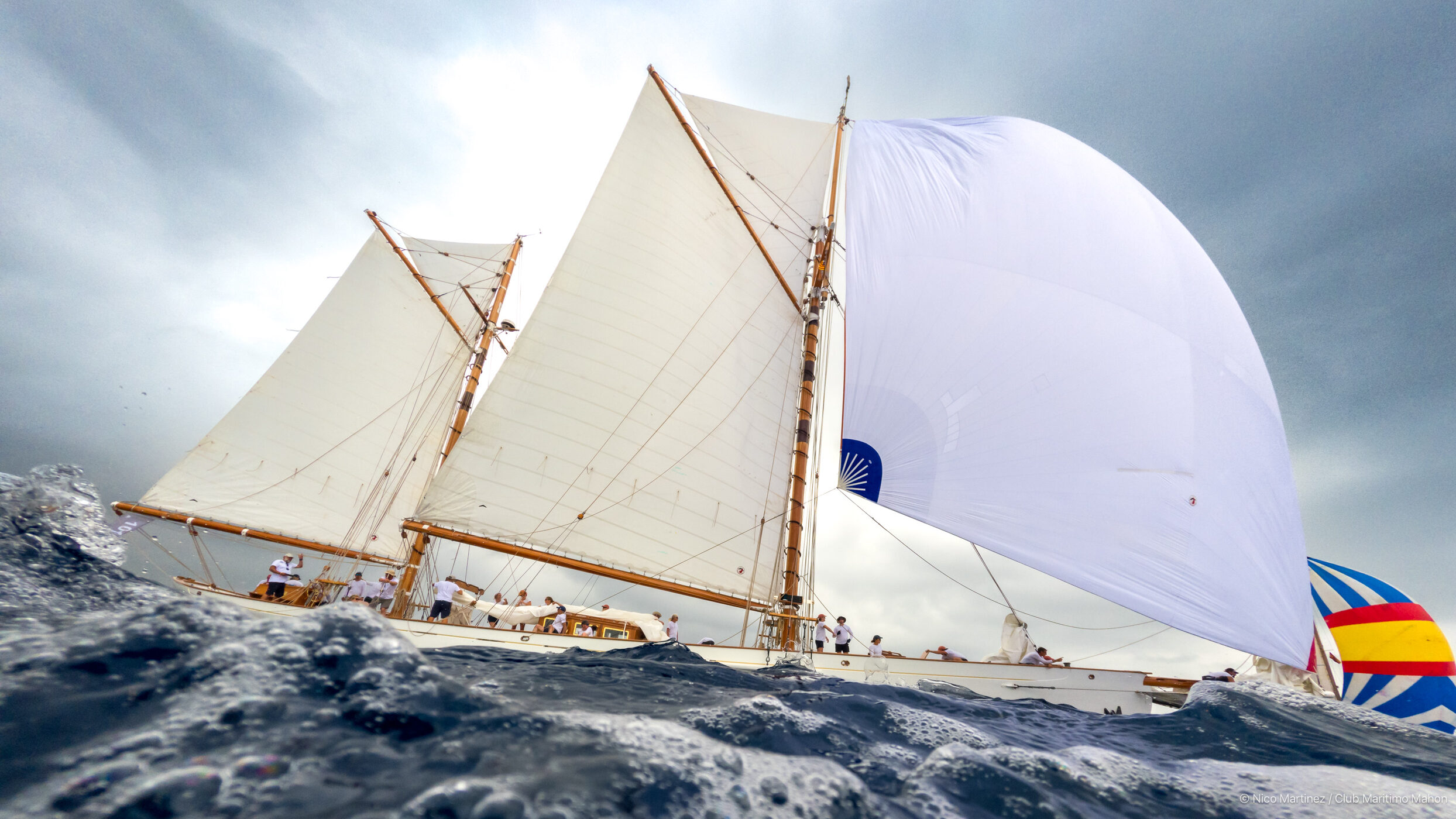
The 22nd Repsol Copa del Rey Vintage Yacht Race once again puts Menorca on the international classic sailing map. Officially unveiled this afternoon at the Club Marítimo de Mahón, the regatta will bring together 41 historic boats from 12 countries from August 25 to 29, featuring a combination of four days of competition at sea and a packed social program on land.
Now a flagship event on the international vintage sailing calendar, the race counts toward the Mare Nostrum Classics Trophy–Spanish Classic Sailing Cup (RFEV) and the Vintage & Classic Yacht Club’s Mediterranean Champions Cup, the most important vintage yacht racing circuit in the Mediterranean.
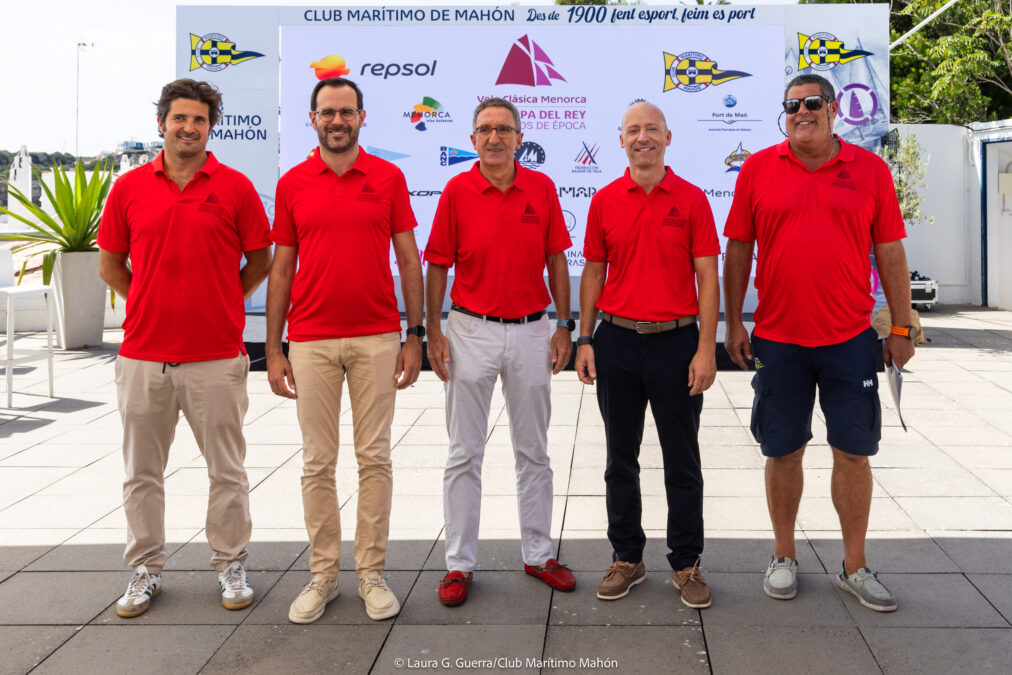
Organized by the Club Marítimo de Mahón (CMM) on behalf of the Royal Spanish Sailing Federation (RFEV), the Repsol Copa del Rey is sponsored primarily by Repsol and supported by the Menorca Island Council, the Maó City Council, and the Balearic Islands Port Authority. The presentation brought together the president of the Menorca Island Council, Adolfo Vilafranca; the mayor of Mahón, Héctor Pons; the president of the Club Marítimo de Mahón, Basilio Ferrer; Carlos Pedruelo, head of Repsol’s Marine and Fisheries divisions in the Balearic Islands; and the regatta director, Ignacio Marra-López.
Ferrer highlighted the pride felt by the Club Marítimo de Mahón at once again hosting the Copa del Rey Vintage Yacht Race and expressed his gratitude for the institutional support provided by the Menorca Island Council and the Mahón City Council, as well as for Repsol’s sponsorship. The club’s president described the competition as “the emblem of the port, the city, and the island.” In the same vein, the mayor of Mahón, Héctor Pons, praised the Club Marítimo’s organization and the natural setting offered by the port of Mahón, which provides the perfect backdrop for watching the classic fleet sail in the shelter of its waters. For his part, Adolfo Vilafranca emphasized the visibility that the Copa del Rey brings to both Menorca and the sport of sailing—a discipline that, as he noted, is part of the island’s very essence.
Following the official presentation, the day continued with the registration of the boats and the confirmation of entries, ahead of the start of the competition, which will take place between tomorrow and August 29. For the fourth time in its 22-year history, the Repsol Copa del Rey will feature four days of racing.
A fleet with more than a century of naval history
The 2026 edition features a top-tier fleet, with vessels that embody more than a century of evolution in naval design and construction. The historical range extends from the Cariad, built in 1896, to the Victoria, launched just this year by Spirit Yachts and built according to original plans from 1926.
In the Classics category—reserved for boats launched between 1950 and 1975—the Argos once again stands out as the benchmark: a ten-time winner and one of the most decorated boats in the history of the Repsol Copa del Rey. The Bermudian sloop owned by Bárbara Trilling, designed by Kim Holman and built in 1964, returns to Mahón with a clear goal: to defend the title it won last year—its seventh in a row.
The competition, however, will be tough. Andrew Harvey’s *Clarionet* (1966) comes on the heels of its victory at the recent Illes Balears Clàssics competition hosted by the Club de Mar-Mallorca, where it won every race, and after once again demonstrating its potential at the Cormorán Trophy in Pollença Bay.
The Bermudian Era class, comprising boats launched before 1950 with triangular rigging, represents one of the most significant displays in terms of both heritage and sportsmanship in this edition. Among the new entries is Thea, a Formula 12-Meter yacht designed by Johan Anker and built in Norway in 1918. The boat owned by Hans Michael Jebsen—which is actually 20 meters long—is participating in the Repsol Copa del Rey for the first time.
Its history is as unique as its design: in more than 100 years of existence, it has had only four owners. It will face off against some of the biggest names in Mediterranean classic sailing. Tony Morse’s Baruna (1938) enters the race as the top favorite after finishing third last year, although the starting line will also feature such competitive and legendary yachts as Jens Kellinghusen’s Varuna (1939); Griff Rhys Jones’s Argyll; Jordi Cabau’s Sonata (1937); and Germán Frers’s Recluta.
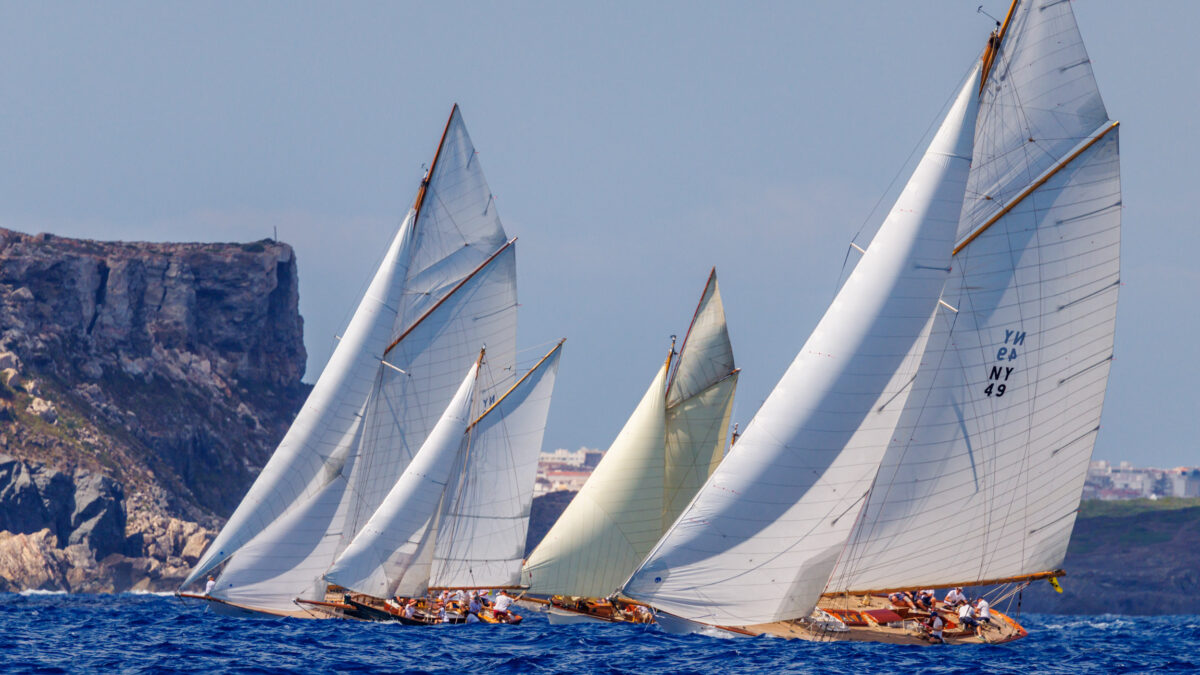
In the Época Cangreja class—for boats launched before 1950 with a trapezoidal rig—the Rowdy will be one of the competition’s main attractions. The NY40, owned by Dona Dyer and launched in 1916 based on a design by Nathanael Herreshoff—known as the Wizard of Bristol—arrives in Mahón after comfortably winning the Club de Mar-Mallorca regatta.
Her main challenge will be the Chinook, practically her twin and also designed by Herreshoff, built in 1916 as well. The two maintain a close, though friendly, rivalry. The Spanish flag will also be represented by two boats with distinguished histories in this class: the Gipsy (1927), owned by the Fundación Vela Clásica de España, and the Bon Temps, owned by Santi Godó, which is celebrating its 100th anniversary this year.
If there’s one boat destined to turn heads in Mahón, it’s the Cariad, owned and skippered by Tim Hartnoll. At 36 meters in length, this imposing auric ketch is the largest and oldest boat in the Repsol Copa del Rey. Built in 1896, she will compete in the Big Boat class, which once again brings together true giants of the classic fleet. Among them are the schooner Altair (1931) and the FI15 The Lady Anne (1912), both designed by William Fife III, as well as the Viveka (1929), designed by Frank Paine and built by the Lawley shipyard in Massachusetts.
The Espíritu de Tradición class represents the intersection of modernity and classicism. In this class, Andalucía-Barlovento—a Lotus E3 Scandinavia 40 designed and built by Harry Becker in 1973—will attempt to defend the title it won last year. The competition will once again feature the sailboats Legolas, Happy Forever, and Victoria—all from the Spirit Yachts shipyard—which are once again among the contenders for the title.
Four days of competition against Mahón
The Repsol Copa del Rey will consist of four race days, each featuring a coastal course in the waters near Mahón. Ignacio Marra-López, director of the Club Marítimo de Mahón, explained during the presentation that the finish line will be located inside the harbor, weather and maritime traffic permitting. It is also possible that some races may start from within the harbor itself, as happened last year.
This format will thus allow the competition to preserve one of its main attractions: bringing a world-class historic fleet to the public and transforming the port of Mahón into a prime setting for viewing some of the most unique boats in international classic sailing.
The fleet statistics provide an exceptional snapshot of the historical significance of the Repsol Copa del Rey. The Big Boats, with an average length of nearly 29 meters and an average age of 106 years, will share the waters of Mahón with the sleek Espíritu de Tradición class, whose average length is 14.5 meters and whose average age is just 32 years, making them the youngest class in the regatta.
Between these two extremes lie the Cangreja Class, with an average age of 104 years and a length of 16.4 meters; the Bermuda Class, with an average age of 91 years and a length of 17.4 meters; and the Classics, with an average age of 60 years and a length of 13.6 meters. The result is an extraordinary fleet: 41 boats, 12 countries, an average age of nearly 69 years, and an average length of 16.6 meters.
More than just a regatta, the 22nd Repsol Copa del Rey is once again being presented as a celebration of maritime heritage, naval design, and competition. For five days, Mahón will serve as the gathering place for a fleet that transforms the history of sailing into a living spectacle on the Mediterranean.