








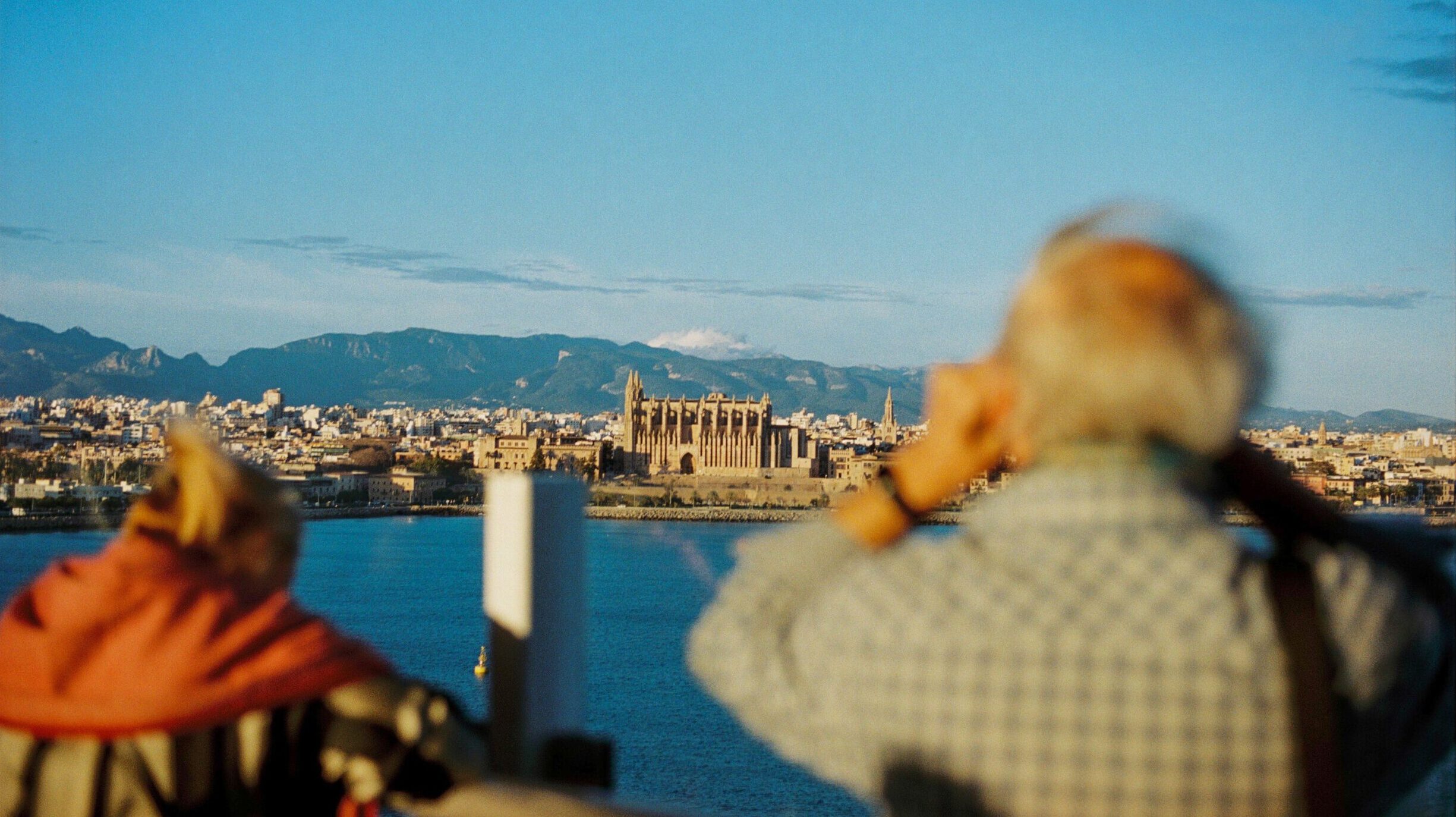
June marked the exact moment when the Balearic Islands took the lead in tourism spending in Spain. A position they will likely not relinquish until the final quarter, provided forecasts are confirmed and the season follows the pattern of the last two years. The islands recorded nearly 3 billion euros in tourist spending last June (2.954 billion, almost a quarter of the total spending in Spain), enough to overtake Catalonia as the leading region in this category (2.726 billion). The Balearic Islands dominate the summer in terms of tourism revenue, just as the Canary Islands take the lead in the off-season and Catalonia does the same as a spring bridge between the two archipelagos. And on the horizon is the prospect of reaching 22 billion euros by 2026.
The summer leadership change came a month earlier last year, with the Balearic Islands taking the lead as early as May and maintaining that top position until October. The same is expected to happen this year (in 2024, the islands did not cede the lead until November). Meanwhile, between January and June, the Balearic Islands recorded a cumulative total of 9.141 billion euros, representing a 4.5 percent increase compared to the same period last year. The 2025 fiscal year closed with a total of 21.059 billion euros (5.2 percent more than in 2024), so if current growth rates are maintained, it will be relatively easy to surpass the 22 billion mark.
All this comes in a context where the ancillary services sector continues to suffer a significant decrease in visitor spending. Consumer habits have gradually changed to adapt to the economic situation in the source markets—mainly Germany and the United Kingdom—and to the rising cost of airline tickets and accommodation. Travelers are scrutinizing their budgets while shortening their average stay. In fact, the price increase is not deterring tourists: eight million arrivals were recorded during the first half of the year, 2.4 percent more than last year. In this regard, the record level of spending will once again go hand-in-hand with the record number of visitors, albeit at a significantly higher growth rate. In this sense, the fact that the increase in tourist spending is double that of the number of arrivals has been a constant trend in recent seasons.
However, the Balearic Islands are far from leading the ranking of per-person tourist spending. In June, the islands recorded about €1,300 per tourist, below the Community of Madrid, which holds first place with just over €2,100 per person, according to tourism spending statistics published by the National Statistics Institute (INE) and the Balearic Islands Statistical Institute (IBESTAT).

The increase in the cost of tourism in the Balearic Islands has been driven by two key factors: the commitment to modernize the hotel sector toward a higher-quality model and the surge in tourist demand that followed the end of the pandemic. As for hotels, the number of four- and five-star establishments has grown significantly over the last 15 years, and they now represent almost 70 percent of the total supply. This transformation has acted as a driver for other tourism services, starting with the hospitality sector. The increase in hotel prices, in this regard, is due to investment in product improvement and a level of demand that shows no sign of slowing down.
An increase in reserves this summer
In fact, this summer’s bookings have also been driven by geopolitical instability: the shift of tourists from the eastern Mediterranean to the western Mediterranean, seeking to escape the war in the Middle East, has made Spanish destinations, especially the Balearic Islands, a preferred alternative.
In terms of spending by nationality, the volume of visits attributed to Germans and the British – the two main markets for the Islands – inevitably places them at the top of the list in absolute terms. However, when spending per person is considered, tourists from the Nordic countries and the Benelux triangle – the Netherlands, Belgium, and Luxembourg – have significantly higher averages in a European context. Furthermore, the average reaches €1,760 per day for tourists grouped under the statistical category ‘rest of the world’. The spending level of long-haul markets, such as the USA, Canada, and Middle Eastern countries, is much higher than that of traditional European source markets.
So far this year, IBESTAT reports that 24.28 percent of tourist spending was allocated to the cost of a package tour, 35.85 percent went to expenses related to lodging or meals, and the remainder (39.87 percent) to transportation, activities, and other expenses.
The tourism sector still shows no sign of slowing down. Needless to say, the figures for July published Tuesday by Turespaña indicate a new record for the number of air passengers. The archipelago received 9.5 million international air passengers between January and July, which represents a 2.8 percent increase compared to the same period in 2025. This figure represents 14.2 percent of the more than 67 million passengers who arrived in Spain during the first seven months of 2026.