








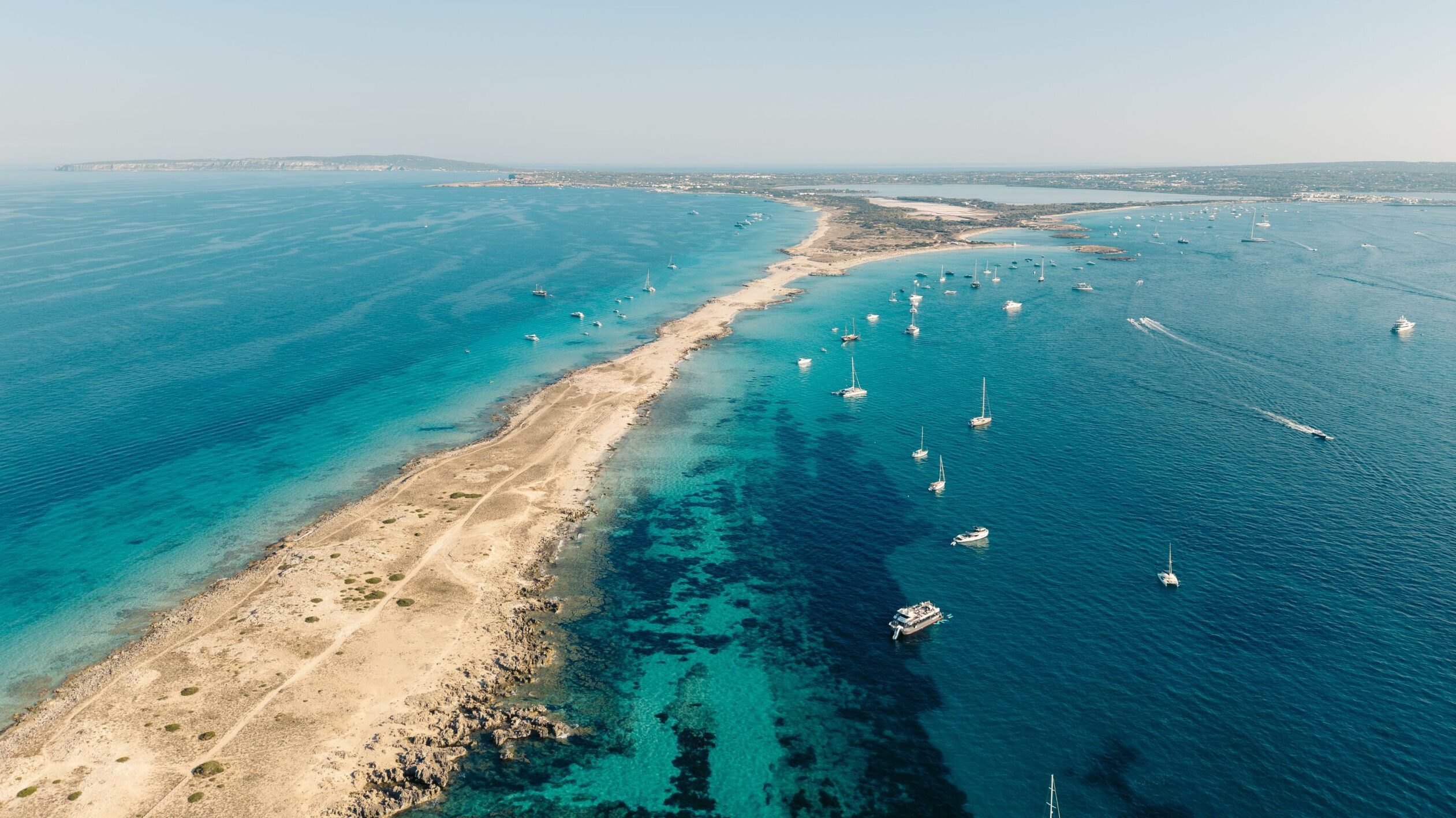
Government spokesman Antoni Costa attributed the dismissal of former Director General of Coasts and the Littoral, Maria Joaquina Ferrer Matas, to the reduction in the number of lounge chairs and umbrellas on Formentera’s beaches, an issue that, he said, has had both an economic and social impact. He made these statements when asked about the matter at the press conference following Friday’s Government Council meeting, at which her dismissal was confirmed and her successor, former Llucmajor mayor Joan Jaume Mulet, was appointed.
When asked about the reasons for the change, the first vice president maintained that the goal is “to ensure better service and support for citizens and businesses” in a department that is “enormously complex and sensitive.” Although he acknowledged that Ferrer Matas had carried out “an enormous amount of work that was very complex and very difficult,“ he highlighted the existence of “complicated situations” such as the “enormously significant reduction of moorings and sunshades in Formentera.”
We have a situation in Formentera that hasn’t occurred in previous years and that has a very significant impact on Formentera’s public interest. It’s a situation that concerns the regional government, he emphasized.
It seems that there is – and I emphasize that it is only an appearance – a significant divergence between what happened in previous fiscal years and this one, as a result of interpretations that are respectable but seem different. And the result of this divergence is a significant impact. The most important thing is to comply with regulations, but also that an interpretation should have been made that would have led to the previous results, and that the damage currently being caused should not have occurred,” he added later.
The fact that there are beaches where “not even a single beach chair could be set up,“ the spokesperson argued, causes economic damage not only to business owners who have seen their beach occupancy permits reduced, but also to bathers.
I’m talking about people who go to the beach, want to rent a lounge chair, and can’t get one. The beachgoers value them because they use them. The best way to determine whether they are necessary or not is to see if they are being used. The quality of beach services is suffering as a result of this situation. “This is a significant problem,” he emphasized.
“Differences and disagreements” with Lafuente
The spokesperson also acknowledged that there were “differences and divergences of opinion” between the former Director General of Coastal Affairs and her superior, the regional minister of the Sea and the Water Cycle, Juan Manuel Lafuente. “But everyone knows the minister’s disposition: calm and open to dialogue. It’s one thing to have differences of opinion and quite another to attribute them to issues that go beyond that,” he noted.
However, he has denied that the regional government has been subjected to “pressure” from the business owners affected by the reduction of licenses on Formentera’s beaches, nor that the PP is concerned about the possible electoral impact this could have.
It’s not a question of pressure or the lack thereof, but of concern. We in the Government are concerned that a situation like the one we are experiencing in August could arise. We have gotten through the high season in a difficult situation, which is causing a decline in the quality of service offered on the beaches of Formentera. “It’s not a matter of pressure, but of our concern that this situation be resolved in the best way possible,” he insisted.
Jaume Mulet will have to solve it
Costa expressed his confidence that Jaume Mulet’s “dialogue-oriented and locally focused” approach would be useful in resolving this and other issues, such as the “significant backlog of pending cases.” “If this is an issue that concerns the regional government, it’s clear that the new director general will address it, and we hope it will be successfully resolved. But I must say that this is not the only situation of this kind,” he emphasized.
The Government spokesperson expressed his confidence that Jaume Mulet’s experience as a mayor would help him “negotiate, seek to reach agreements, and make the best decisions, always respecting the current legislation.” Born in Llucmajor in 1967, the new director general studied Business Studies at the University of the Balearic Islands (UIB). He began his career in the public service in 1989 as an advisor to the regional government’s Department of Commerce and Industry.
In 1995, he joined the Llucmajor City Council as a councilor for Urban Planning and Finance. Between 2008 and 2015, he served as the town’s mayor; during this period, he also chaired the Mallorcan Solidarity and Cooperation Fund and was a member of the Consortium for the Development and Regeneration of Palma Beach.

