








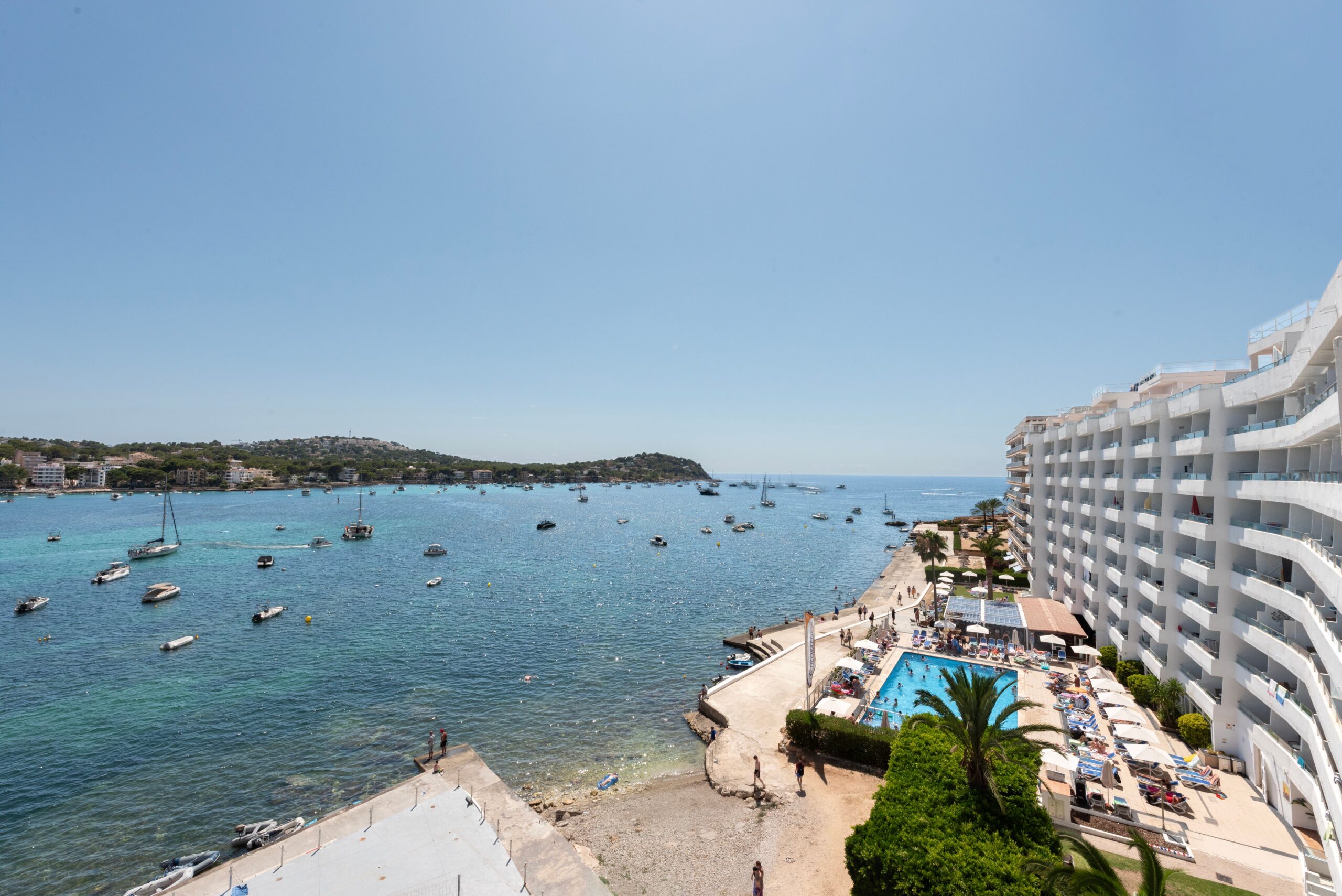
Investor appetite for Spanish tourism shows no sign of waning. In a context where high-end hotel assets have become one of the most sought-after products in the real estate market, the Balearic Islands have once again confirmed their status as a major magnet for large capital. It is no surprise that the archipelago led hotel investment in Spain during the first half of 2026, with 577 million euros, accounting for 23 percent of the national total, according to the latest report from Colliers.
The leading position of the Balearic Islands also comes at a particularly dynamic time for the sector. Between January and June, €2.46 billion was invested in hotel transactions in Spain, 26.5% more than in the same period last year and the highest figure ever recorded for the first half of a fiscal year.
The market thus maintains the momentum gained from the pandemic and confirms Spain’s appeal to national and international capital, supported by the strength of the tourism sector, high occupancy rates, and the ability of top-tier establishments to continue increasing their rates and profitability.
Most of the activity was focused on hotels already in operation, which accounted for more than 2 billion euros in transactions. This was supplemented by investments in assets for renovations and in land for future hotel developments, in a semester in which 88 establishments, totaling 12,187 rooms, changed hands.
Main operations
The main transactions during this period also reflect the direction in which the market is heading. Among the most significant are the acquisition of the land where the Four Seasons Marbella is to be built, the sale of 50% of the Four Seasons Madrid, Palladium’s repurchase of Azora’s stake in their joint venture, and Calena’s purchase of a portfolio of three hotels from HI Partners. Also noteworthy are the transactions involving iconic properties such as Tivoli La Caleta and Ocean House Torremolinos.
Hotel values continue to rise. The average price paid per room reached €213,300, the highest level on record and more than double what it was a decade ago. Behind this increase is not only growing interest in five-star establishments but also competition to acquire assets in destinations with established tourist demand and limited opportunities for new supply.
Luxury continues to set the pace of investment. More than half of the capital raised during the semester was channeled into five-star hotels, which accounted for 51 percent of the total volume, while four-star establishments attracted an additional 35 percent. Overall, the premium segment accounted for virtually all of the market’s major transactions.
Next on the list
By destination, the investment map confirms the strength of vacation destinations. After the Balearic Islands, the Costa del Sol attracted 435 million euros, equivalent to 18 percent of national investment, while the Canary Islands attracted another 363 million euros, accounting for 15 percent. In contrast, Madrid and Barcelona, the country’s main urban markets, added up to 562 million euros, with the capital registering the highest volume of hotel investment.
Beyond the numbers, Colliers has identified a shift in investment trends. Transactions involving individual hotels have clearly taken center stage and now represent 81 percent of the market, while large portfolio purchases have seen a gradual decline and now account for only 19 percent of the total. The market seems to favor more selective acquisitions, focused on assets with appreciation potential and a distinctive positioning.
This evolution is also reflected in the buyer profile. Hotel chains have strengthened their leading role, taking advantage of opportunities to expand their portfolios in strategic destinations. Alongside them, real estate investment companies (SOCIMIs) and specialized investment vehicles stand out, focusing on stabilized assets or those with repositioning potential, while international funds maintain their focus on value-added transactions. Overall, Spanish capital led investment during the first six months of the year, accounting for 62 percent of the total volume.
Given this level of activity, the outlook for the full fiscal year remains optimistic. Colliers estimates that if the trend observed during the first half of the year continues, hotel investment could once again exceed the €4 billion mark in 2026, consolidating Spain’s position as one of the most attractive hotel markets in Europe for institutional capital.


