







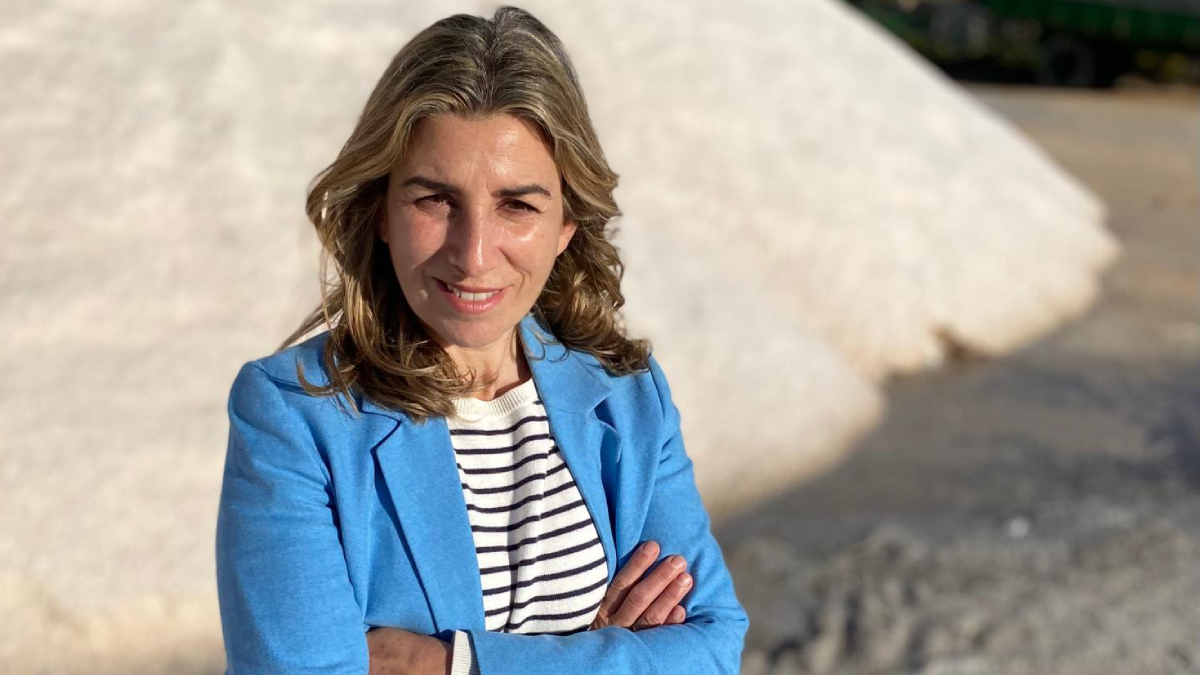
With over 25 years of experience in brand strategy, marketing, corporate communications, institutional relations, and business positioning, Laura Calvo (Barcelona) is currently the Director of Communications and Institutional Relations at Flor de Sal d’Es Trenc in Mallorca, and has served as Honorary Consul of the Principality of Monaco in the Balearic Islands since 2024.
Since 2024, she has served as Monaco’s Honorary Consul in the Balearic Islands. How did she come to hold this position?
First of all, I would like to express my gratitude to H.S.H. Prince Albert II, the Embassy of the Principality of Monaco in Spain, and all the consular representatives and officials of the Principality for their trust and inspiration. I assume this position with great surprise and, above all, with deep honor and gratitude for the trust placed in me. The appointment follows a diplomatic and institutional validation process involving both the Embassy of the Principality of Monaco in Spain and the Monegasque and Spanish authorities, a procedure that can take between one and two years. I understand that my appointment was based on aspects of my career related to institutional relations, corporate communications, and international outreach, particularly in projects involving sustainability, excellence, and the premium sector—values that are closely aligned with the image of the Principality of Monaco.
What would you say is the most important aspect of your role?
I would particularly highlight the institutional and human aspects of consular work. The work of the Honorary Consulate of Monaco in the Balearic Islands consists primarily of representing the Principality and strengthening bilateral relations through institutional, cultural, economic, and diplomatic events. In addition to this representative role, I am particularly motivated to promote initiatives that bring Monaco and the Balearic Islands closer together in areas such as culture, sustainability, gastronomy, and international outreach.
What assistance does the Consulate offer to businesspeople from the islands who are interested in setting up a business in Monaco?
The Consulate in Palma can serve as an initial point of contact and institutional liaison, helping to direct inquiries and facilitate contacts with the appropriate agencies. It does not replace specialized legal, tax, or administrative advice, but it can assist companies in their initial engagement with the Monegasque business ecosystem and guide them on the general steps to take.
The consulate also serves as a place for Monegasque citizens, residents, visitors, and anyone interested in the Principality to meet, receive assistance, and find support. The Balearic Islands is a deeply international region, with more than 19 million visitors annually and a well-established community, characterized by close collaboration among consulates, which creates a highly enriching environment from both an institutional and human perspective.
Which part of the archipelago is of greatest interest to Monegasque businesspeople looking to invest?
The growing interest in Monaco among companies and projects in the Balearic Islands is particularly noteworthy, just as there is also interest from Monegasque companies that view the Balearic Islands as a region very similar to their own in terms of international standing, quality of life, Mediterranean setting, and specialization in premium sectors.
In recent years, both Monaco and the Balearic Islands have established themselves as major international hubs (and leaders) in the luxury, lifestyle, and hospitality sectors, attracting a high-profile international audience each year, as well as MICE events, conferences, conventions, business meetings, and internationally significant events related to innovation, sailing, premium tourism, gastronomy, wellness, and specialized services in other sectors.
This year marks the 150th anniversary of diplomatic relations between Monaco and Spain. Will you be hosting any commemorative events in Mallorca?
2026 is undoubtedly a particularly significant year for relations between the Principality of Monaco and Spain, as it marks the 150th anniversary of Monaco’s diplomatic mission in Spain, which was officially established on July 14, 1876, although relations between the two countries date back five centuries.
To commemorate this anniversary, one of the highlights will be the opening in Madrid on June 1, attended by H.S.H. Prince Albert II and Princess Charlène, of the exhibition “Monaco and Spain: Five Centuries of Shared History,” hosted at the Royal Botanical Garden in Madrid. Subsequently, this exhibition will travel to various Spanish cities and is scheduled to arrive in Palma de Mallorca, where it will be housed at the Club de Mar Mallorca. It has been very rewarding for me to be able to participate so actively in its development.
Without a doubt, this event will provide a wonderful opportunity to further strengthen the historical, cultural, institutional, and economic ties between Spain, the Balearic Islands, and the Principality of Monaco, while also promoting a shared vision of the Mediterranean based on culture, sustainability, excellence, and international cooperation. Furthermore, it coincides with the 70th anniversary of the wedding of Rainier of Monaco and Grace Kelly. We still fondly remember Prince Rainier and Princess Grace Kelly’s visit to Mallorca
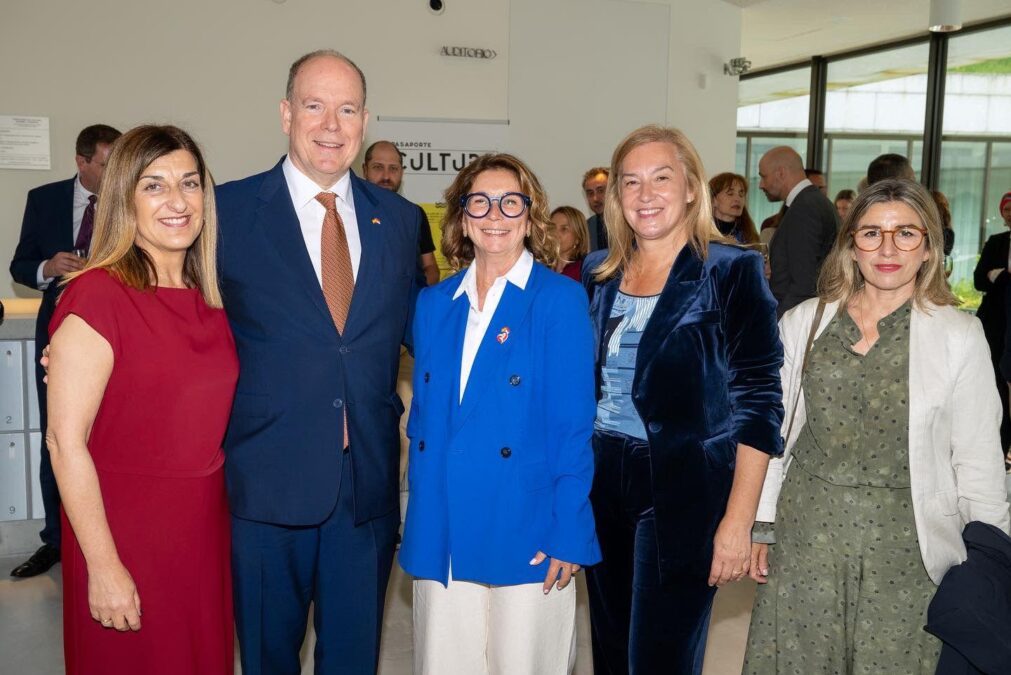
Have you treated Prince Albert?
On the occasion of the exhibition honoring his great-great-grandfather, Prince Albert I, in Cantabria, various events were held, and I had the opportunity to speak with H.R.H. Prince Albert. I was particularly struck by his approachability and down-to-earth manner. We had a very cordial conversation alongside the Ambassador and other consuls, discussing family matters and everyday topics as well.
Prince Albert II is particularly noted for his deeply diplomatic institutional profile, as well as his unwavering commitment to protecting the environment and the oceans—areas in which he has become an international leader. His ability to project a modern, elegant, and stable image of the Principality, while preserving the human and cultural legacy associated with Prince Rainier and Princess Grace, further reinforces widely recognized values of cultural sensitivity, approachability, and international vision.
Since 2020, he has been a member of the Executive Committee of the Federation of Small and Medium-Sized Enterprises of Mallorca (PIMEM). How is this business platform faring on the islands?
PIMEN is an essential part of the Balearic Islands’ real economic fabric. It currently comprises 73 sectoral and regional business associations and represents more than 3,000 companies and small businesses in Mallorca, making it one of the most important and essential business platforms in the archipelago. The Balearic Islands are undergoing a period of profound transformation, and SMEs play a fundamental role in building a more balanced, sustainable economic model with greater added value. Furthermore, PIMEN has successfully fostered a dynamic vision open to institutional dialogue, bringing together a wide range of sectors and creating spaces for reflection on the islands’ economic future. Personally, I particularly value this ability to connect business, the local region, sustainability, and internationalization from a perspective closely aligned with the business reality of the Balearic Islands.
She is currently the Director of Communications and Institutional Relations at Flor de Sal d’Es Trenc. What is the company’s main line of business?
Flor de Sal d’Es Trenc has established itself as one of the most renowned premium gourmet brands in the Balearic Islands and a leading international name in Mediterranean gourmet sea salt. The company produces Flor de Sal d’Es Trenc and natural sea salts using traditional methods within the protected area of the Es Trenc-Salobrar de Campos Maritime-Terrestrial Natural Park, a unique Mediterranean landscape that represents one of the brand’s key distinguishing and emotional values.
Beyond the product itself, the company embodies a distinct contemporary vision of the Mediterranean rooted in authenticity, local heritage, sustainability, excellence, and lifestyle. I believe that is precisely where much of its uniqueness lies: we don’t just sell gourmet sea salt; we offer a deep connection between the landscape, tradition, Mediterranean culture, and high-quality products.
What marine or environmental projects does Flor de Sal d’Es Trenc support?
The most important of these is the salt flat itself, located within the Es Trenc-Salobrar de Campos Maritime-Terrestrial Natural Park. It plays a direct role in the conservation of the environment, biodiversity, and the balance of the Mediterranean ecosystem. At Flor de Sal d’Es Trenc, we work to highlight the importance of the salt flats as a productive, cultural, and environmental landscape of immense value to the Balearic Islands. In this context, we maintain collaboration and dialogue with the government and with organizations such as GOB, AEMET, CSIC, IMEDIA, and other scientific and environmental agencies.
She is a pioneer in introducing the concept of luxury retail to Mallorca. What retail products and sectors would you highlight on the islands?
Flor de Sal d’Es Trenc was one of the first Balearic brands to adopt a direct-to-consumer and single-brand retail model centered around a premium local gourmet product—a highly innovative approach in the early 2000s. The islands also boast an extraordinary distinguishing factor: they welcome millions of international visitors with a keen appreciation for design, quality, lifestyle, and experiences tied to the region. This makes the Balearic Islands a magnificent international showcase for brands capable of conveying identity, consistency, and excellence. In this context, I can also say with confidence that trends indicate that the premium retail of the future will become increasingly hybrid, emotional, and experiential.
She also specializes in corporate relations and diplomacy, as well as brand strategy and development with an international focus. What advice does she typically offer on these topics?
I certainly agree that one of the fundamental keys to brand strategy and international positioning is to first build a solid identity before communicating. A brand must know exactly who it is, what it stands for, what its values are, and what unique value it can offer. Only then does communication truly resonate. As Madame Coco Chanel said, “elegance is consistency”; and I believe something similar applies to brands: consistency, authenticity, and the ability to maintain a coherent narrative over time generate far more value than any one-off action.
At the same time, I believe it’s important to take the initiative and lose your fear of exploring new opportunities.
Where do you feel you have the most creative freedom in your business?
I feel particularly fulfilled when I can bring together energy, identity, place, and a keen attention to detail in a single project.
I particularly enjoy building bridges between businesses, institutions, culture, gastronomy, sustainability, experiences, and people. That’s where I truly find my creative space: in transforming a brand into a coherent, respected story with the potential for global reach, without losing its identity.
I also find it very inspiring to work on concepts where seemingly disparate worlds coexist—luxury and sustainability, tradition and innovation, diplomacy and business, local products and global reach, craftsmanship and evolution—and to discover that, when there is a clear and coherent vision, all these elements can reinforce one another.