






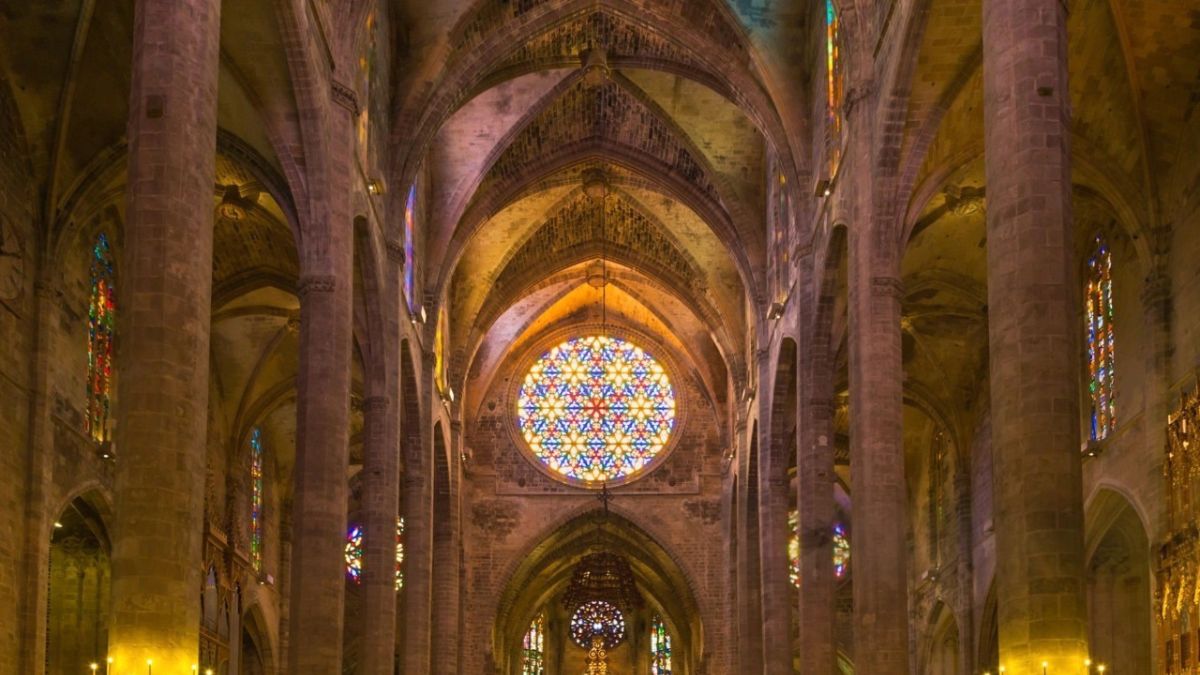
Turquoise waters, the Serra de Tramuntana mountains, and over 300 days of sunshine explain why Mallorca is one of the most visited destinations in the Mediterranean. The island has everything you need for a getaway in true Mediterranean style. The largest of the Balearic Islands offers a combination of landscape, climate, and culture that is hard to match, where coves, mountains, and urban life coexist. However, beyond its beaches and leisure activities, the island holds authentic heritage gems that many visitors overlook. Among them stands out a symbol of European Gothic architecture known as the “Eye of the Gothic,” the great rose window of the Cathedral of Santa María in Palma de Mallorca, considered the largest of this artistic and cultural period and one of the most impressive in the world due to its size, its complex tracery, and its extraordinary play of light, which transforms the interior into a unique chromatic mosaic. Therefore, tourists can now go with “their eyes wide open.”
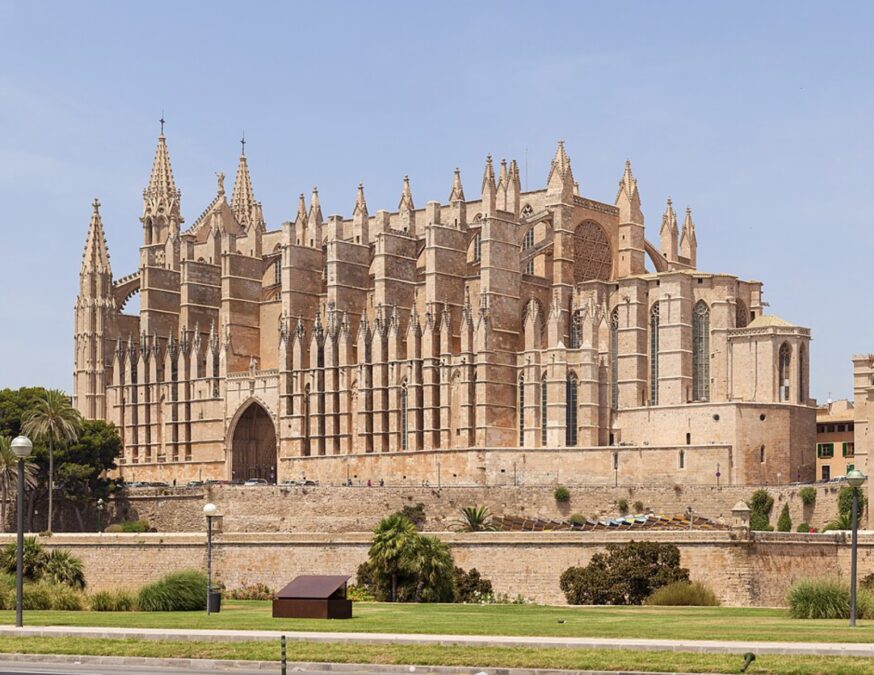
The Cathedral of Santa María in Palma de Mallorca, known as La Seu, stands as one of the city’s most iconic landmarks. Construction began in the early 13th century, following the conquest of the island by the Crown of Aragon, on the site of an ancient mosque, in fulfillment of King James I’s promise. The cathedral, built in the Levantine Gothic style, cannot be viewed as a finished work, as it has evolved over the centuries through numerous expansions and renovations that have progressively enriched its structure.
What has remained constant, however, is its status as a living icon of the city, visited throughout its history by tourists, scholars, and experts who continue to come here, drawn by its artistic and symbolic value. Built primarily of local sandstone (marés), the cathedral blends into the landscape of Palma’s southwest coast as a true architectural gem open to the sea and to history.
The “Eye of the Gothic”
The cathedral is particularly notable for its large rose window, which measures about 13 meters in diameter and is composed of 1,236 pieces of stained glass. This feature, unusually situated above the central chancel, filters the sunlight and projects it into the interior, creating a unique and ever-changing visual effect that is considered one of the most spectacular examples of Gothic art in the world.
It was built in 1370, and the stained-glass windows that complete it were added later, in the 16th century. One of its most striking features is the perfect Star of David formed by the 24 triangles created by its tracery. Furthermore, its location is exceptional, as it is situated above the central chancel, rather than at the foot of the church, as is customary in Gothic architecture.
“Gaudí’s Eye” in Santa María
One of the most significant renovations to the cathedral took place between 1904 and 1915, when Antoni Gaudí redesigned the interior of the church to adapt it to new liturgical needs. His renovation restored the central role of the congregation, improved visibility of the choir and the Chapel of the Trinity, and incorporated more intense lighting thanks to the large windows. In addition, he introduced elements such as the baldachin over the high altar and a new conception of space based on light and verticality, which reinforced the building’s monumental character.
Other heritage gems in Palma
Beyond the cathedral, Palma is home to other architectural gems that reflect the island’s rich religious heritage.
The Church of the Sacred Hearts presents “Elements: The Heartbeat of Life,“ an immersive experience that combines video mapping, music, and light to transform the church into a symbolic journey through the four elements—water, earth, fire, and air—with the figure of Ramon Llull serving as a unifying element. Thanks to 360° projections and surround sound, the space becomes a living installation where spirituality, digital art, and emotional storytelling merge into a contemporary sensory experience.
For its part, the Church of La Porciúncula, located in Playa de Palma, is a work by architect Josep Ferragut Pou from the 1960s, known as the “glass church.” Its oval floor plan is enveloped by more than 600 m² of stained-glass windows that bathe the interior in light that shifts throughout the day, creating an ethereal and dynamic atmosphere. These stained-glass windows depict religious scenes such as St. Francis of Assisi’s Canticle of the Creatures and episodes from the life of Jesus Christ, establishing the church as one of the leading examples of contemporary religious architecture in Mallorca.