








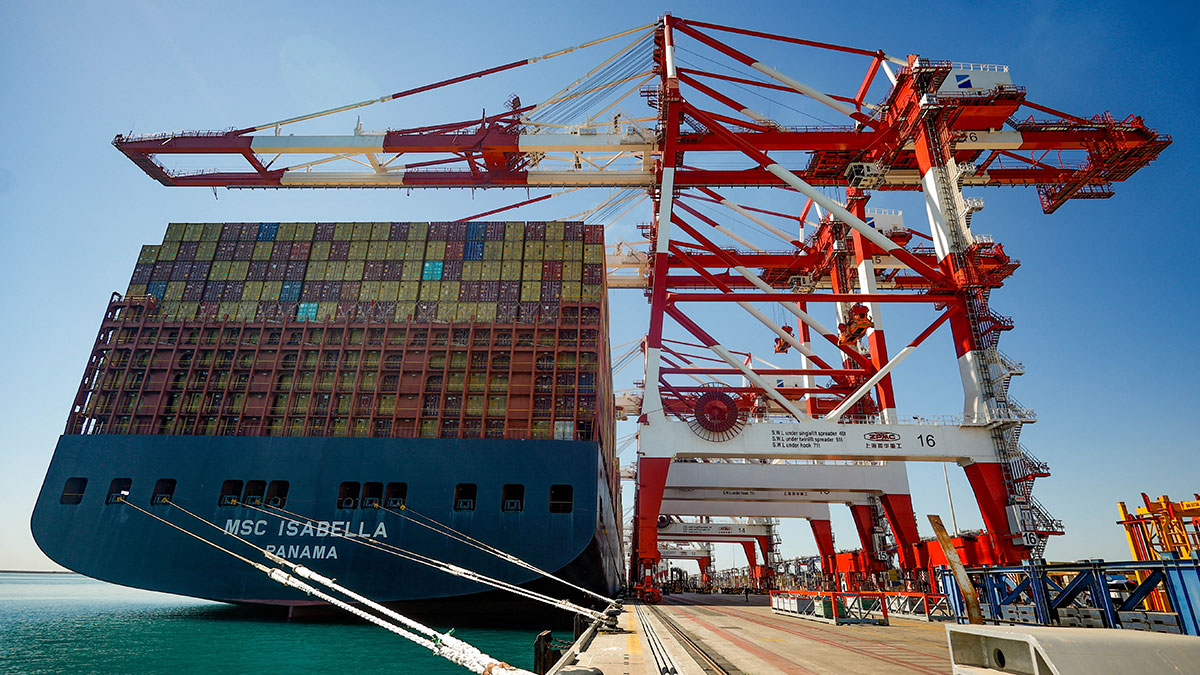
The United States has opened a new trade front with Spain. The Federal Maritime Commission (FMC), the agency that oversees maritime transport in the United States, proposed on Wednesday imposing a fee of $200,000 (about 180,000 euros at the current exchange rate) per voyage on all Spanish-flagged vessels operating in U.S. ports. It also proposed restricting the entry of certain Spanish products.
The proposal comes after Trump has repeatedly called for trade sanctions against Spain due to its disagreements with Washington over NATO defense spending and the war against Iran.
Products in the Spotlight
The second measure calls for limiting imports of perfumes and cosmetics, oils and fats, ceramics, stone products, sugar, and confectionery. The FMC has submitted both proposals to the Trump administration, which will be responsible for implementing them. For now, neither is in effect.
The Background: Denied Berthing Spots in Algeciras
The proposal is the outcome of an investigation that the FMC launched in December 2024, during Joe Biden’s term in office. According to the agency, Spain denied berthing to at least three U.S.-flagged vessels operated by Maersk Line and linked to the U.S. Maritime Administration’s (MARAD) Maritime Security Program. One of them, the Maersk Denver, which was sailing the route between New York and the Middle East, was unable to enter the port of Algeciras in November 2024. Those decisions came amid a wave of protests by activists against the arrival in Spain of ships carrying military supplies for Israel.
The ships were suspected of transporting weapons bound for Israel, although Maersk maintained at the time that the transshipped cargo did not include weapons or ammunition.
The FMC now claims to have gathered “conclusive evidence” that Spanish authorities prevented these ships from entering port. In its view, this creates unfavorable conditions for maritime transport and has “serious” consequences for the reliability of the international supply chain. It adds that this hinders its efforts to boost U.S. exports, strengthen its own merchant fleet, and support national security objectives.
The Government’s Response
Sources at Moncloa, which is reviewing the report, responded that the matter does not fall within the bilateral sphere but rather concerns the trade relationship between the European Union and the United States. Therefore, the government will defend the interests of Spain and its companies in coordination with the European Commission and the other member states. The same sources called for a relationship based on “mutual respect,” described the transatlantic alliance as strategic, and expressed their commitment to maintaining fluid and constructive trade ties, while avoiding an escalation that would harm the business community.
Public Consultation and Hearing
The FMC will open a public comment period during which companies, industry associations, and other interested parties may submit written comments on the economic and commercial effects of the measures. The agency will offer Spain an administrative hearing to respond to the findings and defend its actions before deciding whether to impose any of the sanctions.
The statement does not clarify how these measures would fit in with Spain’s membership in the European single market, in which the 27 member states act as a bloc on trade matters.


