







I’ve been in Madagascar for a week and a half now, and it feels like I just arrived yesterday. I’m at the chart table studying the weather forecast for the next leg of the voyage when suddenly I hear the sound of an engine quite close to the Sofía. I go out on deck, quite surprised, because I’ve only seen rowboats with sails so far. A boat with a powerful outboard motor and six people on board is approaching the Sofía from the stern. I watch as two of them are armed with AK-47s—the classic pirate assault rifle. My body freezes, and my mind starts racing as I devise a plan to defend against the pirates.
I quickly go back inside the cabin and look for the 60-centimeter-long machete that a Kuna Indian from San Blas, Panama, gave me. I set it down next to the stairs, where it’s quick and easy to reach. I hide some cash I had on the table and go back out on deck. They’re just 10 meters from the stern, and with my nerves on edge, I gesture to them as if asking what they want. They respond with the same kind of gestures, indicating they want to tie the boat to the side and come on board. I’m sweating.
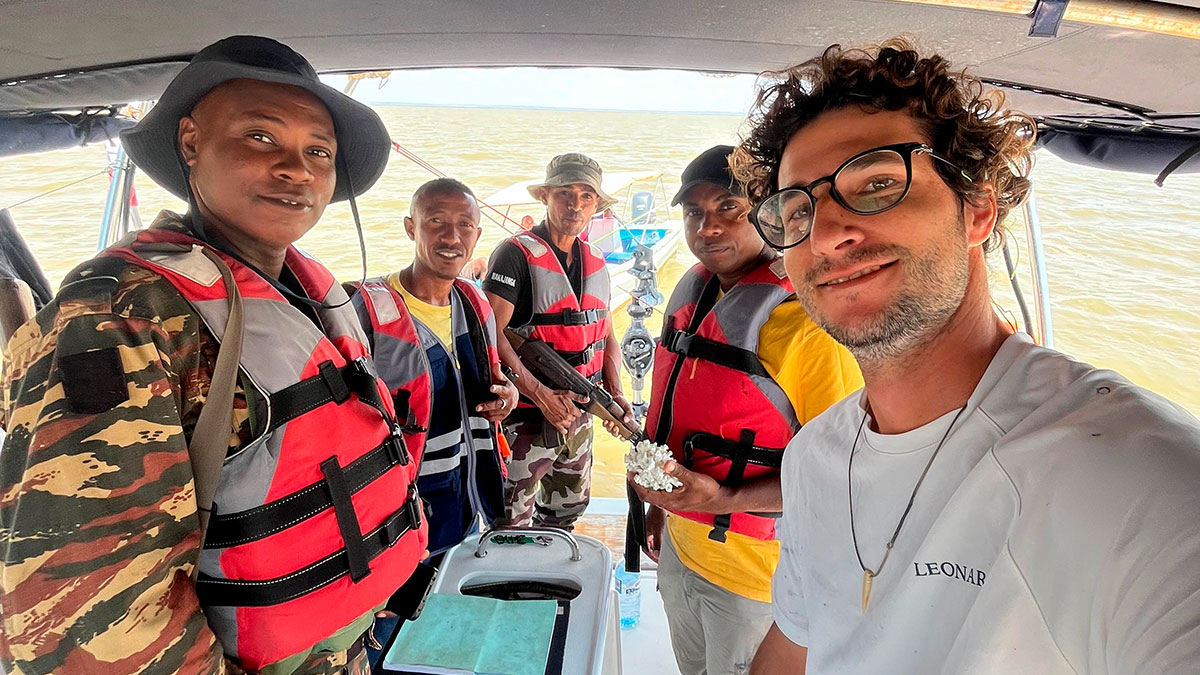
Just as they’re about to throw me a rope to tie up the boat, I notice their clothes. They’re wearing a kind of military camouflage uniform. Two of them have the initials APMF on their chests; they’re port and river police officers from Madagascar. I breathe a little easier, but the submachine guns still make me uneasy. I secure the rope to the stern cleat, and one by one, they climb aboard and take their seats in the cockpit. I’m struck by the contrast between their camouflage uniforms and AK-47s and the Nike flip-flops they’re wearing.
The six agents and I are in the boat; there’s no room for anyone else. To lighten the mood a little, I offer them coffee and water, but they turn me down, which makes me even more nervous. They start asking me for the boat’s paperwork and my passport. When they see that I’m from Mayotte and that I haven’t officially entered Madagascar, they ask me the obvious question: Why didn’t you report to the authorities once you anchored in Madagascar?
I explain to them that the plan is to stay a few days until the weather improves so I can continue on to South Africa. They aren’t convinced by my explanation and ask to see my logbook to verify what I’m saying. They ask me if I’m alone on board. I nod, and they’re very surprised. I can tell they’re confused; I don’t think they understand that I’m sailing alone. With the help of the translator, I explain the whole adventure I’m on, and little by little, they start to see my point and become a bit friendlier. The atmosphere relaxes, and every now and then they crack a smile.
After two hours of conversation and questions and answers, they decide it’s time to leave. However, before leaving the Sofía, one of them asks me for a souvenir of my time in Madagascar. I’m a little taken aback and offer him a piece of dried coral that I found on Cocos Keeling Island. Before boarding their boat, they tell me that since I didn’t enter Madagascar legally, I can’t set foot on land and must remain on board.
I wave goodbye to them; now I can finally breathe easy and stop sweating. I look over at the officer who asked me for a souvenir. He’s very happy with the piece of coral I gave him. I can go back to the chart table to keep studying the weather. It looks like I’ll have to wait several days until I get a good window to sail to South Africa.


