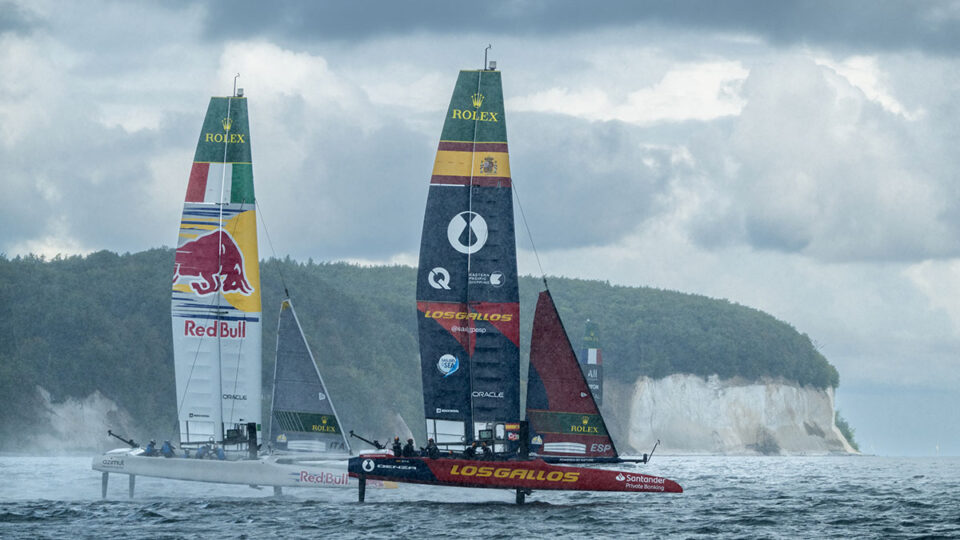








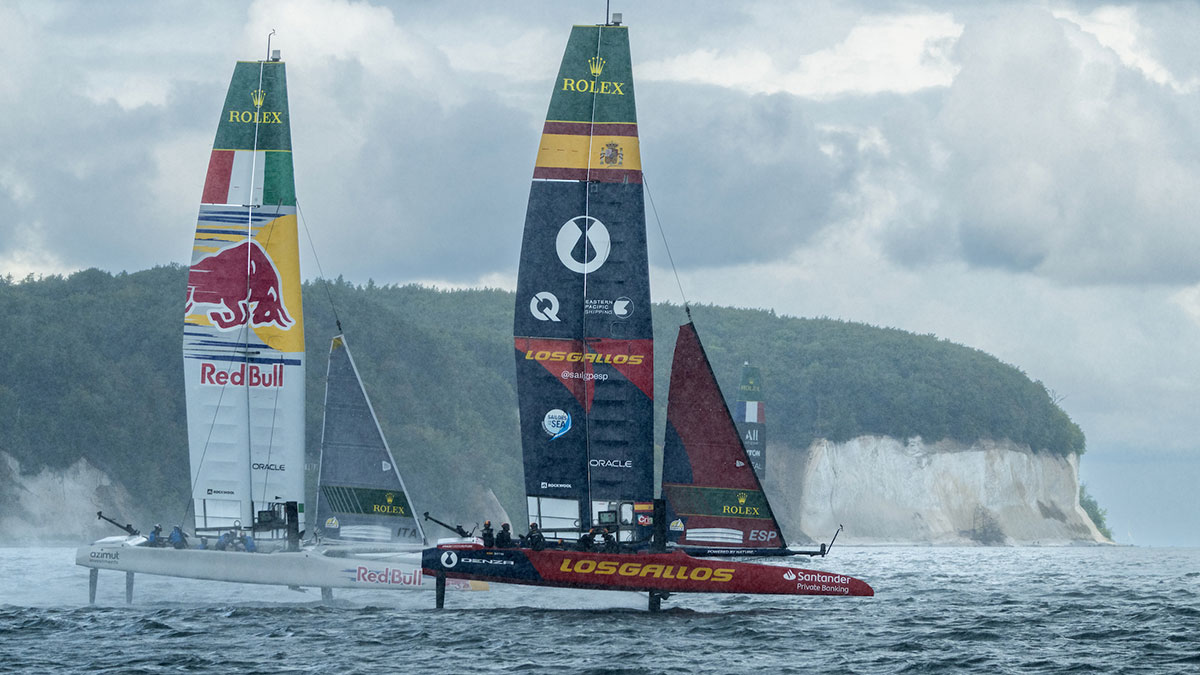
Valencia is preparing to host its first Spanish Grand Prix of the Rolex SailGP Championship this weekend (September 5 and 6). The event, which will bring together 13 teams already set up at Marina Port Valencia, takes over from Cádiz, host of the last four editions, and confirms the Valencian Community as the venue for the tournament for the next three seasons: Valencia will also host the 2027 event, while in 2028 the baton will pass to Alicante.
Red Tide Section, Sold Out
The Valencian public seems enthusiastic about the “Formula 1 of the water.” To get a close-up view of the F50s flying on their foils, SailGP has set up a grandstand at Marina Port Valencia with a capacity for about 9,000 spectators, divided into two sections for logistical reasons to accommodate the 13 teams. Tickets for the Grada Marea Roja section, the closest to the action, have completely sold out.
The CEO of the Spain SailGP Team, Tony Alquézar, has highlighted the event’s international reach (it is broadcast in more than 212 markets) and its economic impact: According to his figures, the last two editions generated more than 90 million euros in the host city and the surrounding area, a figure he is confident will be repeated in Valencia.
Los Gallos, with their sights set on Australia
Much of the excitement is due to the Spanish team: Los Gallos, led by Diego Botín and Florian Trittel, both Olympic champions. They arrive in Valencia in second place in the overall standings, nine points behind third-place Sweden. The Australian team, the Bonds Flying Roos, remain the team to beat: they have won five of the Grand Prix events held this season and have reached nearly every final of the season—a feat that only Spain can match among the other teams, though with a record of two wins in seven finals.
The team is coming off back-to-back victories in Halifax (Canada) and Portsmouth (Great Britain), and a comeback to third place at the German Grand Prix in Sassnitz, where they had a lackluster first day before bouncing back with a second-place finish and a victory in the final two races of the qualifying round.
“We have to be just as consistent as we’ve been in the rest of this season’s Grand Prix races, but without losing sight of our other rivals,” warns Florian Trittel, the team’s wing trimmer, referring to other contenders such as Sweden’s Artemis, Emirates GBR, and the US SailGP Team, which are nearly ten points behind Spain. Joan Cardona, the team’s tactician and grinder, notes that Los Gallos “can be even more dominant”—a margin for improvement that, in his view, is the only thing separating the Spanish team from the Australians.
In Valencia, the dominant wind will be the Garbí, a local thermal wind blowing from the south-southwest with a typical speed of 12 to 18 knots. “Current weather forecasts indicate that there will be slightly less wind this weekend,” said Diego Botín at the pre-event press conference.
The infrastructure that will make the excitement possible
Behind the spectacle lies an impressive precision machine. The ship chartered by SailGP travels 61,719 kilometers during the season—the equivalent of one and a half trips around the world—carrying more than one million kilograms of equipment in 115 containers that pass through 12 ports and consist of more than 100,000 parts. Each F50 is shipped disassembled in three of these containers: one for the wing, another for the hull, and a third that also serves as the team’s operational office during each Grand Prix.
In Valencia, the unloading of between 105 and 108 containers at Marina Port Valencia began a week before the competition, and a team of about 80 specialists needs between six and eight days to set up the entire infrastructure, which will be dismantled in less than an hour as soon as the event ends.
The F50s are 50-foot (just over 15-meter) catamarans that are virtually identical to one another, so that the crews—not the equipment—make the difference. Designed to exceed 100 km/h on the water, each boat features three different wing configurations that are selected based on the wind conditions on any given day. The season’s speed record was set by the French team in Sassnitz, at 107.63 km/h.