








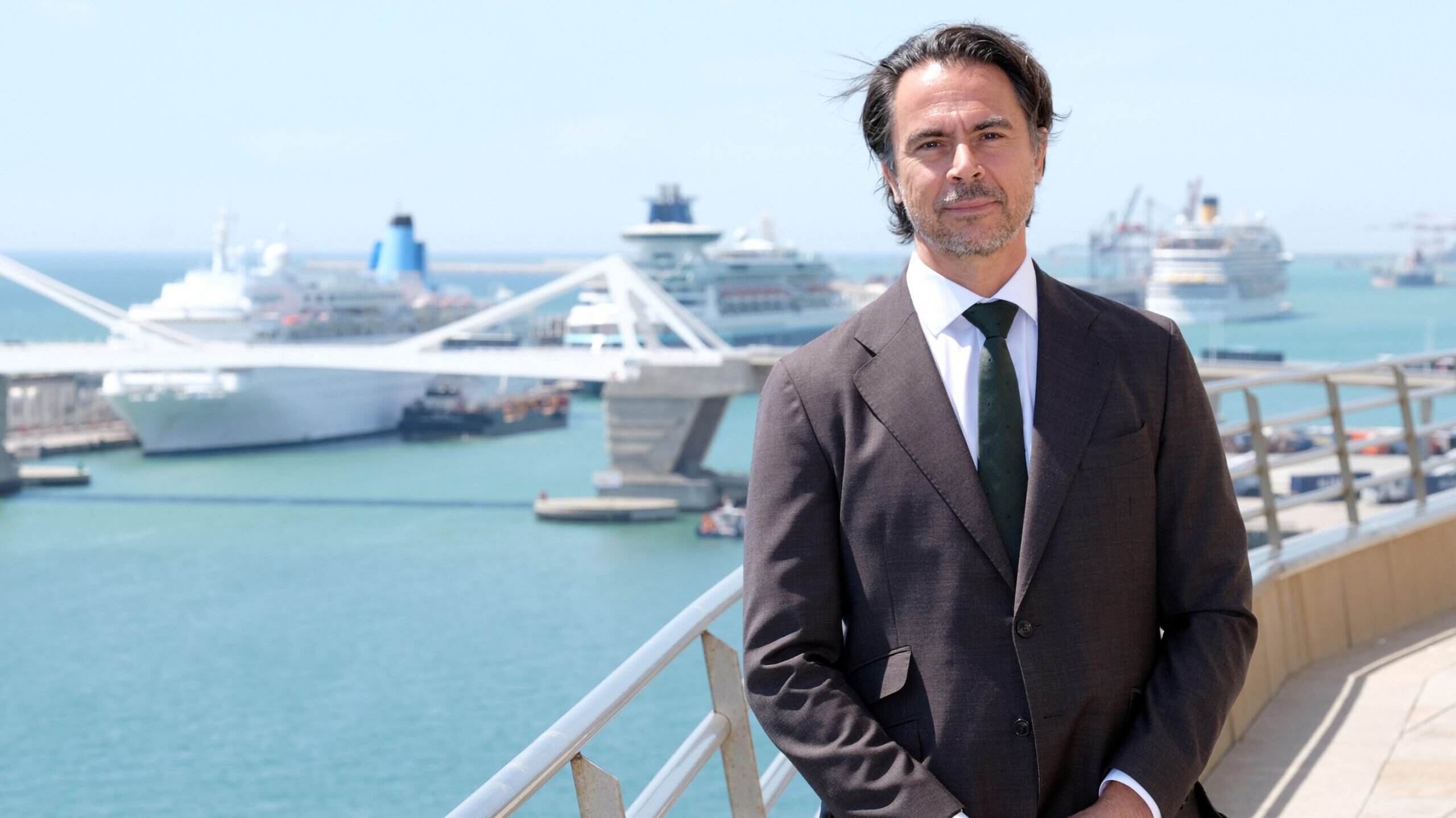
The cruise industry has signed a new memorandum of understanding (MoU) with the Government of the Balearic Islands and the City Council of Palma to manage tourist flows at the port of Palma. Alfredo Serrano, the Spanish director of the Cruise Lines International Association (CLIA), speaks with Forbes Balears about the details of the agreement, the role of the cruise industry in strategies to combat overcrowding, and its investments in the modernization of the fleet.
Does this latest agreement represent an improvement over the previous one?
Agreements are good if both parties—in this case, three—are satisfied, and I would say there isn’t a big difference in terms of satisfaction compared to the previous agreement. I want to emphasize that it’s very positive that there is continuity, despite the change in political leadership. Although it incorporates some changes, it is the same memorandum of understanding that was signed in 2020-2021. There are some aspects that improve on the previous one, based on the experience gained over the last few years, such as, for example, the sections on transparency and governance. In the first agreement, a series of details and issues were negotiated that, over the last four or five years, led to reports suggesting the memorandum was not being complied with, when in reality that was not the case.
At that time, the previous agreement was criticized for not being as transparent as it should have been.
There were criticisms about an alleged lack of transparency, which was never the intention; the problem was that the necessary transparency mechanisms had not been put in place. And this has been a positive change. As for governance, the previous agreement was a static document that did not provide mechanisms to resolve problems that might arise on a day-to-day basis. Now a monitoring committee has been created, composed of all the stakeholders involved, to address all these unforeseen situations.
Furthermore, the regional government has committed to carrying out a study based on rigorous data on the sector and the tourist flows it generates – a strategy that is part of the foundations of the Pact for Sustainability. Is this a key issue at the moment?
For me, the most important thing is to be able to determine with the highest possible reliability when overcrowding occurs in Palma and to find out if cruise ships are responsible; I would bet anything that in more than 90 percent of cases, they are not. Based on this data, the idea is for the public and private sectors to take measures, when appropriate, to alleviate the problems that arise in some cases. The study must also identify and explain the behavior of those cruise passengers who stay in Palma and do not venture to explore the rest of the island. We want to know why this is, because we believe there is significant potential in this tourist segment that could be extended to all of Mallorca.
Are the cruise passenger flows currently arriving in Palma being managed effectively?
I don’t think we asked the same question of travelers arriving by plane or by any other means of transport other than cruise ships. As for the cruise lines, ultimately we’re talking about several operators, and they depend on the guidelines they receive; it’s not their job to decide where to park the buses or to organize everything themselves by telling other cruise lines what time to arrive at the port. I am aware that, in fact, the Palma City Council has promoted initiatives to establish different drop-off points, but I am not aware of this being done on a widespread basis, only at specific times. It is not true that all cruise passengers move at the same time and go to the same places. The study will have to confirm this for us.
You argue that the cruise industry has done things right, yet it remains the primary target of criticism. Do they feel they’ve been made scapegoats for overpopulation?
I think the feeling of overcrowding and saturation among residents has become more pronounced over the last five or six years. At least, that’s what I’ve been reading. Well, cruise activity is down 20 percent compared to 2025 and, by the end of the year, it’s projected to be down 30 percent compared to pre-pandemic figures. The conclusion is that attention was probably focused on an activity that wasn’t actually responsible for the overcrowding. And the same mistake is being made again. It’s not a matter of perception; the numbers are what they are.
How does this effort to adjust activity levels in Palma compare with similar efforts in other destinations in Spain and Europe? Have similar initiatives been taken elsewhere?
In the Mediterranean, cruise activity is growing, with very high numbers. Palma would be an exceptional destination in this regard. Or one of the few. Undoubtedly, among the main ports, it is, in fact, an exceptional case. In Ibiza and Maó, the situation is very different, with significant growth after the pandemic that has now stabilized.
What are the most urgent measures that need to be taken?
I’m obsessed with data. We don’t have control when it comes to destination management: that’s the responsibility of local authorities. My feeling is that, without data, we’re driving blind. As I’ve already said, activity is set to fall by 30 percent compared to 2019, which means fewer jobs, less income, and less wealth, all because we haven’t solved the problem or even contributed to a solution. Decisions are being made about cruises and tourism without any data, or with very little data to support them. If decisions are made without data, they are likely to be wrong, and we will all suffer the consequences. I would like to see a shift from a memorandum discussing the number of ships to one discussing the number of people present at any given time near the Seo de Palma, to give just one example. This is the type of discussion that would help resolve the problem that some members of the public are raising with politicians.
Would you say it’s taking too long to implement measures? At least when it comes to tangible results.
I know it’s not simple. It’s not easy to think of other tourism management models where things are done better, because the Balearic Islands tend to be at the forefront on these issues. It’s not an easy path to follow, but I believe it’s the only possible one, because the alternative is to impose prohibitions and restrictions, which leads to poverty—something no one wants.
You say that the sector is currently experiencing a period of growth in the Mediterranean.
The best indicator for the sector is the growth forecasts for the coming years, and in this regard we have a fairly precise indicator in the form of European shipyards’ order books. The order books are quite full for the next five to seven years, so the sector is enjoying a boom. The sector is in very good health.
Has a change in cruiser traffic to the Western Mediterranean sparked the war with Iran?
In general, no. The entire conflict zone is a key area for cruise operations. Since the conflict with Iran broke out, companies operating there have faced major disruptions because they have been unable to leave; they have been stranded in the Gulf. However, these are winter destinations, so the summer schedule has not been greatly affected: it was already planned for these ships to sail to other destinations during the summer months. That said, it does have an impact for next winter, as the companies will reposition these ships to other destinations. The main beneficiaries will be the Canary Islands and other winter destinations outside of Europe, such as the Caribbean. On the other hand, no ships operating in Turkey or Greece—areas of the eastern Mediterranean closer to the conflict—have changed their itineraries.
It is argued that the sector has been investing heavily for some time to modernize its fleet and make it more sustainable. What stage has this process reached?
Sometimes I hear people talk about the sustainability of cruise ships, even though, in many cases, they are more efficient at protecting the environment than the destinations themselves. Take, for example, water resource management. Currently, more than 90 percent of ships can produce fresh water on board. According to data from Emaya – a public company in Palma responsible for waste treatment and water management – the goal for selective collection is to reach around 30 percent in the coming years, while the cruise industry already has more than 50 percent of its waste classified for subsequent reuse and recycling.
What about using less polluting fuels?
There is also a significant shift toward liquefied natural gas, which is the least polluting fuel currently available on a large scale for maritime transport; it is a fossil fuel, but it has the advantage that engines running on liquefied natural gas can be more easily adapted to use the more sustainable fuels that should be available in the coming years. Furthermore, more than 60 percent of our global fleet is already equipped to plug into the shore power grid and shut down its engines to reduce pollution. This figure contrasts sharply with the proportion of ports that are equipped to do so, which is just 3 percent.


