






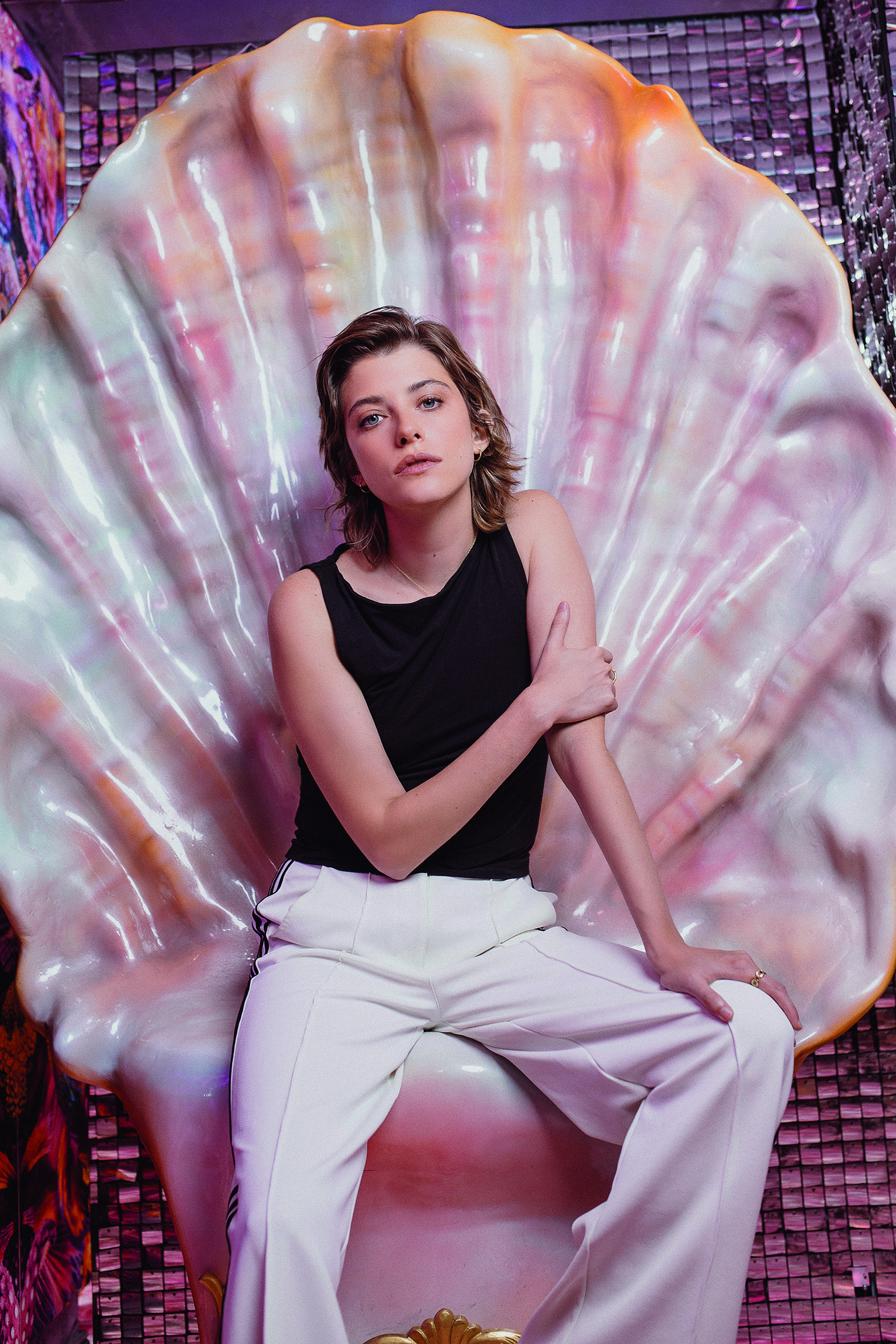
An actress, singer, and songwriter, Malena Villa (Buenos Aires, 1995) has spent years building a career that moves effortlessly between film and music—a dual discipline she considers essential to keeping her creative freedom alive. Discovered by the general public thanks to films like *El ángel*, the Argentine actress has built an increasingly international filmography with titles such as *El llanto*, alongside Ester Expósito and Belén Rueda. She has reunited with Rueda in the Netflix series *El círculo del asesino*, which will premiere in the coming months and tells the story of Joaquín Ferrándiz, Spain’s first modern-day serial killer (“I play a Spanish woman in that one—I’ve been working on the accent for a year,” she adds).
*El ser querido*, directed by Rodrigo Sorogoyen, has just opened in theaters across Spain. The film received a seven-minute standing ovation at the Grand Théâtre Lumière following its world premiere in the Official Selection at the Cannes Film Festival.
What was it like to film with Sorogoyen?
It was an opportunity that came about almost out of the blue, and I welcomed it with great enthusiasm. I first met Rodrigo in a fairly natural way, and then I came to realize the immense scope of his films and the prestige he enjoys in Spain. Being part of a blockbuster like *El ser querido* has been a source of immense pride, even though my character is a supporting role. Having worked with one of the most important directors in contemporary Spanish cinema is a gift in and of itself.
What was it like to film alongside Javier Bardem and Vicky Luengo?
Wonderful. It was an incredibly educational experience. Vicky Luengo and I clicked right away and became very good friends. I adore her, and it was a pleasure to spend so much time with her. As for Javier Bardem, working alongside him was a huge surprise—one of those things you never imagine when you start out in this profession. They’re actors with a wealth of experience, but at the same time, they make everything feel very down-to-earth and simple. That combination of talent and generosity is something I’ll always remember.
Many scenes from the movie were filmed in Fuerteventura. What are your memories of the island?
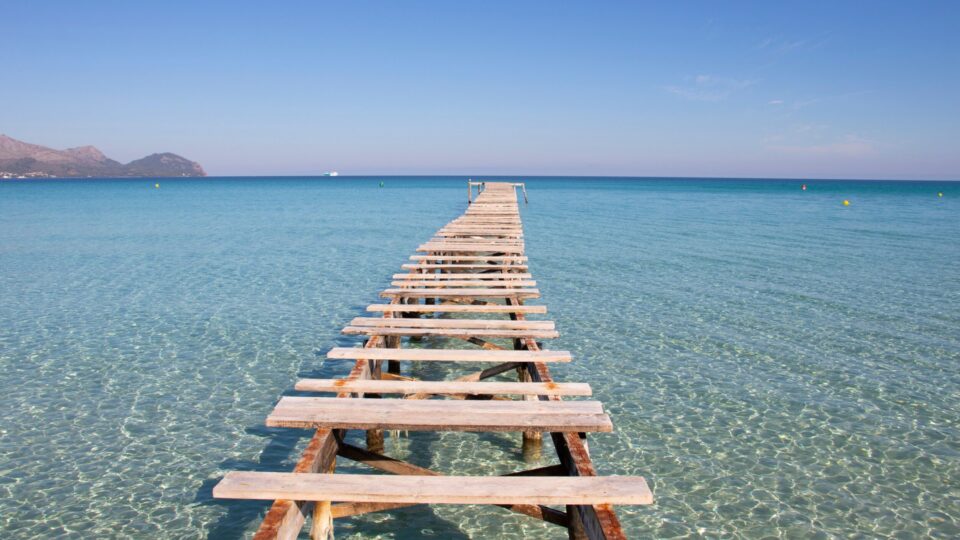
We filmed on the island for two months, so we spent a lot of time there, and it was an unforgettable experience. Although much of the film takes place in the island’s volcanic and almost desert-like landscapes, the beach was very much a part of our daily lives. There was even a scene in the ocean with Vicky Luengo and Raúl Arévalo that required a massive production effort. Seeing all those trucks pull up to a tiny, beautiful beach to set up a single scene was impressive. In the end, when you spend so much time filming with the same crew, it creates an atmosphere almost like summer camp. During the week we were completely focused on work, but when the weekend came, we took the opportunity to explore the island, relax, and spend the day recovering from our hangovers on the beach. Sundays were peaceful—a chance to recover from the pace of filming and enjoy the scenery. Fuerteventura has a light and a tranquility that make it unique.
Aside from this experience in the Canary Islands, you’ve been crossing the Atlantic in both directions for a few years now. What does the sea mean to you?
I love the ocean, I love the beach, and it holds a very special meaning for me because it’s so closely tied to my childhood. My parents have a house in a tiny little town on the coast of Buenos Aires, and we spent every vacation there. It was a very simple and lovely routine: we spent the whole day at the beach, in the water, or fishing. My parents would go fishing, and what we caught from the sea was often what we had for dinner that night. I remember entire summers eating fish because that’s what was available and because we didn’t have much money. Looking back on it now, it seems like such a precious memory. For me, the ocean represents family, spending time together, a simpler life, and a connection to nature that’s hard to find these days.
Do you participate in any water sports?
The truth is, not really. I’d love to learn how to surf—it’s something I’ve been meaning to do. I have a friend who insists every summer that he’s going to teach me, but we still haven’t managed to do it, so I hope that moment comes soon. I really enjoy being at the beach—walking, swimming, and just spending hours looking out at the ocean—but I haven’t taken the plunge into board sports yet. Hopefully this will be the summer I finally give it a try.
How is the sea connected to your musical and songwriting side?
Interestingly, one of the most important musical and audiovisual projects for me actually came about right by the sea. In 2021, we shot a short film for the music videos off my album *Ni tan Mal* in Chapadmalal, a beach on the Buenos Aires coast near Mar del Plata. We filmed among the rocks, with the ocean as the main backdrop, and I think the landscape ended up becoming part of the project’s identity. The sea has something very cinematic and also very musical about it: it creates a special atmosphere, invites contemplation, and makes everything take on a different dimension.
READ THE FULL INTERVIEW IN ISSUE 7 OF NAUTIK MAGAZINE, AVAILABLE FOR PURCHASE AT THIS LINK.