







There are many ways to describe Mallorca. Its beaches, hotels, and landscape have, over decades, shaped one of the most recognizable tourist images of the Mediterranean. But there is another Mallorca – less obvious and perhaps deeper – that is found around a table. This is the Mallorca that will be shown this September at the San Sebastián Film Festival through Mallorca, un recetario, the documentary directed by Pablo Bujosa Martínez that will close the festival’s Culinary Cinema section. The film takes viewers on a journey through various villages on the island to celebrate a cuisine based on seasonal produce, family recipes, and knowledge passed down from generation to generation.
It’s not a trivial choice. The Culinary Cinema, organized by the festival in collaboration with the Basque Culinary Centre, has become one of the platforms where gastronomy and audiovisual culture meet to tell stories that go far beyond a single dish. In its upcoming edition, which will take place from September 22 to 25, five films will put the spotlight on different ways of understanding gastronomy: from Andalusian cuisine to the wines of Burgundy, passing through the world of chef Pedro Subijana and a six-seat sushi restaurant in Tokyo.
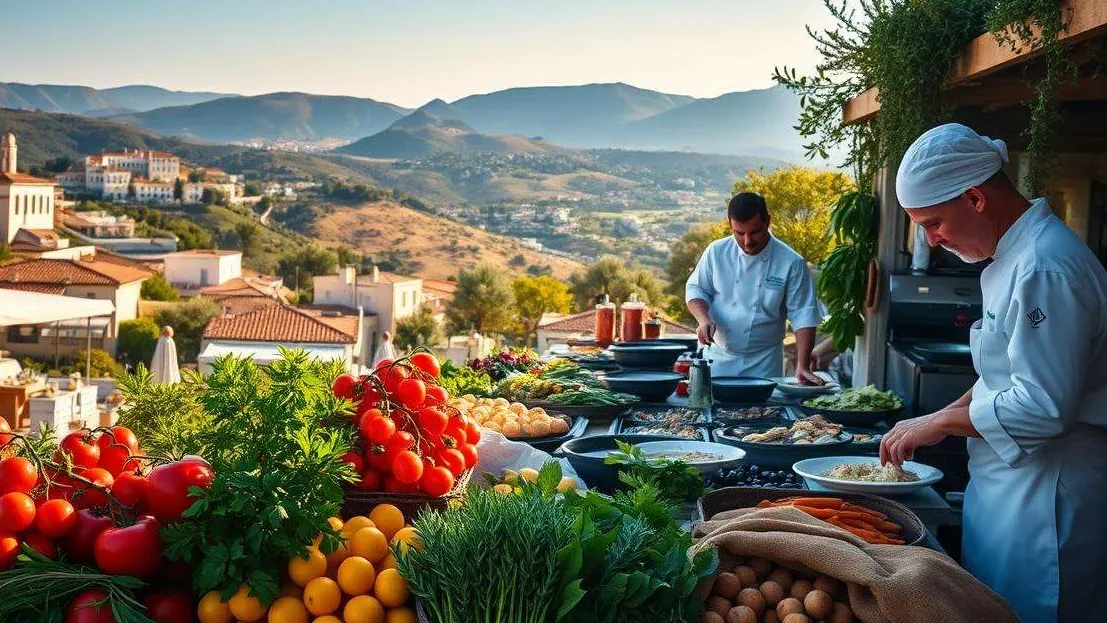
Among these, the Mallorcan film will close the program. Mallorca, a Recipe Book is based on a simple premise: to understand a region, you also have to sit down and eat there. The documentary explores various villages in Mallorca to rediscover traditional dishes made with seasonal products. It’s not just about compiling recipes, but about highlighting the link between cuisine, landscape, and community: what is grown, what is fished, what is preserved, and, above all, what has continued to be cooked despite the passage of time.
On an island whose contemporary identity is closely tied to tourism, gastronomy emerges here as a means to recover a different narrative: one that is not based on the image of the Mediterranean postcard, but on memory. The film will premiere as part of the Culinary Cinema on September 25, during an event that will continue off-screen. Because in San Sebastián, the film will not be the end, but the beginning of the gastronomic experience.
From the screen to the plate
The dinner accompanying the documentary will be prepared by Maria Solivellas of Ca na Toneta and Celler Tonet, and Andreu Genestra of the restaurant that bears his name. Both chefs represent two contemporary approaches to Mallorcan cuisine and share the same philosophy: local products and the region are not mere decorative elements but an essential part of the culinary narrative.
The contrast with the rest of the Gastronomy Cinema program is especially revealing. The section will begin with Noor: Cocinar pasados posibles, by Carlos Velasco and Kate Hu, which explores the work of Paco Morales and Paola Gaulandi at the Noor restaurant in Córdoba, which has three Michelin stars. It will also travel to Burgundy to explore wine culture and to Tokyo to feature Yasuhiko Mitani’s restaurant, a sushi establishment with only six seats and a four-year waiting list.
So, on September 23, there will be a double feature: MITAMI. The Marriage of Sushi, by Japanese director Keita Ideno and Australian Ivan Kovac, and Burgundy, by Americans Michael Sweck and Gregory Kershaw, a blend of fiction with non-fiction elements and a touch of irreverence, which will premiere at the Venice Film Festival and delves into the wine culture of the Burgundy region in France, where tradition endures in passionate rituals of luxury and pleasure. Meanwhile, the first film is a documentary that delves into the world of Yasuhiko Mitani, the owner of an exclusive sushi restaurant in Tokyo with only six seats for diners and a four-year waiting list.
Mallorca‘s presence at the San Sebastián Film Festival, through a series of culinary events, also offers the opportunity to showcase this identity beyond the island. Culinary Cinema is not limited to screening films about food. Its format combines screenings with dinners prepared by chefs connected to the stories being shown. This year’s program will include five films, four of which are world premieres.
The Mallorcan documentary will therefore be part of an international conversation about gastronomy, territory, and identity. And it will do so from a unique perspective. In contrast to the trend of turning gastronomy into a spectacle, Bujosa Martínez’s film focuses on everyday life: the villages, the seasons, the ingredients, and the people who have kept alive a collection of recipes that is part of Mallorca’s cultural heritage.


