








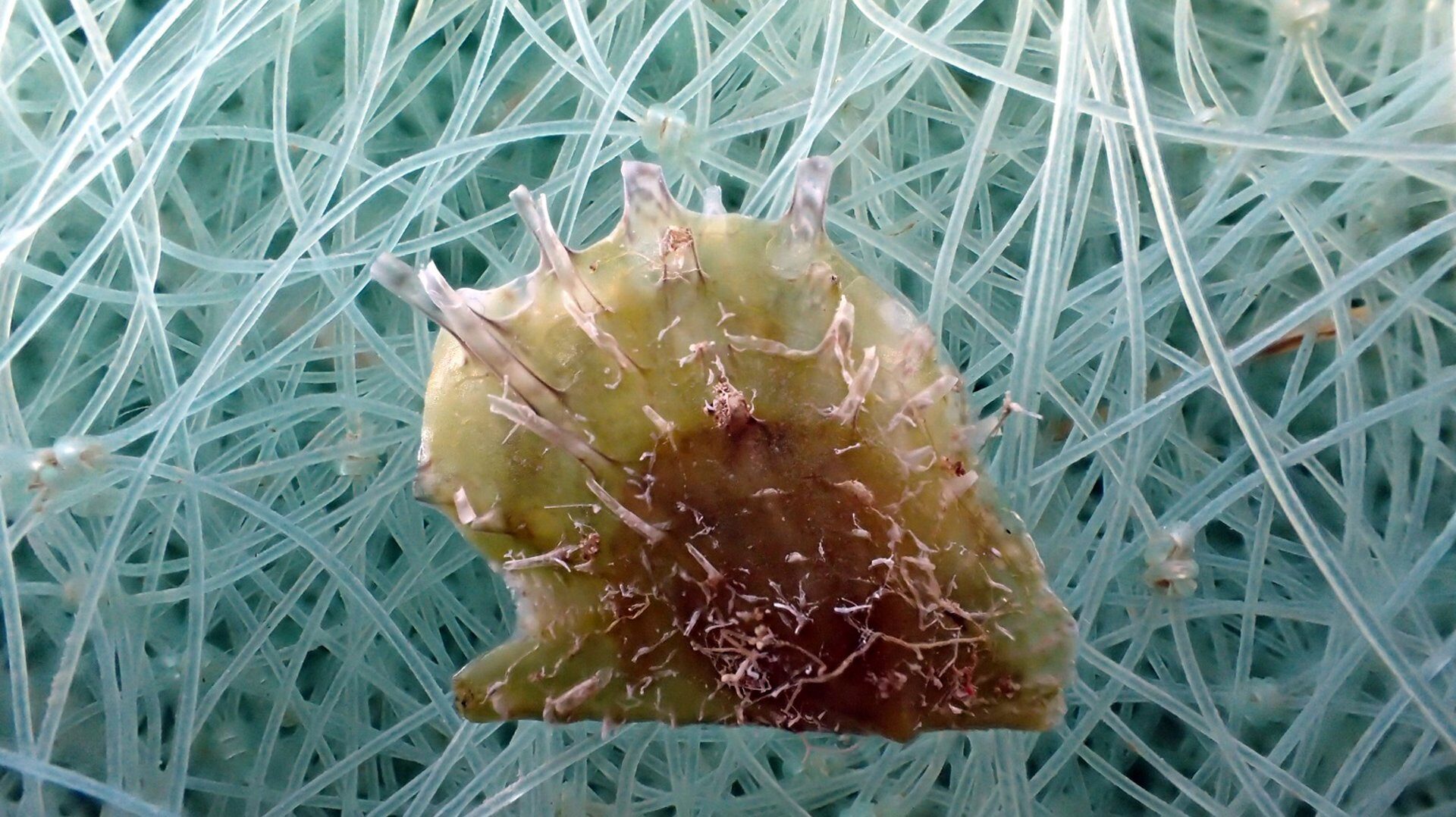
A network coordinated by a researcher from the Torre de la Sal Institute of Aquaculture (CSIC) is detecting the proliferation of the pearl oyster Pinctada radiata – the first invasive species in the Mediterranean – in its early stages. Since its introduction through the Suez Canal in the 19th century, this species is now expanding along the Spanish coast, aided by rising sea temperatures, according to a statement released by the organization.
A network of 132 monitoring sites established in eight countries and coordinated by Diego Kersting, a researcher at the Torre de la Sal Aquaculture Institute (IATS-CSIC), has carried out the most comprehensive study to date on the spread of Pinctada radiata, which is considered one of the “most problematic” invasive species.
The study documents the proliferation of this species throughout the western Mediterranean, driven by rising sea temperatures and its high larval dispersal capacity, and reveals its presence along the Spanish coast from southern Catalonia to Almería. This system allows for the detection of this species’ larvae years before they establish themselves in the natural environment and serves as an early warning system for the presence of this and other invasive species.
Pinctada radiata is a pearl oyster native to the Red Sea that is listed among the 100 most dangerous invasive species in the Mediterranean due to the impact it can have on native biodiversity. The study, led by IATS-CSIC and published in the journal ‘Marine Environmental Research’, involves three researchers from the IATS’s Global Change, Conservation, and Genetics of Marine Species group.
The system uses larval traps installed at 132 points spread along the coasts of eight countries (Algeria, Croatia, Cyprus, France, Greece, Italy, Slovenia, and Spain), covering the Mediterranean from east to west. These devices – nets that create a substrate where larvae carried by currents settle – have made it possible to assess the presence of Pinctada radiata during monitoring periods that in some cases exceed ten years.
New colonies
The establishment of this species in the eastern Mediterranean had long been documented. What we are now observing is that the species is experiencing a widespread expansion in the western Mediterranean, whereas historically it was limited to sporadic and isolated records,“ explains Júlia García Colomé, a researcher at IATS and the study’s lead author.
Records collected between 2015 and 2024 revealed new cases of colonization by Pinctada radiata, mainly in the western Mediterranean basin –which includes the Spanish coast– and the Adriatic and Aegean Seas. This work was made possible by the efforts of more than 70 researchers from numerous institutions, as well as organizations and government agencies dedicated to environmental management, conservation, and monitoring in various Mediterranean countries.
The first records of this invasive species on the Spanish coast obtained by this network date from 2016 in the Balearic Islands, from where it is believed to have spread to other areas such as the Columbretes Islands (Castellón). The records extend as far as Agua Amarga (Almería), although colonies have not yet been observed beyond this area.
In the Columbretes Islands Marine Reserve, these collectors have been used since 2003 to study the Mediterranean giant clam (Pinna nobilis), an iconic Mediterranean bivalve species that is currently critically endangered. It was then that the group led by Diego Kersting, a CSIC researcher at the IATS, observed that this system could also be used to study the proliferation of other bivalve species, such as the invasive Pinctada radiata.
“At Columbretes, we first detected it in traps in 2020, but it wasn’t until 2022 that we observed it establishing itself in the wild,” said Kersting. “This confirms the potential of this network of larval traps as early warning systems for the detection and monitoring of biological invasions,” she added.
The collectors are simple to build, economical, and easy to install and maintain. This method can be applied to other species and is suitable for covering large areas. In addition to the Columbretes, the network allows for the monitoring of other iconic locations in the Valencian Community, such as the waters off the Serra d’Irta and Cape San Antonio, among others.
A thousand invasive species
According to the CSIC, it is estimated that there are 1,000 invasive species in the Mediterranean, of which 600 are already established. For example, in the eastern Mediterranean, the invasion of ‘Pinctada radiata’ has caused the displacement of native species and has had “significant repercussions” on the food chain.
According to researchers, one of the main causes of the spread of this tropical-origin invasive species is the rise in temperature in the Mediterranean, a sea that is warming at a rate three times faster than the global average. “Cooler areas, like the Gulf of Lion or the northern Adriatic Sea, remain free of this species,” revealed Júlia García Colomé.
However, the situation is very different in parts of the western Mediterranean, such as the Spanish coast, where temperatures have recently reached a record 33 degrees at Sa Dragonera, Mallorca. “On the Columbretes Islands, the temperature has risen 1.5 degrees since 1990,” Kersting warned.
According to the CSIC researcher, “we must continue using this network of monitoring stations and provide it with stable funding to detect the arrival and spread of invasive species at an early stage; it is a key tool for protecting Mediterranean ecosystems and reducing the significant environmental and economic costs associated with these invasions.”


