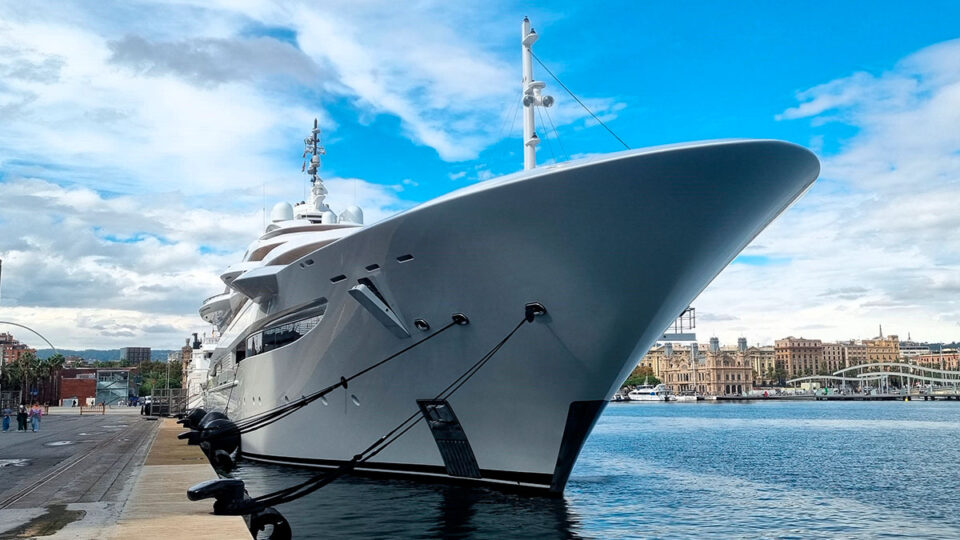








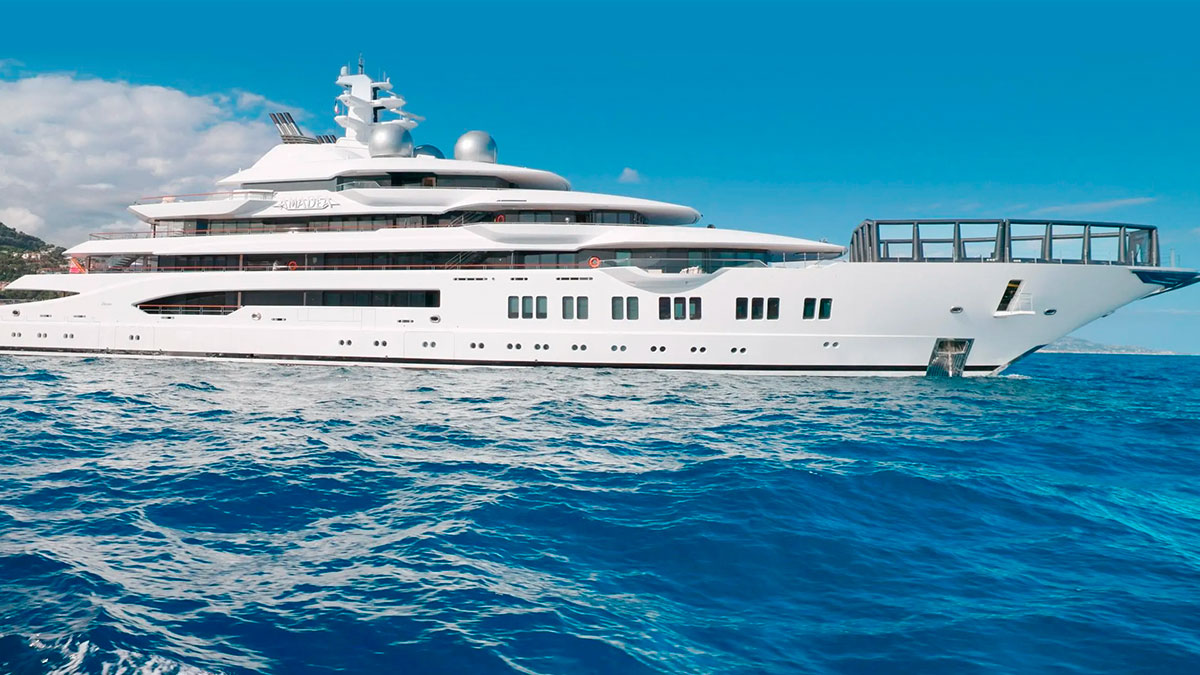
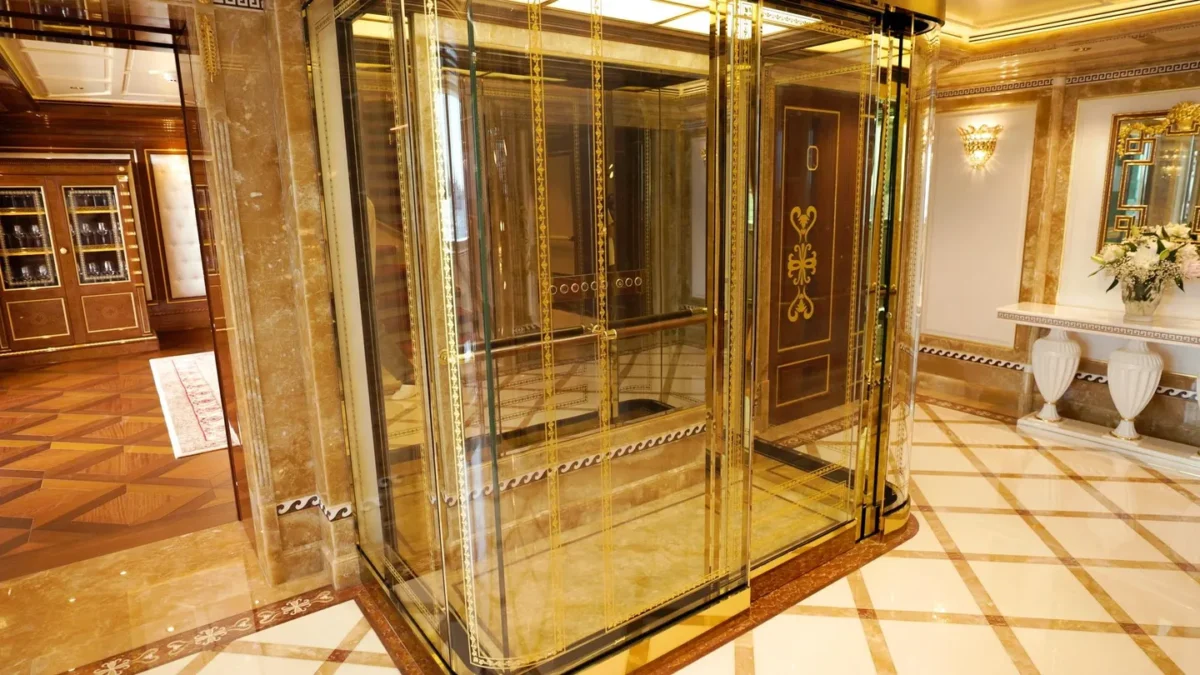
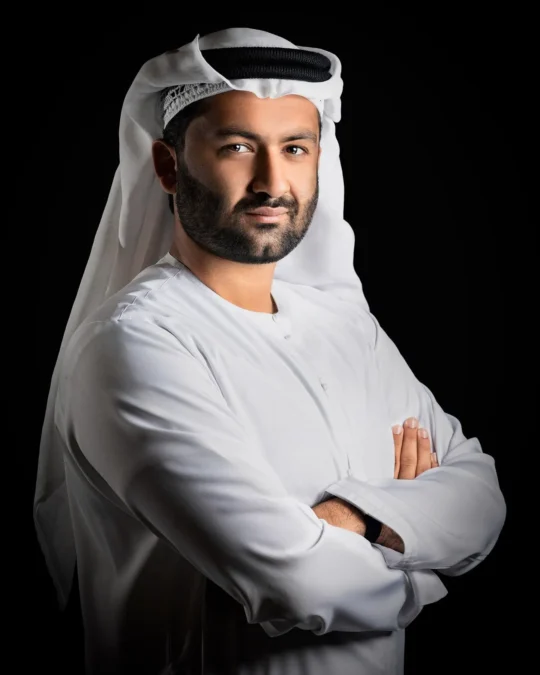
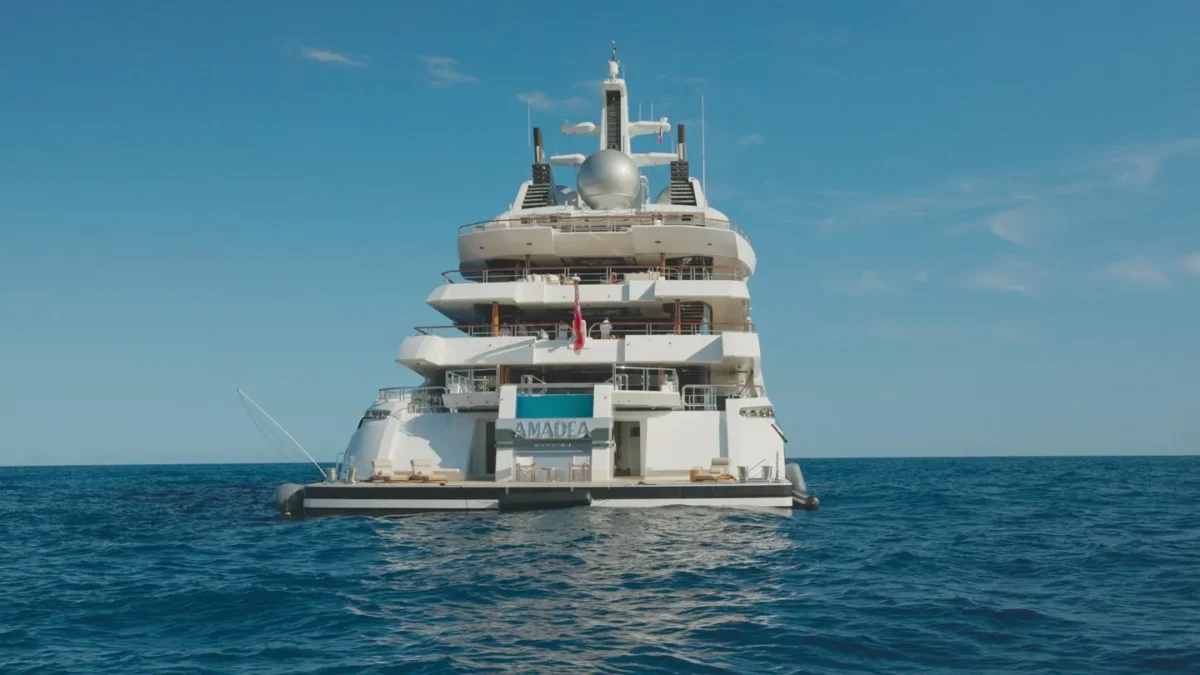
There are two days to go before the Monaco Grand Prix in early June. Abbas Sajwani, 27, steps out of a golden elevator onto the main deck of his 106-meter superyacht, the Amadea, dressed in a white linen shirt and gray pants. He has anchored the yacht—which he purchased from the U.S. government at a secret auction last September, after it had been seized from alleged Russian oligarch Suleiman Kerimov three years earlier—off the coast of the tiny principality, as many billionaires do during the summer.
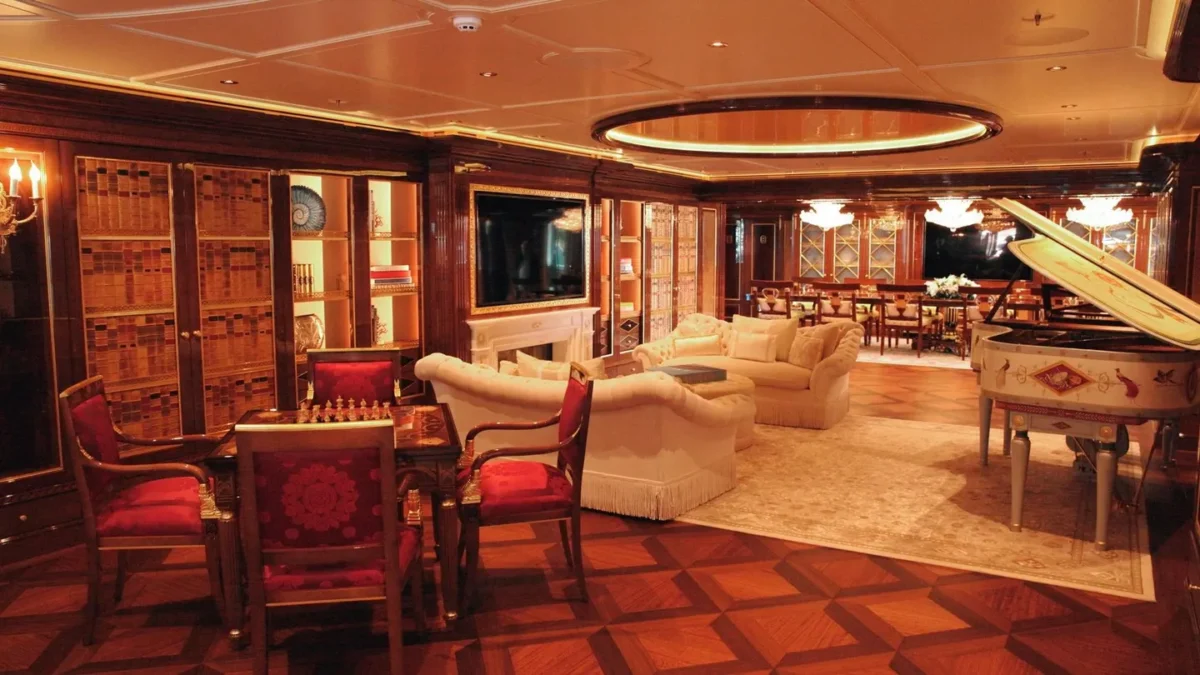
As he walks past the teak walls with their intricate inlay work, a bar carved from marble from the Greek island of Thasos, and a hand-painted grand piano (custom-made for the yacht by Pleyel, the century-old Parisian piano maker), he sits on a cream-colored sofa, framed by the Mediterranean and the Monaco skyline. But the 27-year-old Dubai real estate executive is eager to talk about the latest acquisition by his real estate firm, AHS Properties. “We bought the Shangri-La Dubai in late May for $300 million,” he says, adjusting his rimless glasses. “That demonstrates my personal conviction and my confidence in the Dubai market.”
The son of billionaire real estate magnate Hussain Sajwani—known as the “Donald of Dubai” and a longtime friend of President Trump—he has carved out his own path in the emirate’s volatile real estate market. While his father’s company, DAMAC, has built more than 50,000 luxury units and has another 50,000 under construction, AHS Properties—founded by Abbas in 2021—has focused on the ultra-luxury sector. After purchasing and renovating villas in Dubai’s upscale Emirates Hills and Palm Jumeirah neighborhoods, he began acquiring land along the Dubai Water Canal to build luxury residential towers, which now make up the bulk of his portfolio. Along with his yachts and collection of mansions, this business forms the foundation of his fortune, estimated at $1.9 billion.
Like many real estate developers, Sajwani prefers to think of his trophy purchases in terms of location and scarcity. The Amadea is a perfect example: “When I was looking to buy a yacht, it wasn’t just one box I needed to check,” he adds. “There were ten boxes, and the Amadea, for me, checked most of them.”
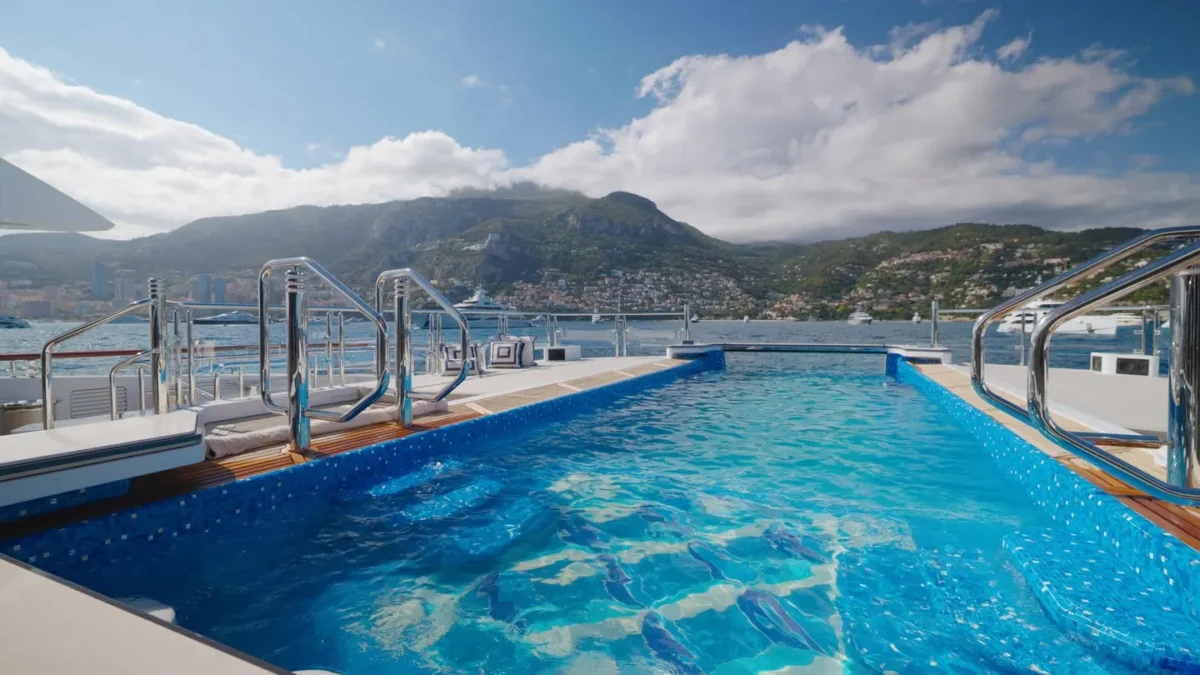
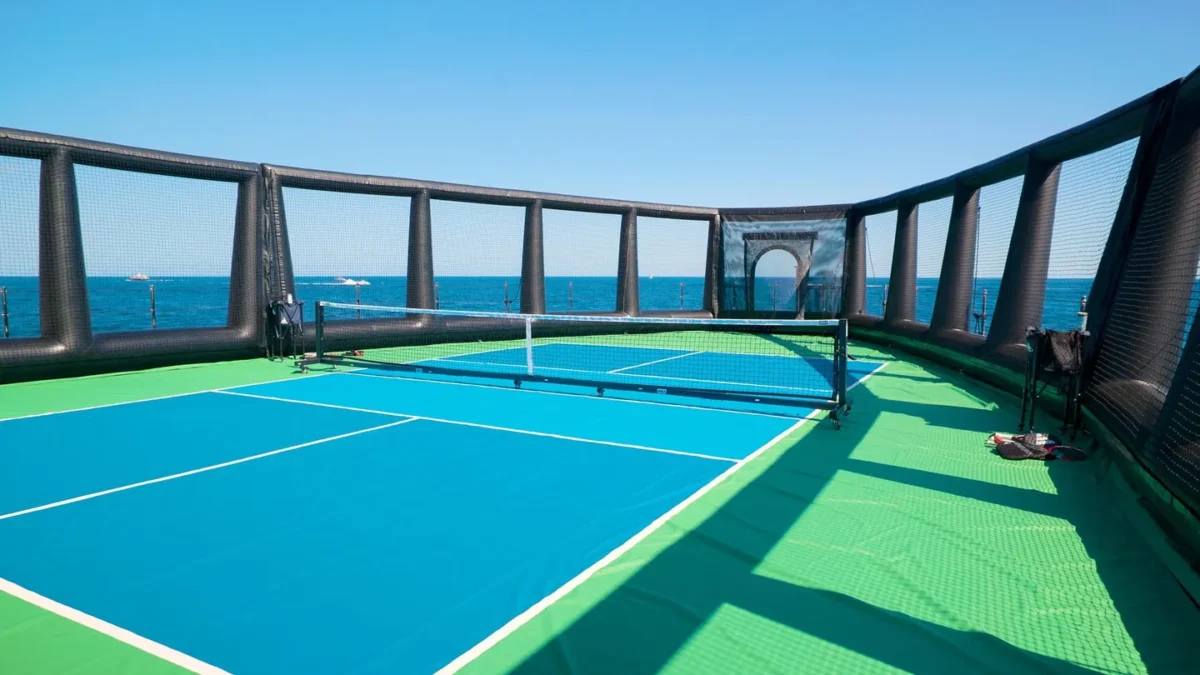
Built in 2017 by the historic German shipyard Lürssen, Sajwani’s floating palace has six decks, including one with a glass “winter garden” designed to evoke a greenhouse, complete with an outdoor hot tub. It features a movie theater with an adjoining outdoor fireplace; a ten-meter infinity pool with an underwater bar; and all the usual amenities of a superyacht, from a spa and beauty salon to a gym and helipad. (During our visit, the helipad had been converted into a pickleball court—an idea that, according to Sajwani, has already been copied by several neighboring vessels.)
Even among the more than two dozen yachts that sail the Mediterranean in the summer, the Amadea stands out for the Art Deco-style albatross on its bow. According to the U.S. government, it was allegedly built for Suleiman Kerimov, a Russian gold magnate and member of the country’s upper house of Parliament, who was sanctioned by the United States in 2018. Two years later, during a brief period when the yacht was on the market, Sajwani visited it and fell in love with it. “I love the interior of the boat; I love the style,” he says. “I think it’s beautiful.”
Sajwani ended up buying another yacht—the AHS, a 66-meter vessel originally built in 2005 and renamed after his initials—but he never forgot the Amadea. Finally, he had his chance to own it. On May 5, 2022, about ten weeks after Vladimir Putin’s invasion of Ukraine, the FBI and Fijian authorities seized the Amadea in the port city of Lautoka. The yacht had set sail from Mexico 18 days earlier, but it failed to escape Uncle Sam’s long arm. It was then transported to San Diego, and in October 2023, the Department of Justice filed a civil forfeiture complaint to formally seize it from Kerimov, before organizing the auction last September.
Valued at $300 million when it was seized, the yacht remained in good condition thanks to U.S. taxpayers, who shelled out some $36 million for its upkeep while it was moored in San Diego. Thanks to a stroke of luck, Sajwani came out on top: his winning bid—the amount of which was not disclosed—exceeded the second-highest bid by just $1 million. (He claims that he later turned down an offer from a buyer who wanted to purchase it for much more—in the hundreds of millions. He currently has his other ship, the AHS, listed for sale for $50 million.)
Sajwani purchased the Amadea (now valued at about $250 million) at a considerable discount, and he has no plans to make major changes. “I really liked 90% of the interior when I bought it. But, overall, we haven’t changed much,” he says. “We’re not going to renovate it.”
On the main deck, Sajwani pauses to point out his favorite features and explain why this is his preferred space for business meetings and entertaining formal guests. “The beauty of this place is the level of detail,” he says, pointing to the leather-bound books built into the teak walls. “From the books on the wall—how they managed to make it look like a library—to the woodwork, the level of detail is unmatched.”
Following in the footsteps of his father, the richest man in Dubai, with an estimated fortune of $15.3 billion, the young Sajwani knows a good business opportunity when he sees one. Born in 1999, he began investing in the Dubai stock market as a teenager, using a $100,000 gift from his father. By 2016, he had turned that money into a handful of small businesses—an internet café and a car wash—before the COVID-19 pandemic put an end to those ventures.
That’s when he began investing in U.S. stocks, specifically in two companies: the shopping center real estate firm Simon Property Group and the luxury fashion giant Capri Holdings, which owns Michael Kors and Jimmy Choo, among other brands. In addition to the $5 million that Sajwani claims to have invested, he also made a big bet using leverage. Both stocks soared by more than 100% between May 2020 and May 2021, and by the time he sold his positions in the spring of 2021, he claims to have made $25 million—a return five times his initial investment.
During that same period, he also made his first real estate investment: he bought a villa in the Emirates Hills neighborhood of Dubai for $11 million at auction, putting down $4 million and financing the rest. Sajwani used bank loans to renovate the property and later repeated the same strategy in Palm Jumeirah, the palm-shaped artificial archipelago home to several billionaires, including Mukesh Ambani, Asia’s richest man. By 2022, Sajwani had sold all the villas and reinvested his profits in a plot of land along the Dubai Water Canal—an artificial waterway lined with hotels and shops—which he later turned into One Canal, a nine-story luxury residential tower.
In 2025, he expanded beyond luxury towers when his firm spent $120 million to purchase the Big Ben Tower, a 328-meter office skyscraper designed to mimic the London landmark, which had stood vacant for years. He is now working on removing the fake clock face and converting the building into a luxury office tower.
All of that seemed like a good bet when Dubai’s real estate market was booming. Between 2021 and 2025, the emirate surpassed New York, Los Angeles, Hong Kong, London, and Miami to become the city with the world’s most valuable luxury residential market, with more homes selling for over $10 million last year than anywhere else on the planet. Then the war in Iran broke out.
So far, transaction volume has fallen by nearly 30% in the second quarter compared to the previous year, according to real estate consulting firm Savills, although the average price per square meter has remained stable. But Sajwani isn’t worried: “The market in Dubai remains very healthy; there’s a lot of demand,” he says. “People are still staying and moving there. The restaurants are full, and residents are out on the streets.”
A sign of his confidence is his recent acquisition of the Shangri-La, a five-star hotel according to the Forbes Travel Guide with 302 rooms, 126 apartments, and office space, located on Dubai’s main thoroughfare, Sheikh Zayed Road. “When you look at that street, that corridor in Dubai, there’s hardly any vacant land left,” he explains. “Prices can only go one way, because everything is built up and there are many investors who want to be there.”
Sajwani is also planning a massive mixed-use project called AHS City, located near the Shangri-La. Set to include Dubai’s largest office complex, as well as luxury apartments, a boutique hotel, an 18,500-square-meter spa, and an 18,500-square-meter food hall, Sajwani has set a target for its opening in 2030.
When he is not in Dubai, Sajwani runs his real estate business from the Amadea: he spends his summers in the south of France, while in the winter the yacht sets sail for Saint Barthélemy in the Caribbean.
“A lot of people say they go on vacation on a boat. That’s not the case for me. It’s more of a place to live,” he says. “My routine on the boat is just like being in Dubai. During the week, I wake up, have my meetings, my Zoom calls, and then on the weekends I enjoy it more. It’s a change of scenery—it’s more of a home than a second vacation home.”
During the Monaco Grand Prix weekend, Sajwani is more focused on the amenities at the Amadea than on what’s happening at the F1 circuit. “The pool gets a lot of use, and one of my favorite spots is the spa,” he says. Equipped with a sauna, hammam, massage room, chromotherapy pool, and a seaside terrace featuring a mosaic-tiled pool that opens directly onto the ocean, there’s more than enough to keep him and his guests entertained.
For all its opulence, the Amadea isn’t even Sajwani’s most recent luxury purchase. That title goes to Holme, a 40-bedroom neoclassical estate in the inner circle of Regent’s Park in London, which he has reportedly just purchased for $260 million. And if for some reason he runs out of guest space at the Amadea, he’s sure to have plenty of room on the mainland.