








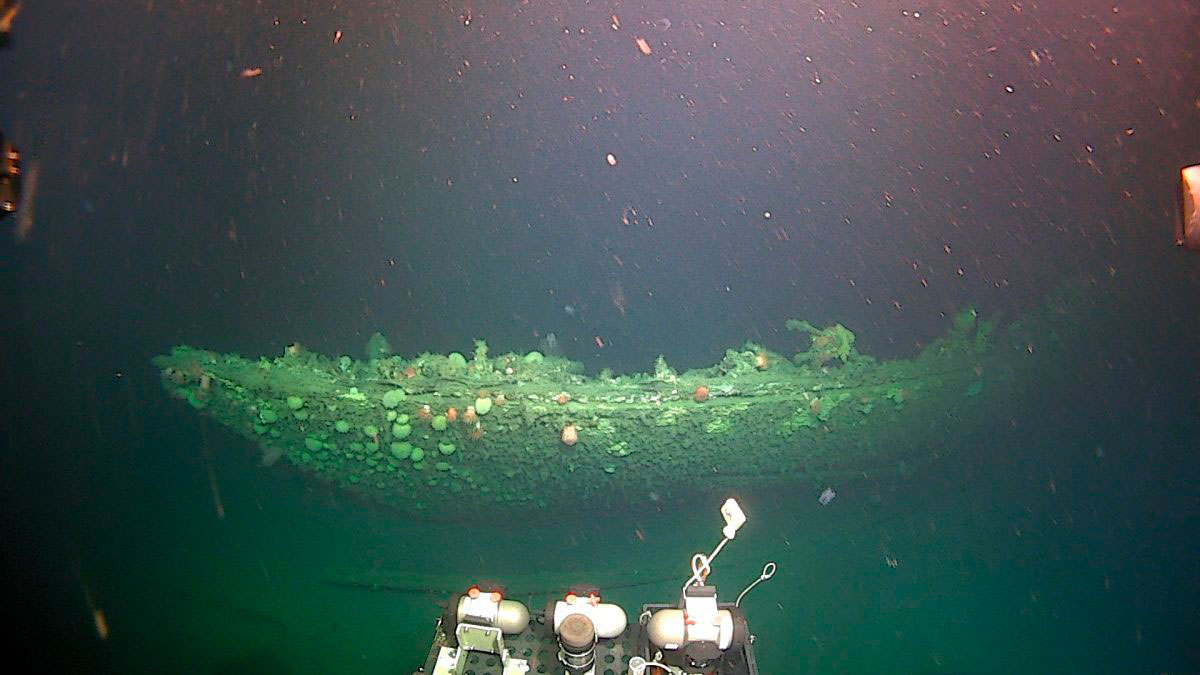
Described by explorer Apsley Cherry-Garrard as “the worst journey in the world,” the 1912 British Antarctic Expedition is remembered worldwide for its tragic epic: Captain Scott’s team reached their destination, the South Pole, only to discover that a Norwegian team, led by Roald Amundsen, had beaten them to it. On the return journey to base camp, every single member of the team perished.
The ship on which Scott, Evans, Wilson, Bowers, and Oates set out for Antarctica, never to return—the Terra Nova—is back in the news more than a hundred years later. An expedition led by the Royal Canadian Geographical Society (RCGS), in collaboration with the Woods Hole Oceanographic Institution (WHOI), has obtained the first 3D images of the wreck, which lies about 10 nautical miles off the southern coast of Greenland.
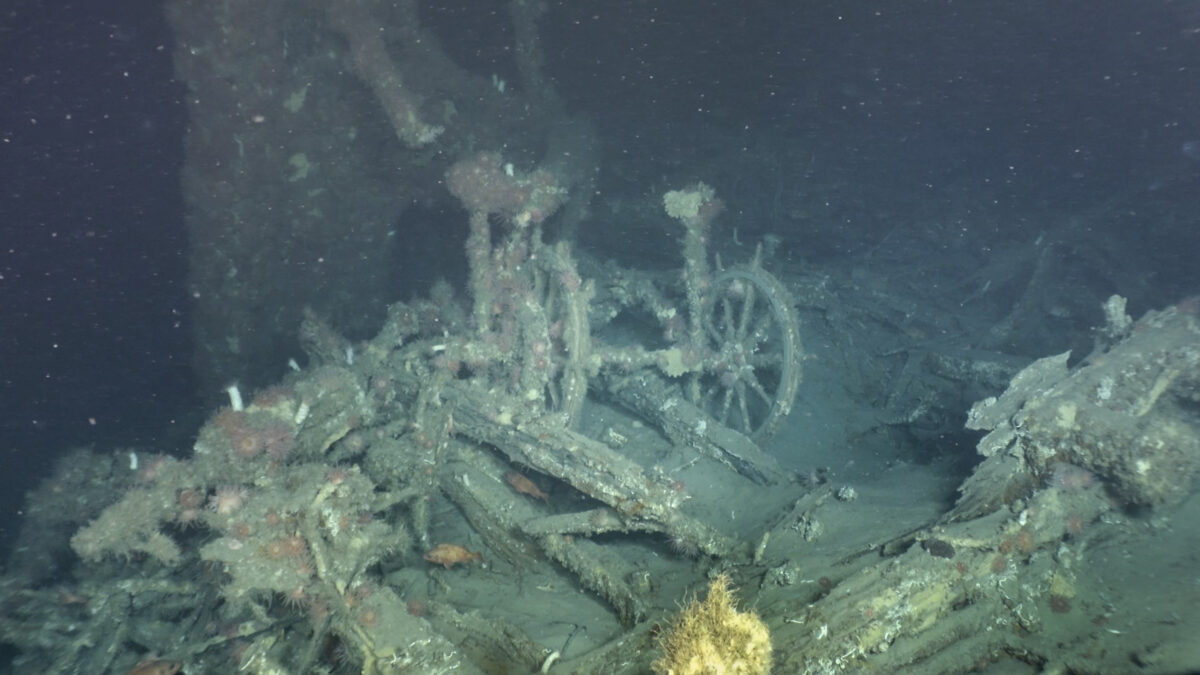
The images were captured by WHOI’s ROV Falcon, equipped with Canadian Voyis technology, and by the manned submersible Alvin, famous for being the first, four decades ago, to visit the wreck of the Titanic. The footage shows a largely intact wooden hull, although the bow is beginning to break apart. From the stern, divers were able to make out the upright rudder, the propeller, and part of the engine room.
The Terra Nova, a three-masted wooden ship built in 1884 in Dundee, Scotland, carried Scott and his crew as part of the 1910 British Antarctic Expedition, whose goal was to reach the South Pole before anyone else. Scott succeeded on January 17, 1912, but discovered that the Norwegian Roald Amundsen had beaten him to it by 34 days. Scott and the four members of his polar party died on the return journey.
The Terra Nova itself was responsible for breaking the news of their deaths to the world, before spending decades fishing for seals off the coast of Newfoundland. During World War II, the U.S. military chartered it to supply naval bases in Greenland; after sustaining severe damage from ice in September 1943, the Coast Guard sank it with cannon fire, deeming it a danger to navigation.
“Seeing a ship so closely linked to the tragic deaths of Captain Robert Falcon Scott and his polar expedition, as well as to the history of Canada and Newfoundland, brings these important stories to a new generation,” said John Geiger, executive director of the RCGS and leader of the expedition. “Thanks to Voyis’s 3D imaging technology, it is now possible to recreate the wreck before this historic ship is lost forever on the seafloor.”
The expedition that captured these mesmerizing images—dubbed the Heroic Age Expedition—set sail from Woods Hole, in the U.S. state of Massachusetts, on July 2 and spent two weeks digitally documenting the last remaining ships of two of the great explorers of Antarctica’s so-called “Heroic Age”: In addition to the Terra Nova, the team had completed, just days earlier, the first comprehensive visual and scientific survey of the Quest—the ship on which Ernest Shackleton died in 1922 and which was not located until 2024, also under Geiger’s direction.
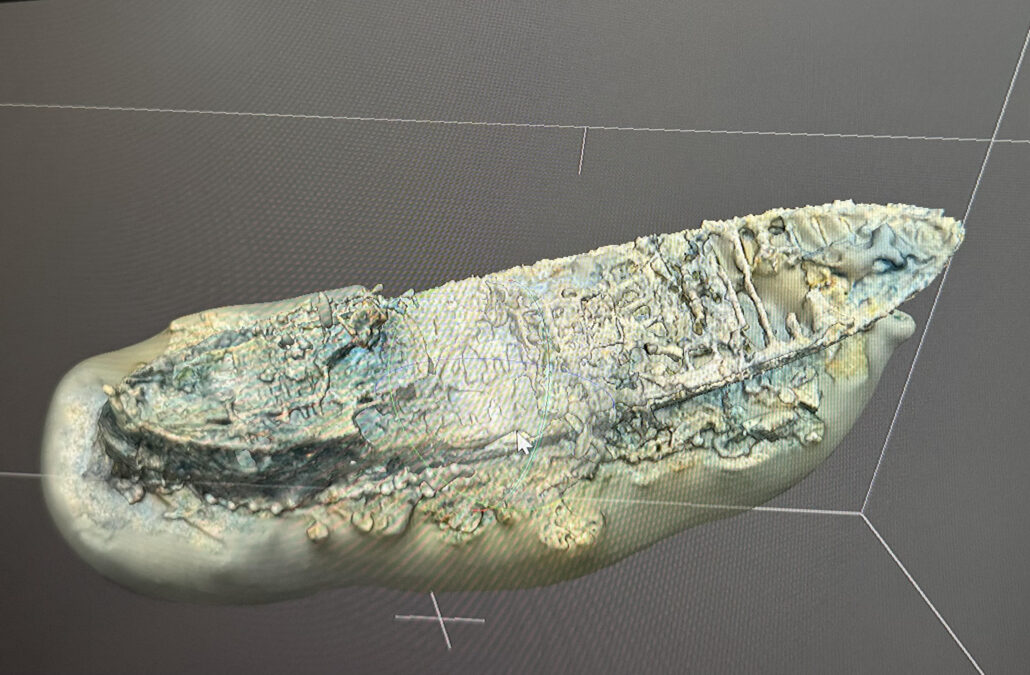
The dives on the Terra Nova are among the northernmost ever conducted by the Alvin, and had to be planned to avoid drifting icebergs. “Using the Alvin to explore the ships of two legendary explorers has highlighted both how far we’ve come since the early 20th century and how much we still have to learn about our planet,” said Bruce Strickrott, a veteran pilot of the submersible. “Back then, there were still unexplored areas of the continents. Today, when we travel to the depths of the ocean, the people aboard the Alvin are often the first to see parts of the seafloor with their own eyes.”
The team has used Voyis’ underwater photogrammetry technology to create “digital twins” of both the Terra Nova and the Quest for both scientific and public outreach purposes.