







“People run so fast because they don’t know where they’re going. Those who know where they’re going take it slow, so they can savor the journey.” — Gloria Fuertes
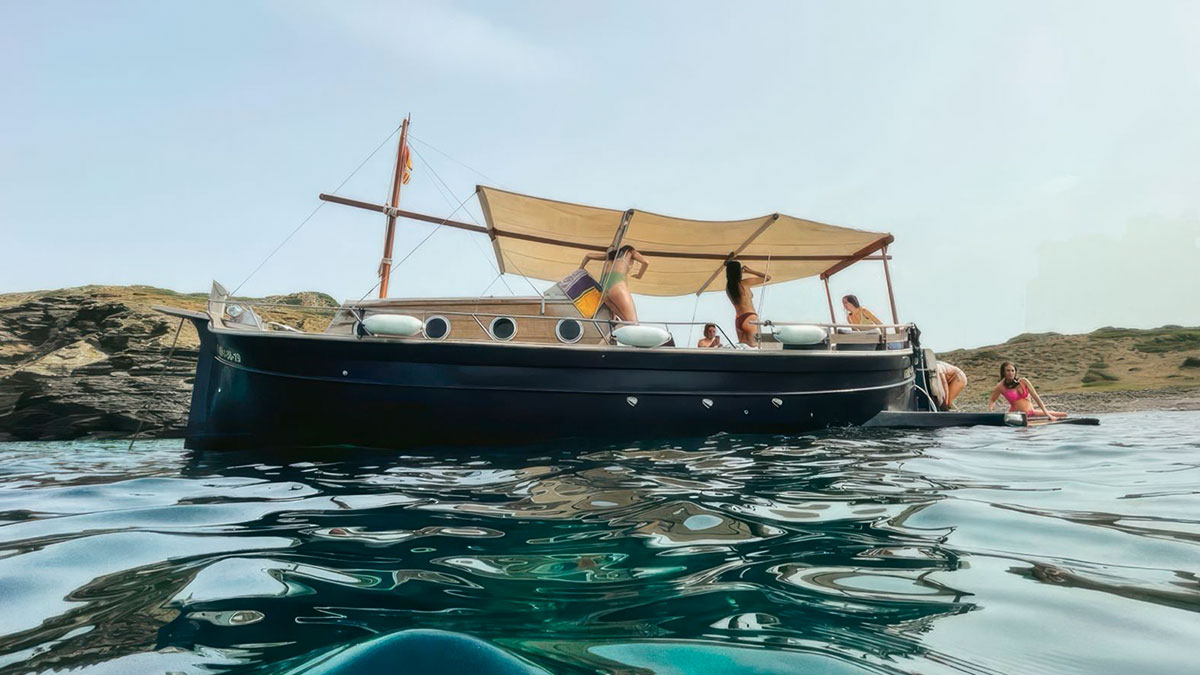
We live in an age designed to get us there faster. Faster boats, more powerful engines, tighter schedules. Everything seems to push us to consume places rather than discover them. Perhaps that is why we continue to feel a special fascination for the llaut.
Because a llaut was never in a hurry.
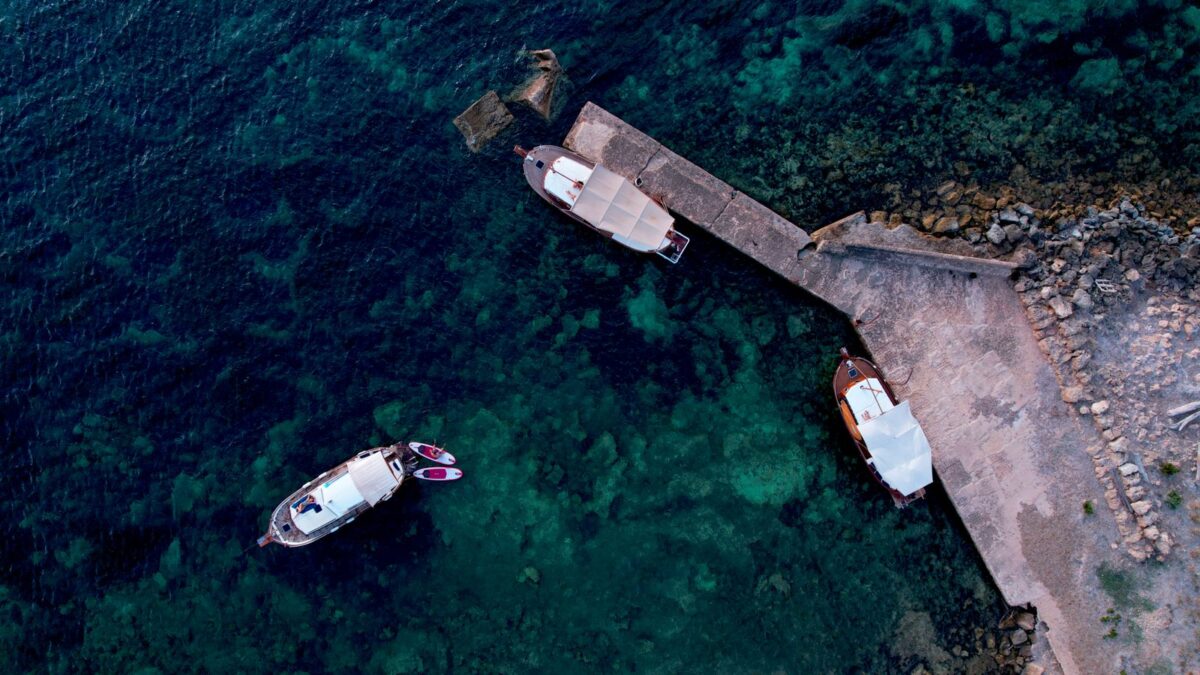
In Menorca, these boats have been a part of the landscape for generations. They have carried fishermen, families, goods, and stories. They have changed owners, ports, and names. They have aged gracefully under the sun and the salt. And, like people, each one has its own character.
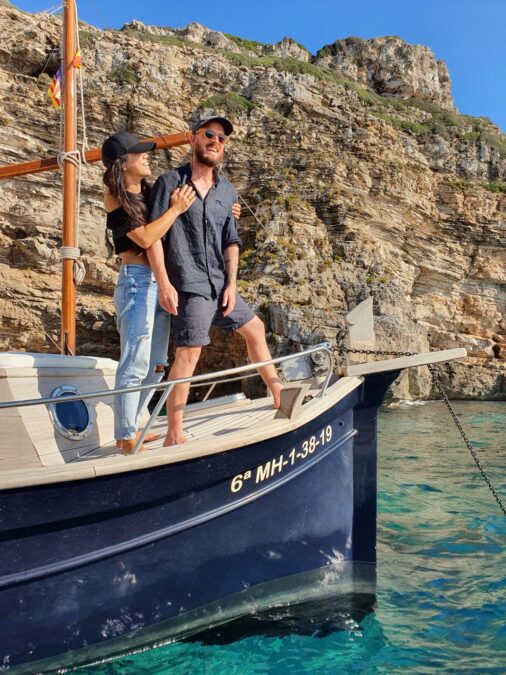
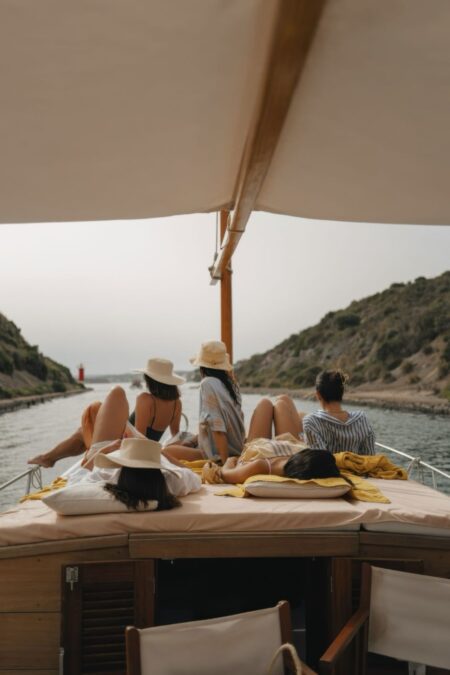
One of our llauts is now called Illa d’en Pinto, in honor of a spot in the port of Mahón. But for many years it sailed under the name S’Estimada, which in Menorcan means “the beloved” or “the dear one.” Its former owner named it that because he said he was so in love with his wife that he would never have a mistress. The boat continues to sail today, many years later, with a different name, different hands at the helm, and new stories on board. Perhaps that is the best definition of a llaut: a boat that never fully belongs to just one person.
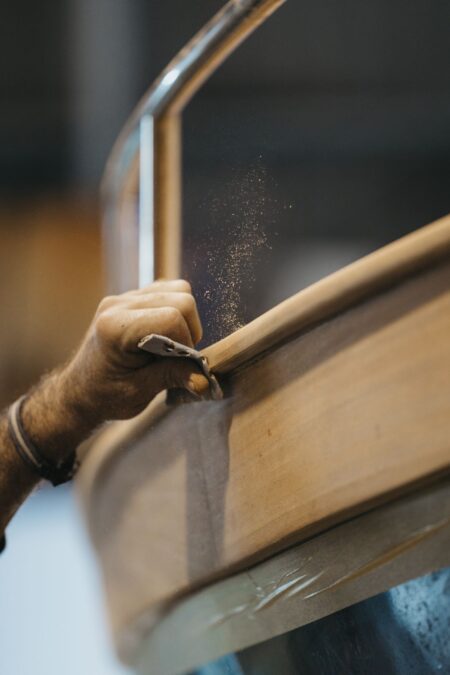
For us, a llaut represents tradition and culture, but it’s also a way of understanding the sea. It has the flavor of the Mediterranean. It’s the result of hours of sanding, varnishing, and care. It has small, handcrafted imperfections that give it character. It’s a boat from the past with some of today’s luxuries.
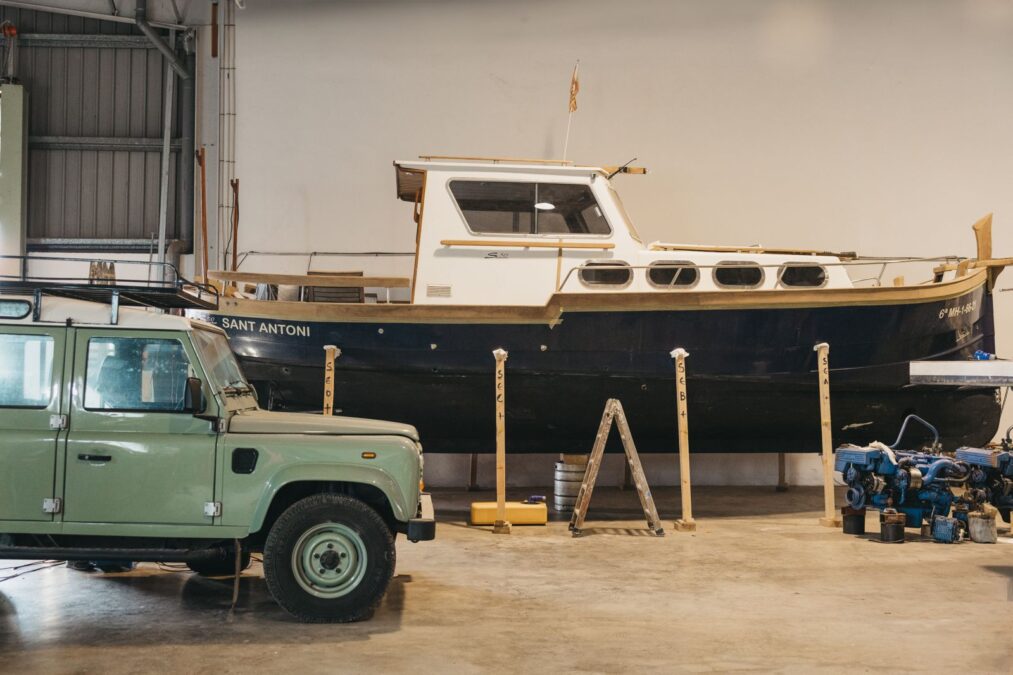
And that is precisely why we know that, as we know them, they will one day disappear. Our boats were built in the late 1980s. Keeping them afloat today requires patience, expertise, and many hours of work. Every year, we have to restore a piece of wood, repair systems that are no longer manufactured, or find solutions to problems for which the instruction manual has long since disappeared. Our technicians are craftsmen, and our mechanics are practically engineers. If a part no longer exists, we often have to make it ourselves. Keeping these vessels afloat is, in a way, an exercise in endurance.
Llauts have a very shallow draft. They were designed to get close to the coast, enter small coves, and find shelter where other boats cannot reach. They do not need to dominate the landscape because they are part of it. And it is precisely from the sea that one can best perceive the changes Menorca is undergoing.
The island remains an extraordinary place, but it is also becoming increasingly sought-after. Many visitors are drawn to the authenticity that still survives in some corners. The challenge is to ensure that this authenticity doesn’t disappear precisely because of the very success that has made it so attractive. That’s why we try to show a different side of Menorca. Not the one seen in the most common photos, nor the one with the crowded coves during the summer. We like to seek out hidden corners, small coves sheltered from the wind, and quiet anchorages where it’s still possible to hear the sea without too many interruptions. We aren’t looking for the most photographed Menorca. We’re looking for the one that still retains the silence, the calm, and the character that made it unique.
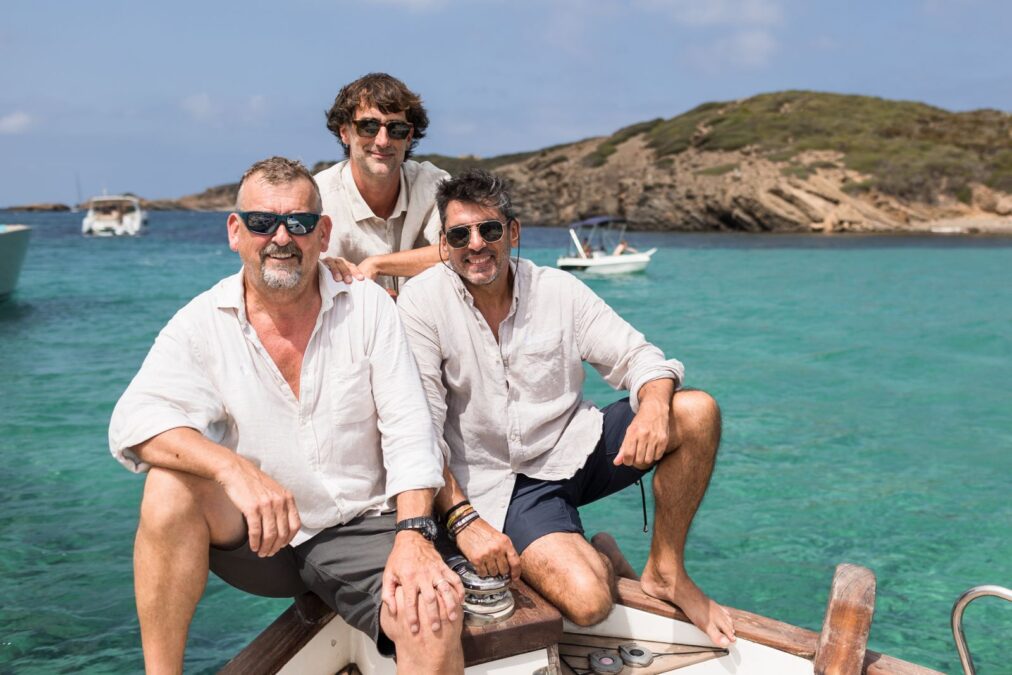
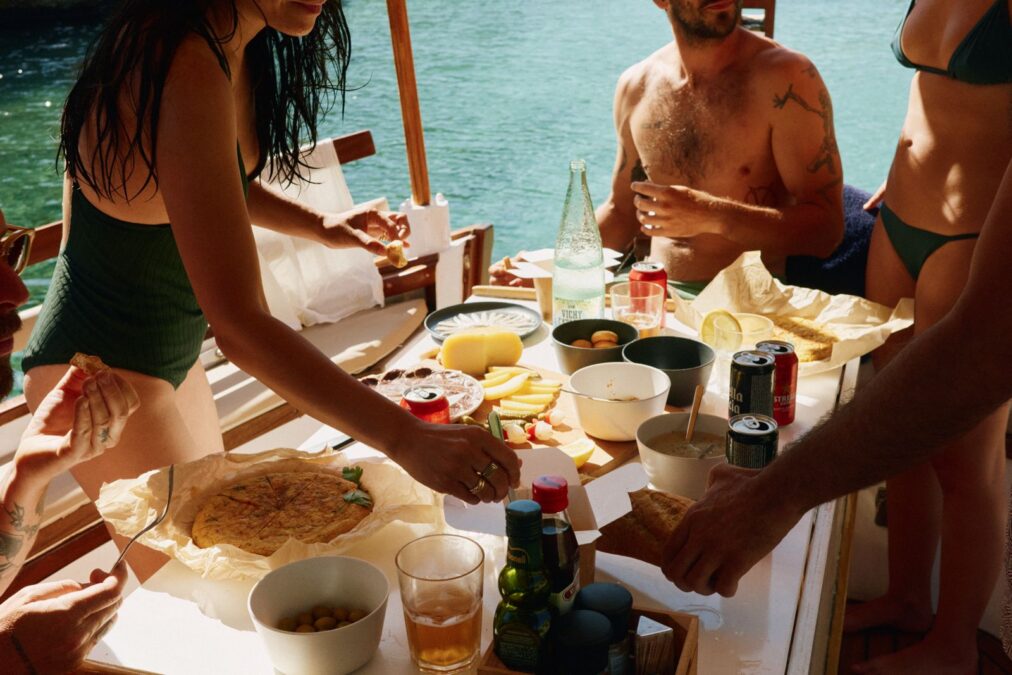
Menorca en Llaut was founded years ago thanks to the passion of a Menorcan who was deeply in love with his homeland and its coastline. When we had the opportunity to take over the project, we realized that we weren’t just acquiring a company or a fleet. We were taking on the responsibility of keeping alive a small part of the island’s maritime heritage.
Since then, we have strived to adapt that legacy to the modern era without losing its essence. We take great care of our boats and have built a team of skippers who understand what makes these vessels so special. Perhaps that is why so many of our customers return to sail with us year after year.
Much of our work takes place when there are no customers on board. During the winter months, we restore boats, hunt for hard-to-find parts, repair sun-damaged wood, and prepare every detail for the coming season. It’s quiet work that’s rarely seen, but it’s what keeps these boats sailing year after year. That’s probably why we’re still here.
Because we believe that some things are worth preserving. Because we still believe that the best way to discover Menorca is from the sea. And because, when everything seems to be speeding up, there are still those who prefer to sail slowly, savoring the journey itself.
Manuel Castaño Ramos is the director of Menorca en Llaut