








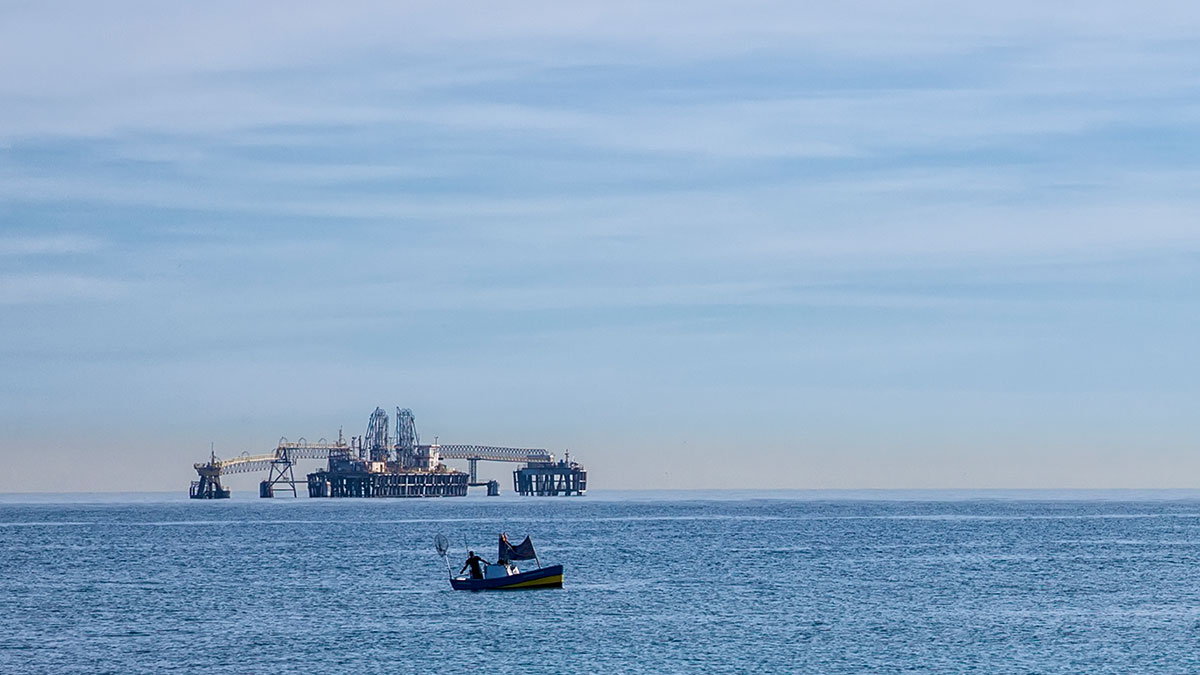
The energy company BP has begun the main phase of dismantling the former offshore mooring island located off the coast of its Castellón refinery. The facility, which for years allowed oil tankers to load and unload directly at the plant, has been inactive since 2012, when BP moved these operations to two new berths built in the port’s southern basin, representing an investment of 50 million euros.
A lengthy administrative process
Once its operational life had ended, BP began the process of removing the island, a process that culminated in a favorable report from the authorities in 2025 and final authorization in February 2026. Work began that same year, and after completing the preparatory engineering and logistical work, as well as underwater inspections to assess the condition of the seafloor, the project entered its dismantling phase in the third quarter, which includes both the visible structures and the underwater pipelines that connected the island to the refinery.
To carry out this project, BP has implemented health and safety plans tailored to the marine environment, an environmental monitoring and pollution prevention plan, and a waste management system that ensures the traceability of the removed materials. Underwater inspections are conducted using remotely operated vehicles and professional divers to verify the integrity of the pipelines before they are removed.
BP is currently developing a project at its Castellón complex to turn it into a green hydrogen production hub, with an initial 25-MW plant—developed in partnership with Iberdrola—that is already in the testing phase. The company also plans to expand its capacity to produce biofuels for aviation and road transportation in the coming years.
