








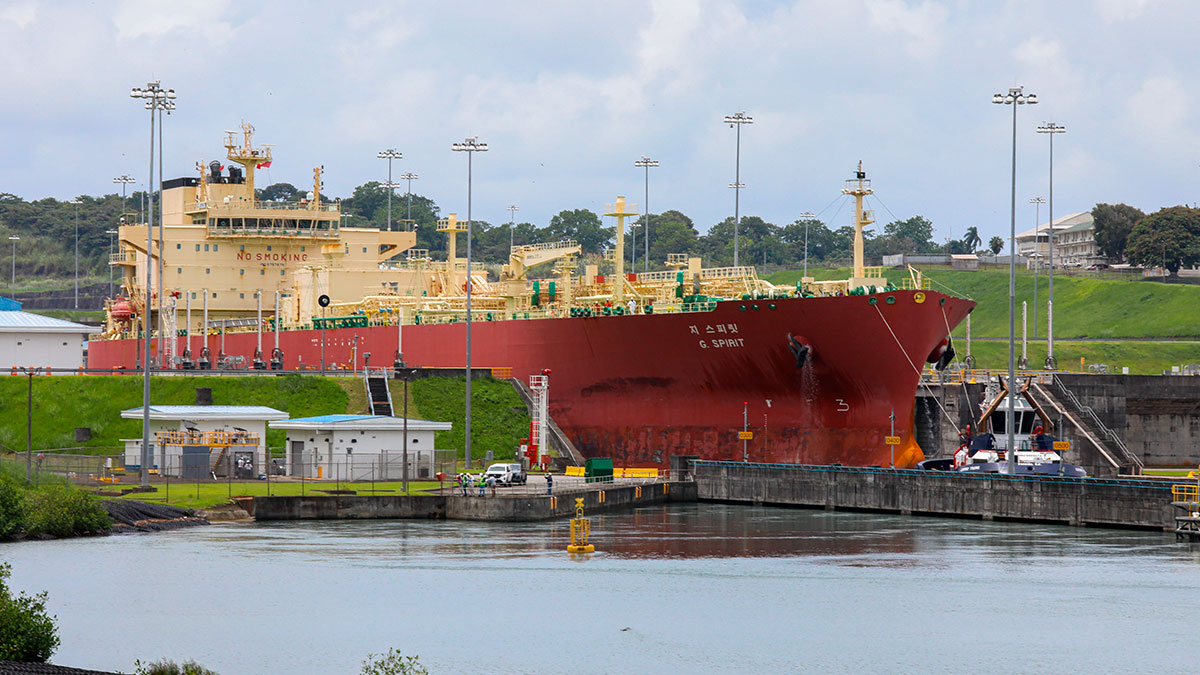
On Thursday, September 3, the Panama Canal imposed its first traffic restriction since the 2023 water crisis, in an effort to conserve the fresh water that feeds the interoceanic waterway. The Panama Canal Authority (ACP) reduced the daily quota from an average of 36 to 34 ships and expects to implement a further cut—to 32 daily transits—beginning September 15.
The reduction particularly affects the Neopanamax locks, used by ships with greater draft: their daily slots have been reduced from 10 to nine since September 3. At the century-old Panamax locks, the daily quota dropped from 26 to 25. Starting September 15, the Panamax locks will also be reduced to 23 daily slots, until the total of 32 transits is reached.
In addition to the traffic restrictions, there is a gradual reduction in draft—the submerged portion of the vessel—which has been in effect since July 3. On September 2, a draft limit of 14.63 meters went into effect, which will be lowered to 14.48 meters on October 1, with the goal of reaching 13.41 meters by next summer, compared to the maximum operational draft of 15.24 meters.
Two Lakes Under Pressure
The 80-kilometer-long canal is powered by fresh water from the Gatún (created in 1913) and Alhajuela (1935) reservoirs, which also supply half of Panama’s population. Between May and August, the basin recorded a 34% rainfall deficit compared to the historical average, and water inflows were 44% lower, according to data from the ACP.
“Water conditions are challenging due to the possibility of a strong El Niño event,” warned Ilya Espino de Marotta, who will take over as administrator of the Canal next Monday. The World Meteorological Organization estimates that there is a nearly 100% probability that El Niño will persist through February 2027, with an intensity that could be very strong or even exceptional.
The reservation system is under strain
In light of the shortage of slots, the ACP modified its reservation system effective August 30 to provide greater flexibility to Neopanamax customers, who can now secure more than one slot for the same date or for consecutive dates. For transits beginning September 13, 63 weekly slots will be offered, distributed among the various market segments, with a minimum of three reserved for liquefied natural gas (LNG).
Ships arriving without a reservation face indefinite delays and auctions where prices have skyrocketed: quotas have reached over $5 million, compared to an average of $55,000 at the beginning of the year.
Impact on Global Trade
Between 3% and 5% of global maritime trade passes through the Canal, and seven out of every ten containers that cross it originate in or are destined for the United States. Between October 2024 and September 2025, approximately 13,400 ships carrying 489 million metric tons of cargo passed through the Canal, generating revenue of $5.7 billion.
The restriction also comes at a delicate time for the gas market: traffic of methane tankers through the Panama Canal had rebounded in July, with 11 loaded vessels—the highest monthly total since November 2023—nine of which were headed for Japan or South Korea. Tensions in the Strait of Hormuz, which have led LNG and LPG operators to reroute their shipments through the Americas-Asia corridor, are placing additional pressure on the Panama Canal.
Analysts surveyed by AFP warn that prolonged restrictions could drive up shipping costs and lengthen wait times, affecting the prices of goods. According to former Panama Canal Administrator Jorge Quijano, for every 30 centimeters the draft decreases, a ship can carry an average of 200 fewer containers.
The ACP plans to build a 4,600-hectare reservoir on the Indio River, west of the Canal, to safeguard its operations against future droughts and ensure a supply of drinking water for the population over the next 50 years. However, the project will not be completed before 2031.

