








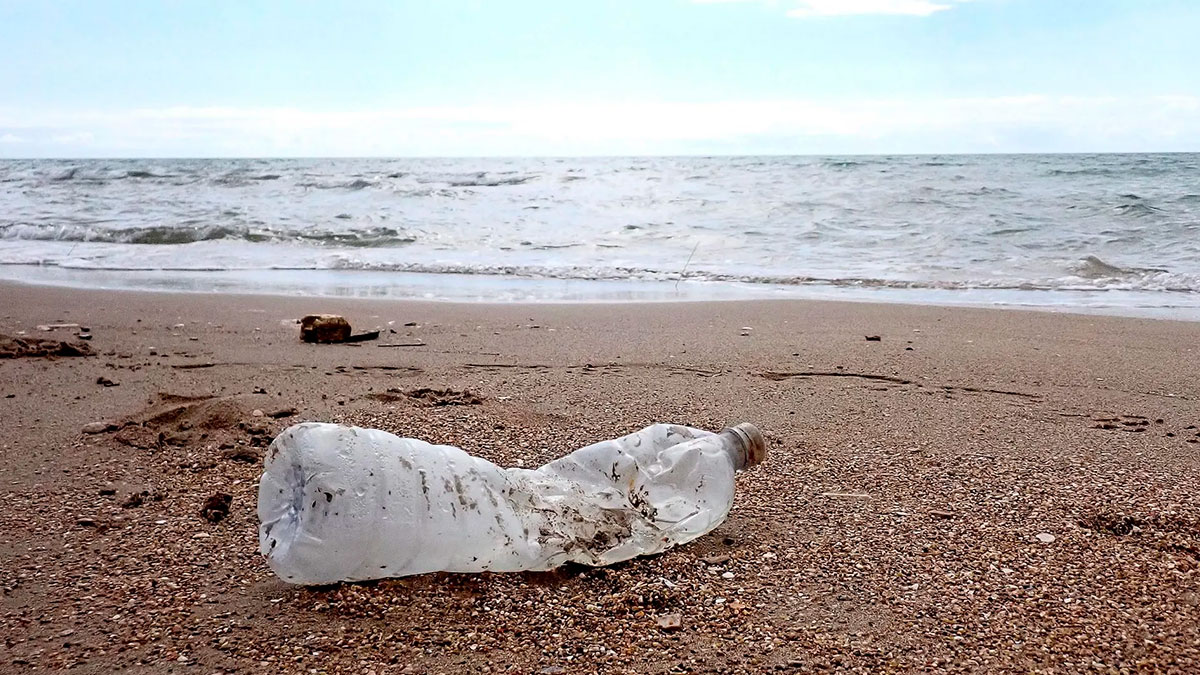
Discarded plastic bottles and their caps are the most common types of trash found on beaches and in waterways around the world, according to a new survey published by Ocean Conservancy. Volunteers collected 1,338,712 plastic bottles and 885,854 caps during the 2025 International Coastal Cleanup, making them the first and third most commonly found items during this one-day event.
Cigarette butts were the second most common item found, with 1,927,920 of them collected by volunteers.
For many years, cigarette butts were the main type of litter collected by volunteers in the United States, and the report notes that there are currently more than 1,200 municipal or local regulations addressing this type of litter, such as the designation of smoke-free beaches.
Nearly 20 million volunteers since 1986
Since the first International Coastal Cleanup in 1986, nearly 20 million volunteers have joined local initiatives to remove more than 405 million pounds of trash from beaches and waterways around the world.
The event is held annually on the third Saturday in September, although it has grown so much that thousands of cleanup events are organized throughout the entire month.
A database cited in hundreds of studies
Its marine debris database has also been used to inform scientists, conservation groups, and governments about ocean trash. Its data have been cited in nearly 300 peer-reviewed articles, 163 of which were published in the last five years alone.
It was recently used in a peer-reviewed study demonstrating that plastic bag bans reduce pollution from these types of bags. “International Coastal Cleanup will continue to serve as a benchmark for scientists and policymakers to assess the effectiveness of our interventions and solutions,” the report states.
In addition, it has played a decisive role in driving legislative changes: from advocating for California’s SB 54, the ban on balloon releases in Florida, the Farewell to Foam Act, and the UN Plastics Treaty.
“Single-use plastics are polluting our ocean at an alarming rate”
“The results of the International Coastal Cleanup send a clear message: single-use plastics are polluting our ocean at an alarming rate,” said Nick Mallos, vice president of conservation and ocean plastics at Ocean Conservancy, in a statement. “We hope that by sharing these findings, policymakers will be inspired to take the bold action needed to end ocean plastic pollution once and for all.”
Dr. Anja Brandon, director of plastics policy at Ocean Conservancy, noted in a statement that plastic bottles are among the most recyclable items in existence. Dr. Brandon added that the report’s findings highlight two important truths: first, that too much plastic is being produced; and second, that much of that waste does not end up where it should.
“Increasing access to recycling, including bottle deposit and return systems, and investing in reuse and refill infrastructure would go a long way toward protecting the ocean from this very common type of plastic pollution,” said Dr. Brandon.
Oceana’s senior campaign director, Christy Leavitt, stated that the cleanup results make it clear how single-use plastics continue to litter beaches and waterways around the world, according to a press release. Leavitt added that removing millions of pieces of single-use plastic is a significant achievement.
“As long as companies continue to produce enormous amounts of single-use plastic, volunteers will continue to find it on our beaches and in our waterways,” Leavitt said. “That’s why we need solutions that tackle the problem at its source by reducing plastic production worldwide.”