








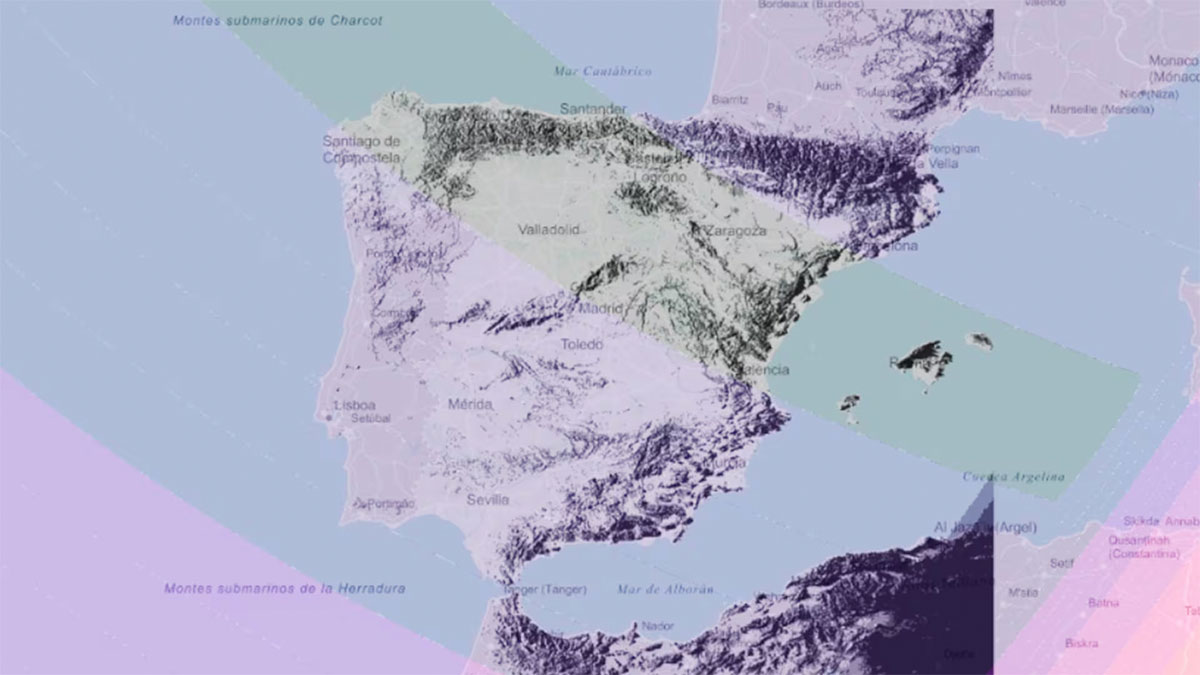
Next Wednesday, August 12, around 8:30 PM, the moon will pass between Spain and the sun during a total eclipse – the first to be seen on the Iberian Peninsula in 114 years. And much of the country has decided to watch it from the water: from A Coruña to the Balearic Islands, passing through Asturias, Cantabria, Biscay, Castellón, Valencia, and Tarragona, the path of totality coincides with some of Spain’s most popular sailing coasts — and recreational sailors are well aware of this in the marinas, where there is already a shortage of boats. In the Balearic Islands, in fact, the Nautical Companies Association says there are practically no boats left to rent.
Given the upcoming holidays, the General Directorate of the Merchant Marine (DGMM) has issued a resolution with recommendations to ensure that the celebrations do not cause collisions. The agency’s assessment, led by Ana Núñez, is simple: large crowds looking up at the sky, daylight fading in a matter of minutes, and a suddenly much busier sea are all factors that call for caution. Their message, summed up in the slogan that Maritime Rescue has used to publicize it on social media — #SensatezEnElMar — is this: the show is in the sky, but responsibility remains at the helm.
First, steer the ship; second, lift your gaze.
On its social media, the Maritime Rescue Service recommends that, during the eclipse, constant vigilance be maintained and that, whenever possible, someone other than the captain observe the phenomenon while he continues to steer the vessel; check the navigation lights and use them if visibility decreases; have all mandatory life-saving equipment on board; constantly listen to VHF channel 16 and follow instructions from the Maritime Rescue Service; do not exceed the maximum number of people authorized on board; maintain a safe distance from other vessels and, if you decide to anchor to observe the eclipse, do so only in safe and authorized locations, avoiding navigation routes, port entrances, maneuvering areas, and any area where anchoring could obstruct maritime traffic. The Maritime Rescue Service reminds users that the priority is to ensure that eclipse viewing never distracts from navigation or compliance with current regulations.
The International Regulations for Preventing Collisions at Sea remain fully in effect, and the DGMM adds that, before going to sea, it is advisable to have decided on the route, the point of observation, and the approximate time of return, as well as to check the weather forecast and inform someone ashore of the planned route. Since light levels will decrease significantly during the period of maximum obscuration, it is worth checking the navigation lights beforehand and ensuring they are ready to be turned on.
Regarding anchoring, the DGMM also asks that seagrass beds and other sensitive seabeds be avoided. To view the sun directly, only eclipse-approved glasses or filters should be used: no conventional sunglasses, binoculars, cameras, or telescopes without specific protection.
The most critical moment, the organization warns, will not be during the eclipse but afterward: when hundreds of vessels decide to return to port at the same time. That is why it is asking yacht clubs and marinas to step up access management and encourage staggered returns, avoiding crowds and congestion at the ports’ entrances and along the channels.
Tugboats, rescue vessels, and helicopters on alert
The Maritime Rescue operation on August 12 will be especially reinforced in the Balearic Islands, where up to 70 professionals will work throughout the day on patrol boats deployed in the areas of the islands where the highest levels of nautical activity are expected. The goal is to respond to the exceptional increase in the number of boaters heading out to sea to observe the eclipse and to ensure safety on a day when a much higher-than-usual concentration of boats is expected.
The Government of the Balearic Islands has not been left behind and has launched an extraordinary prevention and surveillance operation in anticipation of the expected influx of visitors to natural areas and the coast. IBANAT will deploy 161 forest firefighters, including 49 additional reinforcements: 93 in Mallorca, 23 in Menorca, 39 in Ibiza, and six in Formentera. Thirty-five environmental agents will also be added.
Across the country, the Government has deployed more than 33,600 agents and established 123 exclusion zones where access will be prohibited for environmental reasons or due to the difficulties a evacuation would pose. The official forecast is that between 1.8 and 2.9 million people will travel to the more than 350 designated viewing sites along the totality’s path.